Showing posts with label 2016. Show all posts

Monday, March 27, 2017

Home + The Id


HOME
(Unrated, Inception Media Group, 87 mins., DVD release date: Mar. 1, 2016)

THE ID
(Unrated, Hutson Ranch Media, 87 mins., DVD release date: October 25, 2016)

It has been a brutal series of months since my last review, so it's only fitting that I return to the fray with yet another two-in-one, thematically-paired, no-holds-barred SHOWDOWN! 

Previously, I decided to evaluate the early '90s transitions of two B-actors into more hands-on filmmaking: Keith Gordon, who played the misfit in Dressed to Kill, Christine and Back to School; and Steven Antin, who played the meathead in The Last American Virgin, The Goonies and The Accused. The winner of that bout turned out to be Mr. Gordon with his wintery-wartime adaptation of William Wharton's A Midnight Clear.

Gordon directed a promising ensemble (Ethan Hawke, Gary Sinise, Kevin Dillon, Peter Berg, etc.) to their best abilities, displayed a breathtaking visual style and showed admirable humanism towards both sides of the armed conflict. As hindsight beckons, I find A Midnight Clear to be one of my favorite movies of 1992, and an underrated gem I wholeheartedly recommend. On the opposite end was Antin's maiden voyage into screenwriting with Inside Monkey Zetterland, a headache-inducing vanity project directed clumsily by Jefery S.F.W. Levy and showing no empathy towards Antin's proxy's struggles with work and family, as well as boasting unfocused, improv-heavy exaggerations from an overqualified cast (Martha Plimpton, Rupert Everett, Sandra Bernhard, Katherine Helmond, etc.).

The irony is that Sofia Coppola, back when she was still being raked over the coals for The Godfather Part III, would go on from her minor role in Monkey to make this kind of movie with elegance and insight as both Lost in Translation and Somewhere. And funnier, too.

So with the Revenge of the Nerd having come to pass, now we flip the gender and confine the action to one universally-beloved genre touchstone. Thus, I welcome you to MISS ELM STREET 2016!

Wes Craven passed on in August of 2015 of brain cancer and the sting of his death still lingers. I had nothing but the utmost respect and adulation for the man, who remained a vital force in horror for three decades on the strength of the controversial Last House on the Left, the commercial Scream series and the slasher-defining surrealism that is 1984's A Nightmare on Elm Street. 2016 was a pivotal year for me, since I got to meet Robert Englund, Ronee Blakley and Amanda Wyss at Texas Frightmare Weekend (as well as Mitch Pileggi, Matthew Lillard and David Arquette). My only gripes were that I missed Lance Henriksen's table and wasn't able to reacquaint myself with the fourth major figure of this micro-Nightmare reunion, Heather Langenkamp, whose I Am Nancy screened at the Phoenix Film Festival in 2011.

Freddy's first victim and Freddy's first victor are the subjects of this dual-review, which flashes forward 32 years in time from Craven's masterpiece of fantasy terror.


Langenkamp began her screen career with walk-on gigs for Francis Coppola's two S.E. Hinton-based youth pictures, The Outsiders and Rumble Fish, but those were sadly excised. Then she made her starring debut in Nickel Mountain, a love story involving diner owner Michael Cole and pregnant teenager Langenkamp. Alas, it was Langenkamp in the buff that was the only thing which was memorable about that one, and another instance where, like Diane Franklin's back-to-back exploitation movie roles of 1982, a budding talent was being trivially misused. Luckily, the comely Tulsa native won the coveted role of lieutenant's daughter Nancy Thompson in A Nightmare on Elm Street, and the rest is history.

Well, chances are you may not recall that Langenkamp was the endangered princess in ZZ Top's video for their 1985 hit "Sleeping Bag." If you aren't familiar with 1980s sitcoms, maybe you forgot that she was once Marie Lubbock in the Growing Pains spin-off Just the Ten of Us which once aired on ABC-TGIF (around this time, sadly, Langenkamp was attracting overzealous fan mail). And in her spotty career, mostly for the small screen, she played a different Nancy in a teleplay based on the Tonya Harding controversy and was cast against her wholesome, chipper type in an after-school special ("Can a Guy Say No?") where she played temptress to...Steve Antin, in another rare moment when he didn't play a macho creep. And his dad was Beau Bridges, go figure.

Langenkamp settled down and started a family with Oscar-winning effects artist David Anderson and has herself done cosmetic work for some prestige pics (Cinderella Man, Star Trek into Darkness) in between sporadic returns to independent film acting. Amanda Wyss, meanwhile, has popped up on my site a couple of times in Better Off Dead and Shakma, which ought to give you a clue as to how this blonde bombshell of the 1980s kept on in the wake of Tina Grey's ill-fated, post-coital beauty sleep. Yes, she was in Fast Times at Ridgemont High a couple years earlier, stating rare autonomy in a sideline girlfriend role: "I don't want to have to use sex as a tool, Brad." But she also closed the decade out by giving in to erotic impulses in To Die For, a yuppie Luca Westerna who emasculated her beau by hissing "You fuck like you have your nose in a book."

Where do you go from there?

Wyss persisted in the 1990s with guest roles on TV and bit parts in action schlock, her claim to fame at this point being Randi MacFarlane in the Adrian Paul era of Highlander. In the previous decade, though, Wyss threatened to break out of cult stardom with appearances in the likes of Silverado and Powwow Highway, where her pluck and beauty were undeniable. She had the charisma and tenacity to become a great journeywoman among her 80s starlet peers. And yet, to this day, she remains just another best kept secret. Wha?!

Now we come to 2016, in the wake of Heather Langenkamp further questioning/solidifying her place in pop culture history with I Am Nancy, an assemblage of candid interviews, convention footage and comedic clips (including well-edited Paul F. Tompkins stand-up), and Amanda Wyss finally getting some overdue leading roles now that she's in her mid-fifties. And their roles are juicier than ever in the cases of HOME and THE ID. UCLA grad Frank Lin [giggle], who previously directed Fabio(!) in an ethnically-diverse rom-com called American Fusion, helmed the former; Thommy Hutson, who looks eerily like Ira "Will, the Wizard Master" Heiden, makes his debut with the latter following extensive production/writing work on such franchise retrospectives as Crystal Lake Memories, More Brains and Never Sleep Again (he also wrote the book of that same name focusing exclusively on the making of Nightmare 1).


Langenkamp previously played a distressed mom in Jonathan Zarantonello's The Butterfly Room opposite Barbara Steele's wicked witch-next-door. In Home, she's the mater of an interracial lesbian nuclear family. Didn't see that coming! The shock of Miss Wyss as Meredith Lane in The Id comes purely from the psychological toll exacted on her by her invalid dad, who makes Burt Young's serially abusive, gun-polishing mook from Amityville II: The Possession look like Ward Cleaver. Whereas Home is a spookshow about an overnight caregiver in the recent tradition of The House of the Devil and Babysitter Wanted, The Id is an eerie chamber drama in which the aging caretaker ferociously claims a life of her own, even if it means murder.


Like in Babysitter Wanted, the central character of Home is a young woman of strict Christian breeding who clings to her scripture in the face of unnerving terror. With her missionary father away in India, Carrie (Kerry Knuppe) arrives at the recently-purchased house of her mother Heather and her lover Samantha. Since a Kerry plays a Carrie and Samantha is played by Samantha Mumba, aka Irish Rihanna, you can deduce who plays Heather. Hint: her last name's not Locklear. There's even a Lew (Temple) and an Aaron (Hill), in case you doubt this movie's attempts at naturalism.

Lin treats Carrie's fundamentalism as a form of teenage rebellion (abstain from fleshy lusts, she certainly doesn't) and Heather becomes an apologist to atheist Samantha for such defiant acts as dressing formally for Sunday dinner and saying grace, not to mention Carrie's irresponsibility in looking after Samantha's moppet daughter Tia (Alessandra Shelby Farmer, who screeches more in repose than in jeopardy). Eventually, once Samantha and Heather leave for a business trip, Carrie and boyfriend Aaron become internet-trained exorcists as random phenomena suggests the previous homeowner, an occultist/ventriloquist, still holds a grudge. 

Home spices up its gumbo of funhouse clichés (spooky dolls, spooky paintings, spooky upstairs noises, spooky children, and so on) with welcome quirks and attempts at intimate domestic drama which sadly don't go all the way in alleviating the solemn familiarity of it all. Once again, like with Monkey Zetterland, the decision to encourage ad-libbing doesn't graft structure or depth upon the strained relationships of Heather/Samantha, Heather/Carrie, Samantha/Tia, and Carrie/Tia, despite mostly solid performances from the cast. Heather Langenkamp, in particular, has matured with greater warmth than ever and Kerry Knuppe shows the same potential Langenkamp did back when she was a dream warrior.

The improvisation backfires completely in the case of Lew Temple, who plays an elementary school guidance counselor who awkwardly introduces himself to the gay couple and whose earnestness carries a lecherous subtext. This character may have been intended as comic relief, but the humor falls flat.

Frank Lin pulls a fast one on viewers by treating Old Man Roberts as a red herring of a poltergeist, with a big reveal that is truly shocking if as anemically handled as the character dynamics. But there isn't any freshness to the atmospheric slow-burn style which makes up the majority of the film, which was definitely not the case with either House of the Devil or Babysitter Wanted. Lin just goes through the motions, as TV sets power on of their own accord and glass shatters from on high. This isn't as oppressively mundane as any of the Paranormal Activity movies, but it's no more novel. 


Home is more commendable for its tokens of acceptance rather than its fright potential, whereas The Id gets much nastier in the battle of wills between sheltered, doting Meredith Lane and her sarcastic, belittling Father (Patrick Peduto). Lin shuttles Langenkamp out of the ensuing panic, but Thommy Hutson refuses to shy away from Amanda Wyss' deteriorating faculties. The moments of respite wherein Meredith numbs the pain with television and erotic fantasies in the bathtub are capsized by the karmic wave of Father's cruelty. Even his incontinence becomes a snickering form of one-upmanship.

Meredith refuses to be patronized by well-meaning social worker Tricia (Jamye Grant), who stops by every morning to drop off food, but she's nostalgic to the point of desperation and pitifully unable to follow up on any stand she takes against her dad. Not just any desire to leave the house, but even the act of wearing lipstick stirs him into a mocking fit. In Better Off Dead, Lane Meyer's shrine to Wyss' Beth was an caricature of romantic idealism; Meredith Lane's room of high school memories is decidedly more tragic in its codependence, especially after her senior year sweetheart Ted Harborough (Malcolm Matthews) calls her up one afternoon.

For all the dementia and hostility Father shows daughter, Meredith is about to pay it back in the name of stunted independence.

Clearly having studied his De Palma as well as his Craven, Hutson plants his tropes on firm psychological topsoil and splits his screens for symbolic clues and stark contrasts. He strips his leading lady of all glamour and focuses the camera harshly upon her; even when she's dressed up in her old prom night gown, the bags under Meredith's eyes leap out just as much as the red of her fabric. The unreliability of Meredith and the irascibility of Father creates a mysteriously hostile bond, though Father does quote fanatically from the Book of Revelations and uses almost every vulgar word for "loose woman" he can think of. Father is right to assume that Meredith is still "daddy's little girl," meek as she is given that she's been withdrawn so long. Meredith is right to presume sexual jealousy in her father's acidic outbursts, because if his current state is any indication, no woman on earth could stand being married to Mr. Lane.

Patrick Peduto is also rendered compellingly unphotogenic as the Father, but unlike Wyss, he has no grace notes in Sean H. Stewart's screenplay to seize. He simply slanders the women in his life and flaunts his superiority over Meredith with all the subtlety of Montgomery Burns.

The movie follows a trajectory worthy of Poe's The Tell-Tale Heart, as Meredith sinks further into madness even after she's cut the umbilical cord. How one will react to the latter half of the film, which uses phantasmagorical "Boo!" moments and sepulchral voices liberally, depends on the identification one feels towards Meredith. The movie pushes her into areas of outright nastiness which threaten to undo all the goodwill Wyss builds up, including some obscene yearbook annotations which renders Meredith irredeemably perverted in her longing for aged Ted, who is now a doofy, bald-headed husband. On the way to its fateful conclusion, the movie demonstrates the same kind of nihilism cloaked in morality as Father, which is all too easy and way too much. 

The Id works best as a belated showcase role for Amanda Wyss, and it's clear she and Thommy Hutson have thought about the character very deeply. She plays Meredith so close to the bone, it's the celluloid equivalent of osteoporosis.

So who makes the best impression after 32 years of "One, two, Freddy's coming for you" chant-alongs? This isn't as cut-and-dry as when I championed A Midnight Clear over Inside Monkey Zetterland. Heather Langenkamp's innate maternal instincts and time away from the spotlight makes you treasure her all the more, whereas Amanda Wyss' hard work and perseverance has rewarded her the role of a Lifetime. The films themselves have to be taken into consideration, too. Home is hardly as ambitious as The Id, even though I appreciate its minor idiosyncrasies in the wake of Hutson's caged cauldron of resentment. But all the depth I craved in Lin's film is more ample in Hutson's movie, and Wyss deserves to be in the same Fangoria Chainsaw Hall of Fame as Nancy on the strength of Meredith Lane.

I'm tempted to call it a draw, though I really should settle for Amanda Wyss. Nancy was a symbol for homely young girls across the world to act on their survivalist impulses, and Langenkamp will go down in history for it. Wyss deserves better than being that one chick who dumped both Judge Reinhold and John Cusack, as well as finding a new life away from Tina. The Id, whatever its flaws, has opened doors for her to do so, and it's about time.

So congratulations to Amanda Wyss, Miss Elm Street 2016. No longer the girl in the rubber bag, now she's proudly wearing the tassel.


Wednesday, October 26, 2016

Sing Street


SING STREET
(PG-13, The Weinstein Company, 106 mins., theatrical release date: April 15, 2016)

In the 1970s, Van Morrison mused on the transcendent promise of rhythm & blues in his own thickly-brogued, folksy fashion, rekindling the romantic charge in Jackie Wilson's honeyed voice as well as his own passion for live performance as channeled by the 11-piece Caledonia Soul Orchestra. To cite one of Van's influences, Sam Cooke, he could no longer fight the feeling, and the It's Too Late to Stop Now LP of 1974, as well as its three-volume companion piece released over 40 years later, is on par with the Cooke who played the Harlem Square Club or James Brown at the Apollo back in the 1960s.

Fellow Irishman John Carney aims to capture that same revitalization of spirit through song, which is tricky business since his forte is narrative filmmaking. Through sheer force of intimacy, 2007's Once managed to convey that passion through the professional and romantic union of a busker and an immigrant on the streets of Dublin. It was also hailed as a miracle for the movie musical format due to its naturalistic, nuts-and-bolts scale. Carney's third film is a period piece set in 1985, neither the freshest or the most honest era for pop music let alone nostalgia. Not only that, but it's a teen film set in 1985, the year the genre exploded for the American market.

Chalk it up to Carney's grounded sincerity and filmic lyricism that Sing Street, were it time-warped back into the heyday of Hughes, could've usurped 92% of its competition on the strength of imagination alone.

Lots of youth-oriented pictures in the first half of the 1980s touted music-as-escape, the majority of which simple-mindedly reduced the concept to flashy montages or raucous house parties or dance bonanzas. In the hands of hucksters, such freedom came across as trivial. John Carney communicates the shared bond people can form over late night turntable binges, as well as the inspiration it can yield. There is a moment a little over 30 minutes in where two boys spin Joe Jackson and The Jam, crack jokes about rabbit pellets and brainstorm an original song. Carney fluidly expands that confidential moment of creativity into a band practice of the same tune and goes further from there. The rhythm of the film and the song interlock gracefully, and you can sense the main character's growing confidence handled with majestic precision.

Carney's human touch is more than fitting given that budding singer/lyricist Conor Lawlor's dizzying coming-of-age is all for love, specifically one for the beguilingly beautiful older girl who stands in waiting across from Conor's parochial school on Synge Street. She's Raphina, an aspiring model with a drug-dealer boyfriend whom she claims will whisk her off to London, land of opportunity. Conor asks if she'd be interested in being a video vixen in the meantime for his rock band. Before he knows it, Conor and his new friend, prepubescent entrepreneur Darren Mulvey (Ben Carolan), are hustling to form said group and produce said video for a non-existent song.

Advised by his college dropout brother Brendan and allied with homely multi-instrumentalist Eamon, who names the ragtag five-piece band Sing Street, Conor's individuality blossoms upon exposure to the likes of Duran Duran, Hall & Oates and The Cure. The band practice Conor & Eamon's new songs and film a second video on the way to their first gig at the midterm dance. Conor falls deeper for the orphaned Raphina whilst having to confront his own disintegrating family unit as well as the pressures from draconian school headmaster Baxter (Don Wycherley) and ruffian classmate Barry (Ian Kenny).


Forget all that you can read about Sing Street being a youthful version of The Commitments (do watch for Maria Doyle Kennedy as Conor's ma opposite Aidan Gillen), because this is on a higher level of cinematic nirvana. Think more of Bill Forsyth, who made the winsome Gregory's Girl in 1981. Think more of John Duigan, author of the affecting Danny Embling saga with The Year My Voice Broke and Flirting. Imagine a School of Rock if it had been written by Richard Linklater as well as directed by him. Carney's charm is reminiscent of those films, so rich with character-building sensitivity and mundane-seeming quirkiness and a naturalistic, guileless treatment of growing pains. It would seem to be a dreamer's version of a depressing reality, especially given how Dublin appears a one-horse town (the end credits offer an assurance that things have progressed in the economy and educational system), but there is way too much courage, wisdom and tenderness in Sing Street's slice-of-life playlist to ever write off as sappy, closet-pretentious button-pushing.

As Conor himself puts it to his bandmates, looking for the words to clarify Raphina's diagnosis that he's not happy being sad, "it means that I'm stuck in this shithole full of morons and rapists and bullies...I'm gonna try and accept this and get on with [life] and make some art."

Ferdia Walsh-Peelo is a terrific discovery as Conor Lawlor, the pint-sized New Romantic whom Raphina pet-names "Cosmo." More than just another lovesick archetype, Walsh-Peelo turns Cosmo's clumsiness into the stuff which makes him secretly the coolest kid on the block. It's got nothing to do with the fact that he walks into Christian Brothers School one day resembling a junior Nick Rhodes (although I smirk every time I notice it), but it's the incremental integrity and bottomless joy of discovery he demonstrates. Getting the girl may be a top priority, and rooting for him is an irresistible inevitability, but if he has more songs in his heart, then he truly deserves his name written in the cosmos.

Lucy Boynton perfects that same attractiveness of soul and body as Raphina, a sophisticated 16-year-old whose innocence is renewed by the affections of Conor. The Sing Street band mates, trained musicians all, appear to have less material to excel with than the leads, but John Carney does right by them regardless. Mark McKenna has that droll, lanky demeanor which automatically signals introversion, but there's a spark in his Eamon that makes him an invaluable asset for Connor. Percy Chamburuka gets a great introduction as "golliwog" keyboardist Ngig, whilst Karl Rice & Conor Hamilton shine as the elementary-aged bassist Garry and drummer Larry. Rice's impromptu costume for the band's first video shoot turns out be a corker, and he also dances with an elderly lady on the shuttle.

As Brendan, Jack Reynor plays the kind of boisterous, slacker savant that Jack Black does so well, but while he gets a handful of opportunities to demonstrate such (there's a putdown of Phil Collins worthy of Black's overbearing clerk from High Fidelity), Reynor also gets at the inner resentment brought on by his dysfunctional parents and his kid brother's prodigious ascent. When Conor sings "You just can't stand the way/That I turned myself around" in one song, it feels closer to his relationship with Brendan than Raphina. But Carney shades in lovely bondings between Conor and both these respective muses, and Reynor finds the soul in his own character as much as Walsh-Peelo and Boynton.

And then there's that soundtrack, which is another impeccable touch to add alongside Carney's proficiency with his actors here: "Rio," "A Town Called Malice," "Maneater," "Steppin' Out," "In Between Days," Motorhead's "Stay Clean," Genesis' "Paperlate," Flash & The Pan's "Waiting for a Train," and Spandau Ballet's "Gold." All of these top-notch selections are matched by the original compositions which take cues from the hits on show, written by Carney with assistance from Gary Clark of "Mary's Prayer" renown. "The Riddle of the Model" flaunts John Taylor-style slap bass and Walsh-Peelo's spot-on impression of Phil Oakey's monotone. "Up" takes flight both lyrically and musically, and "Brown Shoes" is a singular kiss-off anthem from Conor to his tormentors (although skinhead Barry is sold on being a roadie). But Clark's solo compositions, the gorgeous "To Find You" and the giddy "Drive It Like You Stole It," are the surest and best candidates for Oscar consideration, even with Adam Levine, the Maroon 5 singer who starred in Carney's Begin Again, collaborating with "Falling Slowly" award-winner Glen Hansard for "Go Now."


The synergy of song and plot in Sing Street is intoxicating. Conor and Raphina exchange a possible video idea for "Drive It Like You Stole It" modeled on the Enchantment Under the Sea dance from Back to the Future. An unspoken betrayal reflecting cruel reality is wrapped around Conor's fantasy of the video during rehearsal, where a group of oblivious teens fail spectacularly to emulate the '50s choreography from the movie. In Conor's mind, there is peace between his parents, Brother Baxter does back flips and Brendan comes through for true love with switchblade and motorbike. Only one of the latter will happen in the end, which isn't hard to guess, but I've never seen a reverie on film this magnificent. 

Sing Street is one of 2016's most pleasant little miracles. Like the best of its decade's pin-up pop, it has been blessed with an everlasting hook and a vivacious sense of itself. Carney weaves proven material both in teen movies as well as his own oeuvre into the best long-form music video never made in the ‘80s. It may hit the sweet spot for the fanatically nostalgic, but a coming-of-age movie this superior deserves its own DIY cover version, no vampire teeth required.


Monday, October 24, 2016

Teenage Mutant Ninja Turtles: Out of the Shadows


TEENAGE MUTANT NINJA TURTLES: OUT OF THE SHADOWS
(PG-13, Paramount Pictures/Nickelodeon Films, 112 mins., theatrical release date: June 3, 2016)

It must be just like the endtimes to see a Michael Bay production brought to the screen by Nickelodeon Films. The shock of Bay directing under Steven Spielberg's auspices for the Transformers assembly line is now a thing of the past, even if Platinum Dunes is still pillaging innocent memories of everything from Friday night to Saturday morning. Besides, any functional adult can now appreciate the riskier jokes from Animaniacs or Who Framed Roger Rabbit? they were once too young to comprehend. But Nickelodeon has long since been removed from gross subversion ever since Ren & Stimpy got the axe (I like Spongebob, but did you ever seen him whiz on the electric fence?), and Michael Bay's idea of family fun is to patronize every age bracket instead of just the manchild.

Granted, I am totally non-acquainted with the current Teenage Mutant Ninja Turtles cartoon Nickelodeon does air, nor did I bother to watch the preceding live-action TMNT movie. Judging by the reactions to that 2014 moneymaker, I wouldn't care to remember even had I screened it. Apparently, the Jonathan Liebesman-helmed Teenage Mutant Ninja Turtles was a joyless experience that made the comparatively grittier Steve Barron prototype from 1990 look like Schumacher's Batman. But at least they weren't extraterrestrials, because then I genuinely would've had some post-Transformers stress disorder, a very real form of shell shock.

Teenage Mutant Ninja Turtles: Out of the Shadows suggests these turtle boys (the producers) have cut the diehards some slack. The tone of the sequel is closer in spirit to the Murakami-Wolf-Swenson animated series which defined the property in the late 1980s, going so far as to import the beloved theme song ("They're the world's most fearsome fighting team"), and the script incorporates several familiar-sounding characters. Casey Jones, the hockey-masked vigilante played by Elias Koteas in those ‘90s movies, debuts in Bay's universe here, as do mutant antagonists Bebop & Rocksteady, brain monster Krang and Baxter Stockman, who is represented here as a nefarious black scientist like in the original comics, but loses his prized creation, the Mousers, familiar to his backstory.


Baxter (Tyler Perry) mobilizes the Foot Clan to free the captured Shredder (Brian Tee) from armored transport, but the plan is intercepted by investigative journalist April O'Neil (Megan Fox) and relayed to the four half-shell heroes following a pizza-related blunder at a Knicks game. A freak transportation accident sends Shredder to Dimension X, where he is swayed by Krang (Brad Garrett) to retrieve the pieces of a portal which will allow the grotesque being world destruction. To ensure success, Krang spills the "secret of the ooze" so that Shredder may transform a pair of fugitive henchmen into, respectively, hybrid creatures Bebop (Gary Anthony Williams) and Rocksteady (Sheamus). It is up to Leonardo (Pete Ploszek), Raphael (Alan Ritchson), Michelangelo (Noel Fisher), and Donatello (Jeremy Howard), as well any willing human allies, to dismantle either the portal or Krang's mighty Technodrome.

The ever-endangered April is rescued from a scoop gone awry by the passenger of Shredder's prison van, renegade security officer Casey Jones (Stephen Amell). This time around, the goalie-masked crusader is less a sullen vigilante and more a beleaguered scrappy, a department underling with dreams of becoming a true detective. Casey poses no threat to Raphael's ego and is taken aboard as a partner fast due to April's solidarity with the Turtles. Casey's only real motive is validation for his fantastical story about that Tortugas van with the grill that shoots manhole covers and the robotic arms swinging nunchakus on the side, which he doesn't get from Police Chief Rebecca Vincent (Laura Linney).

The directing gig for TMNT: Out of the Shadows has somehow wound up in hands of a filmmaker more promising than the promo-centric hacks Bay's production company usually employs. That would be Dave Green, whose 2014 feature debut Earth to Echo paid direct homage to Spielberg, but here the only allusion to the maestro behind E.T. is when orange-coded party animal Mikey runs into Bumblebee at a costume party. Green is, as far as Michael Bay productions go, not a total stooge and doesn't redden your eyes during the all-important action sequences, dialing down on the over-editing and disorienting staging as opposed to what Bay typically accomplishes. It's paced briskly, too, and with a lot less of the jejune mogul's patented mean streak to stink the film up like eau d'égout.

Or at least as far as Green's work is concerned. The screenplay by returning scribes Josh Appelbaum and André Nemec, meanwhile, bears all the worst traits of working by committee. The movie's subtitle reflects the lip service paid to the friction within the four "brothers" to either carry on as concealed weapons at the beck and call of a capricious populace or exploit Baxter's synthetic experiments under the chance at normality. They could've more aptly titled it "There's No I in Turtle Power" given the more protracted but equally futile strain for de facto leader Leonardo to manage the conflicting personalities around him, especially the short-fused Raphael. Donatello is a witless expository technophile, and Michelangelo, the one with the potential for dim-witted good cheer on the scale of Bill & Ted, is shockingly unfunny.


For all they're given to work with, the flesh-and-bone actors may as well be CG-inserted to match their blocky, bulky co-stars. Megan Fox continues to give the impression of pouting plasticine, the spunk that once spurred her to rake Bay over the coals now so diluted that she'll forever inspire genuine reappraisals of Jessica Alba every time she's on screen. Poor Stephen Amell, meanwhile, never once convinced me that I wasn't watching the second coming of Chris O'Donnell. One can only pray Will Arnett's well-worn presence as the vaingloriously bogus hero, self-nicknamed "The Falcon," will inspire impressionable youth to seek out the complete Arrested Development so they may watch him be typecast properly. Ditto Tyler Perry in the role of Smart Brother once played by Bebop himself in Undercover Brother. In my mind, Perry's more of a burlesque performer than a comic genius, but that's a minor strength here among a predominantly flat cast.

As for Laura Linney, give her the Frances McDormand Honorary Award for Most Overqualified Supporting Actor and be on your way.

This MSG-enhanced sequel just feels so crushingly prefabricated from the self-referential dialogue (Mikey mourns over a planned hip-hop Christmas album), workhorse pop music cues (Lionel Richie's "Hello," Edwin Starr's "War," Elvis Presley's "Little Less Conversation," and Norman Greenbaum's "Spirit in the Sky" ALL need to be retired for a while) to the finale which blatantly rips from The Avengers, not to mention Star Wars, Ghostbusters, etc.. It's as if they started off with minimal inspiration despite the increased awareness of the franchise's history, resulting in a disposable act of obligation rather than entertainment, a cut-rate Franken-sequel as regrettably overbearing as the new iteration of these happy-go-lucky crime-fighters as the Incredible Hulk's droppings. I wish Dave Green all the luck in the world that he might someday gain a possible mentor in Steven Spielberg, so that he no longer has to bet on the Bay.


Thursday, October 20, 2016

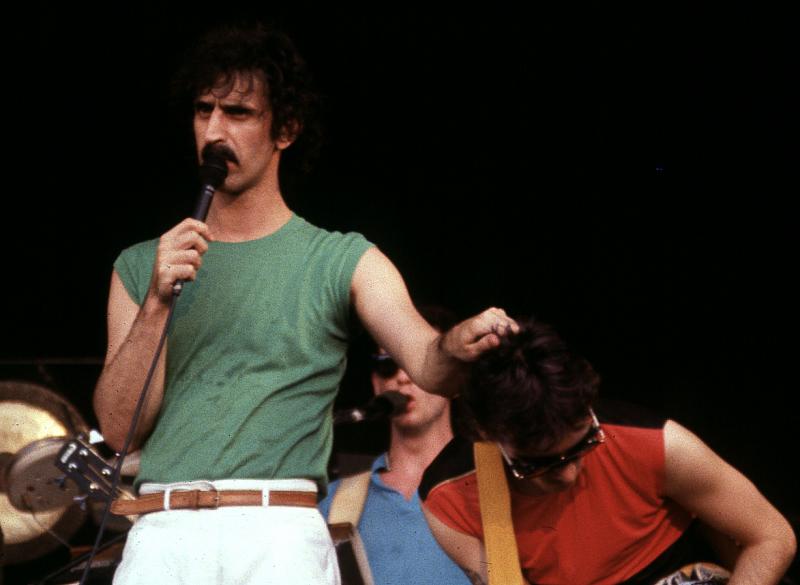
Eat That Question - Frank Zappa in His Own Words

This will be my 99th official movie review on this site, so if you are reading this, thanks for your time and support. I already plan on doing something special for my #100, to extend my support to a great talent who I feel deserves the recognition. But going through all I have written so far, I'm surprised to have got this far even if I had to struggle in some regards. For one, I had to retract my presence from social media for a spell because it wasn't doing my soul or my creativity any good. This meant I ended up sacrificing a connection which ran very deep to me, as well as losing touch with several very receptive people. I have been taking steps to getting back in the stratosphere, mostly on the strength of my devotion to writing.

I don't want to get too deep into this, instead resolving to continue to revitalize and strengthen my passion. So on the eve of my celebratory post, here is my latest review:


EAT THAT QUESTION - FRANK ZAPPA IN HIS OWN WORDS 
(R, Sony Pictures Classics, 93 mins., limited release date: June 24, 2016)

Growing up in Apache Junction High School, I may have been the only person in my drama class to bring a Frank Zappa CD to the dressing room.

My tastes will still formative and a lot of what I was getting into musically were cult artists. I was big on Paul Westerberg and The Replacements then and still am, but I also picked up on every Mother's Father through a compilation album called Have I Offended Someone? I preferred short, simple songs at the time, and the album at least contained some Zappa tunes for the neophyte: "Dinah-Moe Hummm," "Catholic Girls," "Bobby Brown (Goes Down)," "We're Turning Again," and "Valley Girl." This was barely scratching the surface of Zappa's discography, as the CD contained nothing as old as "Harry, You're a Beast" or "Call Any Vegetable," but it boiled down a lot of highlights from Overnite Sensation to The Mothers of Prevention.

And it did so by culling a lot of Zappa's bawdiest tracks, at least in terms of lyrics. One of the songs was "Jewish Princess," which was condemned by the Anti-Defamation League for such lines as "I don't want no troll, I just want a Yemenite hole." Like I said in the last review, tons of people had Porky's to get their illicit kicks. I chose Frank Zappa.

But Have I Offended Someone? turned out to be a gateway of sorts into Zappa's past, which has enough material for a companion volume devoted to his 1960s work. I eventually started hearing the kind of material Zappa wrote which earned him a reputation as a "composer" instead of "rock musician." The xylophone-heavy, jazz-structured perversions of R&B in which no runaway melody was strident enough to become a bar on Zappa's sheet. The discordant experiments with woodwinds and brass, like chamber-of-hell pop. The multitude of distorted voices spouting some dadaist catchphrase, especially in regards to such buzz words as "creamcheese" and "tinsel cock."

Frank Zappa was a genuine freak in a world eager to compartmentalize him, and the music exceeded his grungy attributes. And when it came to promoting himself on television, he drew blood with his sardonic estimations on a society that knew little about his recorded legacy, but held him in esteem or fear as an eloquent dissenter against the lowest common denominator. In 1981, upon the release of his Tinseltown Rebellion LP, one talk show host senses "a deep, permanent, irreversible cynicism" within Zappa, but is he really that different from George Carlin or Groucho Marx when you get right down to it? Zappa's immediate response is that he hopes his skepticism will prove contagious. A moment later, Zappa monologues about the subpar state of modern American culture, from designer jeans to schlock rock, a deprivation of identity upheld patriotically, and pathetically, with poison gas and neutron bombs.

Having read The Real Frank Zappa Book hoping to contract some of Zappa's righteous disdain, Thorsten Schütte's Eat That Question - Frank Zappa in His Own Words does the job visually, a feature-length mosaic drawing from videotaped cross-examinations and the occasional live performance. Going as far back as Zappa's boy wonder slot on Steve Allen's show in 1963, where the multi-instrumentalist improvised a deliriously discordant concerto for Allen's house band accompanied by bicycle, Eat That Question seeks to balance Zappa's outspoken public persona with a wider appreciation of Zappa's desired reputation as a composer in a cultural environment where your only chance at livelihood is to write jingles instead of suites.

Although hardly as all-encompassing as one would hope for a man who wrote 300 different arrangements and put out albums at a steady clip, Schütte does cull a chronologically satisfying array of song selections. From a version of "Plastic People" sung to the tune of "Louie Louie" to such Flo & Eddie-period highlights as "Penis Dimension" to a smidgen of "Approximate" from 1974's A Token of His Extreme special (featuring Ruth Underwood on the vibes and Chester Thompson on the drums) to his 1980s work bolstered by the presence of Ike "Thing-Fish" Willis ("Tinseltown Rebellion," "When the Lie's So Big"), Schütte gives you enough of Zappa at his band-leading best. The cherry on top are Zappa's conducting duties for both the London Symphony Orchestra and the Ensemble Modern (the German musicians captured for posterity on 1992's The Yellow Shark).

Lest you think this but a conduit for welcome renditions of "The Air" and "Cosmik Debris" (so good you'll demand another movie to piece together Zappa's musical accomplishments), Schütte gives Zappa a posthumous solo examination of the artist at his most Frank. When he released 1968's We're Only in It for the Money, Zappa ridiculed the "flower power" generation who flocked to San Francisco without mercy: "I'll stay a week and get the crabs and take the bus back home/I'm really just a phony but forgive me, ‘cause I'm stoned." Incidentally, he was still dogged by the perception that he was for the counterculture. Schütte finds the right sound bites to solidify Zappa's distance from the hippie scene, the highlight a notorious anecdote about Zappa's refusal to assist a group of Berlin radicals escalating into a riot during a Mothers concert.

Zappa refrained from habitual drug use, showing zero tolerance for any of his musicians getting high on the road to impede the flow of "entertainment on time." He also turned down numerous offers to play outdoor festivals in France for the benefit of the communist party. "Some people think that I am some sort of a political rebel," he says at one point. "Isn't it strange the fantasies that people have?" The only instance where Zappa was moved by international politics was when his once-blacklisted music helped bring down the Iron Curtain in Czechoslovakia, inspiring Vaclav Havel to fly Zappa over for a hero's welcome and a short-lived appointment to cultural ambassador. This was a rare triumph for Zappa in terms of opposing the forces of reaction; a few years before, he took the PMRC to task for trying to legislate warnings against "obscene" messages and content.

Like Carlin, Zappa frequently debunked the concept of Dirty Words as a barometer of moral impurity, less an affront to America's integrity than the movement of a "fascist theocracy" whose beliefs were so far right as to invoke Attila the Hun. But it's a fight Zappa had to bear arms against as far back as the late 1960s, when MGM Records reps would clandestinely remove a reference to a waitress' pad (in "Let's Make the Water Turn Black") because they thought of the more sanitary definition. A planned orchestral performance of the 200 Motels score at the Royal Albert Hall was canceled at the 11th hour by manager Marion Herrod because of such trigger words as "brassiere" (nowadays, Adele can drop more R-rated words at the same venue and sell at platinum).

Schütte doesn't include snippets of Frank Zappa's few U.S. novelty hits ("Don't Eat the Yellow Snow," "Dancin' Fool," "Valley Girl"), nor his music video for 1981's "You Are What You Is" (immortalized on Beavis & Butt-Head), but we do hear Zappa's international hit "Bobby Brown." The song was a chart-topper in Norway and Sweden, one would guess because of its doo-wop melody and not the perverted black comedy Zappa grafts onto it. Over a 1978 performance of the song in Munich, Zappa confesses his amusement upon learning it was a popular slow dance number despite its references to sadomasochism, date rape and premature ejaculation.

Eat That Question is not the conventional summation one might expect, but that's no excuse to hold out for Alex Winter's planned documentary. Zappa may have equated interviews with the Inquisition, but that didn't mean he wasn't about to shut up, proving dastardly enough to stymie his tormentors. Goaded into revealing the primary audience for his work, Zappa snipes back "That's none of your business." Winning a Grammy for the title song from Jazz from Hell, Zappa isn't the least bit amused until he demonstrates the Synclavier on the morning news and outright praises it for removing the human element.

Every documentary, even piecemeal ones like this, need an arc, and Schütte gets it from Jamie Gangel's candid discussion with Zappa on the Today Show from 1993. 52 years old and wasting away from prostate cancer, the degenerating fruits of his labor finally granting him massive European success, Zappa is as unrepentant, hilariously upfront and caustically bitter as earlier in the documentary. And then comes one of Zappa's final answers, in regards to how he wants to remembered: he simply scoffs, and says "That's not important." To Zappa, it's an egotistical act of gross spending more suited for former presidents than a simple composer.

The enigma of Frank Zappa remains despite all his testimonials which Schütte has assembled. He was passionate about free speech because it allowed him to spend years proving that nothing was sacred, and that he could offend everybody. And being misunderstood and stereotyped and censored for so long, Zappa could have been conditioned to believe that remembrance isn't a top priority. Cultural apathy, rigid conformity, closet fascism...all things Zappa is given the chance to denounce are surely worth the outrage. This is one movie where you should stay until after the closing credits if you really want to honor Zappa's spirit. But Thorsten Schütte, bless him, has made an effort, and all the ugly people can be happy he did.

Eat That Question - Frank Zappa in His Own Words is a perfect introduction for a world that can finally understand what made Frank Zappa so controversial but also a man who is dearly missed in spite of himself. There will always be hungry freaks, daddy, in need of a little motherly love. Let them eat Uncle Meat.


Tuesday, October 11, 2016

A Mosquito-Man (Sucker)


A MOSQUITO-MAN
(Unrated, Big Screen Entertainment Group, 79 mins., DVD release date: January 12, 2016)

Those with fond memories of watching USA's Up All Night programming block ought to get a kick out of realizing that Kimberley Kates (who I previously mentioned in Bill & Ted's Excellent Adventure) produced two feature films directed by the stars of the sitcom version of Weird Science. John Mallory Asher, who played Gary (originally Anthony Michael Hall in the Hughes film), helmed his former wife Jenny McCarthy in Dirty Love whereas Michael Manasseri, who took over the role of Wyatt (first played by Ilan Mitchell-Smith), wrote and directed A Mosquito-Man. The former premiered at Sundance in 2005 but met disastrous critical and commercial receptions in America. Though grossing $12 million worldwide, it scored in the low thousands domestically. A Mosquito-Man, by comparison, is strictly DTV in the wake of the festival-certified Babysitter Wanted, which Manasseri co-directed with writer Jonas Barnes.

Those with the faintest memories of watching USA's Up All Night ought to realize all of the aforementioned films would fit in perfectly with that after-hours schedule.

Dirty Love doesn't seem incongruous next to the tacky T&A romps of yore. Babysitter Wanted is a demonic splatter flick modeled after vintage suspense movies. And the topic of this review, A Mosquito-Man, is such a slick, modernized heir of Troma (among other things) that Lloyd Kaufman himself gets to be one of the victims, dying on the crapper as well he should. And the hero is introduced as employee of a nuclear power plant, which makes this genetically-spliced monster mash closer to the spirit of The Toxic Avenger than The Fly.
 

Manasseri, best known perhaps as the geeky third wheel opposite the Two Coreys in 1988's License to Drive, plays Jim Crawley, the aforementioned handler of radioactive materials who is emasculated, outsourced and murdered in one day. Not only is Jim passed over for an 11-years-due promotion by Axis Nuclear Power chairman Mr. Kopple (Kaufman), but he's fired as part of the company's new nine-point plan. His car is swiftly impounded and he is denied the bus fare home. And Jim's bitter wife Jackie (Kates) is having an affair with the hotshot who cost Jim his job, Dan Simmons (Ted Myers). When he finally finds a helping hand, Jim ends up a guinea pig for a biological insecticide which turns him into a bloodsucking mutant with a few scores to settle.

This is not the first movie to use this idea, as "Mosquito Man" was also the home video title for a 2005 made-for-SyFy flick called Mansquito (the alternate title of A Mosquito-Man back in 2012 was Sucker). The two movies involve a manhunt/bug hunt involving homicidal hybrid creatures, but Manasseri bucks for a black comic vibe which harkens back to the Sam Raimi stylings of The Evil Dead and Darkman. Although he never truly reaches such pulpy heights, Manasseri certainly tops the most infamous shot from Raimi's debut with a little help from Kimberley Kates. There are also touches of Spider-Man in Jim's newfound ability to flip across the rooftops (the transference does not give him wings) as well as The Crow in the swarm of mosquitoes who guide him on his vengeance. He's able to telepathically command them to do his bidding, demonstrating this to the grizzled detective on his trail.

That would be Shanahan, who is played by Babysitter Wanted vet Monty Bane in a lively variation of a familiar caricature. Whereas in Manasseri's last film he was cast as an imposing figure with no dialogue, Bane instead gets to put his tongue in his cheek and play the intimidating policeman with a droll gusto similar to Tom Atkins (of Night of the Creeps and Maniac Cop). In his desperate attempt to make sense of the string of freak killings, Shanahan calls upon the greedy scientist, Dave (Ricky Wayne, a dead ringer for Jeffrey Combs), who inadvertently created Mosquito-Man, and the funniest incidental moments involve the cagey entomologist and the no-bullshit investigator. When Shanahan finally succumbs to drowning his frustration in liquor, a sudden clue jolts him into action ("We need coffee, ASAP!") It's a strong enough supporting performance that helps carry the movie over its paces.

In the midst of his basic vendetta, Jim finally consummates a romantic union with sweet-hearted co-worker Evelyn (Jordan Trovillion), an aspiring singer-songwriter whose forte is coffee shop country/folk. This is a peculiarly bizarre moment, mostly because their relationship isn't set-up properly at the start, save for a rescue sequence which inaugurates the producer's cut. Jim's surprise mating ritual seems extremely out-of-character and sordid, although as the movie progresses, nice guy Jim struggles with his newfound instincts to the point of once again contemplating suicide rather than homicide. Even Shanahan isn't as demented in his pursuit as someone who unwinds with target practice would indicate, hoping to take Jim alive rather than exercise unwanted military muscle.

Alas, Evelyn is the damsel-in-distress whom Dave abducts in a further display of his unethical megalomania. This results in Jim having to resist an industrial-sized bug zapper, arranged in a force field position surrounding Evelyn, while Detective Shanahan and his rookie sidekick Bowen (Danny Mooney) are locked in a room full of deadly Asian Tiger mosquitoes. Not quite a camp artifact on the level of Sharknado, A Mosquito-Man is at heart an old-fashioned creature feature flick modeled like the introduction to a new Marvel property (an impression the DVD cover art really hammers), with Robert Kurtzman's FX shop molding an impressively icky face for Manasseri, with CG enhancements for the remainder of his features. So while the digital skeeters seem more laughable than some of the leaden digressions into tastelessness, and the movie could have stood to be a bit wittier, but this is fitfully entertaining taken in a "late, late show" environment if not the vaunted stature of a Midnight Movie.

Very special thanks to Kimberley Kates for easing me into writing this review, among other acts of kindness.

The DVD release contains two contrasting cuts of the film. The first would appear to be Kimberley Kates' preferred edit for international markets, as it emphasizes quicker pacing and more rousing options of beginning and end. This also means a truncation of Kates' graphic death scene, much less screen time for Lloyd Kaufman and some unwieldy elisions in dialogue (listen to the conversation between Jim and Dave at the bar). The comedy-centric director's cut, meanwhile, lets Kaufman attempt to steal his handful of scenes more blatantly (including a mothballed golf analogy as well as a direct allusion to Tromeo and Juliet) while also withholding the reveal of the monster at the start for a more downbeat flashback chronology. No cast/crew interviews or commentary, alas, but split amongst the dual platters are a behind-the-scenes gallery and Big Screen Entertainment Group trailer reel.