Showing posts with label drama. Show all posts

Sunday, November 4, 2018

Bohemian Rhapsody


BOHEMIAN RHAPSODY
(PG-13, 20th Century Fox, 134 mins., theatrical release date: November 2, 2018)

"This thing called Queen
I just can't handle it
This thing called Queen
I must get around to it
I ain't ready!
Crazy little thing called Queen."
- Freddie Mercury, R.I.P.

It's 10am on a Saturday, and I figure coffee can't compare to a shot of Queen's incomparable pomp rock in seat-shaking Dolby Surround. That's not a backhanded compliment for the record: Queen are perhaps the only real combo who made bombast sound fun. An old Rolling Stone article declared Queen "the first truly fascist rock band," and those late ‘70s anthems have a jackbooted arrogance to them. But if they didn't have hooks, energy and especially Freddie Mercury, I could hold no nostalgic yearning for them. They'd slot easily into the same AOR ghetto with Journey, Styx and REO Speedwagon, all of whom pale in comparison to the Mercury-May-Deacon-Taylor music machine.

But as Bohemian Rhapsody, the band-sanctioned biopic of their rock ‘n' roll reign, concluded with an abridged recreation of the 1985 Live Aid mini-set which showed them at the height of their power, I surrendered. It's all in the tune of "Radio Ga Ga," the Roger Taylor-penned hit from 1984's The Works (it only went to #16 in the U.S.A., but was a chart-topper or a notch close to such in 14 countries). It's got the martial beat, the synths, the note-bending guitar, the shout-along chorus, the earnest lyrics mourning a format which means even less almost 25 years later. It's sounds stripped down compared to the band's flamboyant first decade, a credit to the evolution begun with the pop-minded 1980 LP The Game. And I sang along to it in the theater shamelessly, or at least the first verse and final chorus.

Then there's that titular behemoth, a song whose pop-cultural revival is the stuff of legend. There are even text graphics filling the screen which shows just how reviled Queen were in 1975, when they embraced rock and opera with the kind of kitsch abandon even Pete Townshend was too reserved for. But cut to 1992, after the death of Freddie Mercury, and a little movie called Wayne's World is released on Valentine's Day, the better to plant a big wet kiss on the kind of music which punk and metal were meant to discredit. Wayne Campbell, Garth Algar and friends singing along, banging their heads, weeping to the fatalistic coda; it was a glorious sequence which began the revitalization of Queen.


Not a lot of bands deserve such an afterglow, but Queen did. Looking back on the jewels of their discography, from "Killer Queen" to "You're My Best Friend," "Somebody to Love" to "Bicycle Race," "Another One Bites the Dust" to "Radio Ga Ga," Queen were the misfit band they proclaimed themselves to be in Bohemian Rhapsody. When they were on, they were the champions of the world. This adrenaline rush was just what I needed first thing in the morning. "Hot dog?" I say "Cool it, man." Let's just surrender to the many glories of Queen without question.

Bohemian Rhapsody should be the essence of Queen. We're not dealing with a hot-tempered soul innovator like James Brown or an insular, troubled pop genius like Brian Wilson. Queen were comparably modest even if they didn't sound like it. They would and did rock you, and their legacy presents an interesting dichotomy. Queen are the stadium band to end them all yet a campy pleasure who scored the 1980 Flash Gordon movie. Freddie Mercury is a homosexual icon and showman supreme, but was introverted and soulful enough to counter any stigma. Brian May, John Deacon and Roger Taylor (here played by Gwilym Lee, Joseph Mazzello and Ben Hardy, for the record) were all undeniably talented as songwriters and musicians. I wanted a whole movie to reinforce the very reaction I get upon hearing that compact version of "Radio Ga Ga" from their Wembley barnstormer, a moment to rival U2's equally compelling extended version of "Bad."

Alas, the widely-reported controversies behind the eight-year production and the simple appeal of Queen have clashed together to result in a film that is a rock biopic pile-up. It isn't exactly "Death on Two Legs," but better to serve it with the title "Hammer to Fall." Bohemian Rhapsody contrives a series of blunt melodramatic clichés which left me numbed by the time Live Aid is shoehorned into a third-act redemption arc. There I was turning as skeptical as Queen's past critics. This isn't merely a group of British pros putting on a great show for the ages in support of a worthy cause. It's a broken family coming together for the first time "in years." It's a wayward frontman learning humility, mending tattered relationships and coming to grips with AIDS. It's the most important charity guest appearance ever, with telethon lines ringing off the hook and funds raised into the stratosphere. It's no longer amusingly pompous but wretchedly hagiographic.


It didn't have to be like this. Spearheaded by Rami Malek's laudable approximation of Freddie Mercury's strutting, saucy charms, Bohemian Rhapsody is not lacking in charisma. Whether working up a paying crowd or a crowding player (look beyond the Gerry Rafferty makeup of one impresario for a flash, ah-ah, of stunt casting), Malek is dashing and daunting when duty calls. This is the first half of the movie, when the band is on the rise (there is a joyful depiction of their first studio sessions) and shacked up in a muddy, creaky country house to record A Night at the Opera. I could overlook the fact that during their preceding Sheer Heart Attack era, the movie version of Queen is blasting through "Fat Bottomed Girls," which wasn't released until 1978's Jazz (no "Stone Cold Crazy," which Metallica so awesomely covered, or "Brighton Rock?").

But then the movie progresses, fudging chronology and fabricating pitfalls with such superficial aggression that I was constantly demanding "Don't bore us, get to the chorus." It's London 1980, and Queen are now working on "We Will Rock You." Memo to screenwriter Anthony McCarten: "News of the World, motherfucker!" I would also assume the band members know the name of a certain single/live staple from that ‘77 album to be "Spread Your Wings." And why do we need hackneyed "Freddie goes solo" tension (which leads to the overstated Live Aid gig) when we could have Queen in 1977, taking one look at the punk landscape which was gobbing in their general direction and laying down the raucous "Sheer Heart Attack?"

Get On Up and Love & Mercy both had more respect for context than McCarten and directors Bryan Singer & Dexter Fletcher (not to mention consultants Brian May & Roger Taylor). They are like revelatory deep cuts next to Bohemian Rhapsody's exhausted hit parade. I came out of Get On Up genuinely sparked by the towering ambition of James Brown as well as the full extent of his brutishness, against bandmates, lovers and perfect strangers. Love & Mercy was rich with empathy for the frazzled soul of Brian Wilson, who heard searing symphonies and pained reveries in his head until he was drugged into possible oblivion. Everything about Freddie Mercury in Bohemian Rhapsody, especially his sexual orientation, is a hedged bet, a concession to formula which negates the declared intent of Queen's music.

Forgive me if I sound like I'm angling for a think piece, but the stodgy construction of this really does stink of the hetero-genous. I'm not asking to see what Sacha Baron Cohen or Stephen Frears originally had in mind. But as an adult, I would care for a depiction of Freddie Mercury that doesn't make his homosexuality look like a sheepish trip down the proverbial rabbit hole guided by a wasted Allen Leech as duplicitous manager Paul Prenter, tinted in infernal clubland reds and subject to migraine-inducing funhouse mirror-lenses when Mercury is grilled about his private life in a press conference. Never mind the way Mercury's real life soul mate Mary Austin (Lucy Boynton) and his bandmates are trotted out as reactionary figures, as well as the sexless bond he has with Jim Hutton (Aaron McCusker), another important friend of Freddie reduced to an agent of salvation. I think Freddie Mercury is more than worthy of wrenching pathos, an unfortunate casualty of a wasting disease which during the 1980s was seen largely as Biblical retribution by assorted religious fanatics and politicians. But damn are these filmmakers pushing for the retrograde; Bryan Singer showed more solidarity towards gays in his inaugural X-Men entries.

The performers are willing, but the flesh is decayed. Lucy Boynton, the love interest of John Carney's transcendent Sing Street, is as worthy of better material as Malek. Imagine a film which delved deeper into the intimacy between Freddie and Mary, the kind which inspired Freddie to treat her as his top confidante and inheritor in his will. Here, she is reduced to a fling, forcing Freddie into an emotional void he immediately fills with decadence and pageantry. All of the relationships, including the former Farrokh Bulsara's defiant connection to his Parsi parents (Ace Bhatti, Meneka Das), have this half-formed (or less) quality to them. Freddie was so much more larger-than-life in actuality, but you'll never know from the way the disco thump of "Another One Bites the Dust" juxtaposes a fateful walk through a leather bar. Didn't John Deacon write that song out of appreciation for Chic's "Good Times?" I heard no Nile Rodgers (Rick James, instead, another anachronistic credit to the film's millennial wankery), but I did get a "THIS IS DISCO!" fit to lead me into another false-improvisatory recording session. Did Steve Dahl ghostwrite this?


Let's be clear: Bohemian Rhapsody is geared towards the more middlebrow section of Queen's fandom, people who titter at a meta joke involving Wayne's World but do not feel a tinge of regret that director Penelope "The Decline of Western Civilization" Spheeris herself didn't contribute a eulogy which would've closed with greater power than the predictable trope we do get. Having mentioned Spheeris and Stephen (My Beautiful Laundrette, High Fidelity) Frears does no favors to Singer and Fletcher; with the latter connected to an Elton John biopic, whose teaser trailer graced Bohemian Rhapsody, look forward to more edgeless plug-and-play rock star dramatizations (please don‘t let me down, Lee Hall).

And Bohemian Rhapsody is strictly plug-and-play, to inexplicably reference "Weird Al" Yankovic (remember his "Bohemian Polka?"). Montages soak up whatever potential resonance there is to be gained from watching a baggage handler born in Zanzibar realize the highs and lows of stardom, and they just keep absorbing and absorbing until the film is as dry as the Atacama. Each musical moment proves an oasis, but they seem scattered because of the way Live Aid bookends the film. And these moments make up the bulk of the offending montages; every workhorse of a song is handled unimaginatively, their accompanying geneses too cute for their own good.

The more I think about it, the less I consider this even a "biopic," since it's too unreliable to have the quotes removed. What you ultimately get with Bohemian Rhapsody is a breakout performance from Rami (Mr. Robot) Malek that wants badly to be of Oscar caliber (Paul Dano and Chadwick Boseman, we hardly knew ye) and as disposable a reminder of Queen's popularity as Hollywood could muster. I don't anticipate what'll happen to, say, Judas Priest when the wind blows their way (save a prayer for Rob Halford). I should've cried those intended tears of joy as they wrapped up at Live Aid but wound up as sad as Garth Algar upon the immortal last words of "Bohemian Rhapsody" itself. Nothing really matters to me.*

*Except the songs, of course. But I can sing along with "Don't Stop Me Now" or "Play the Game" for free.


Tuesday, January 2, 2018

Flatliners (2017)


FLATLINERS
(PG-13, Columbia Pictures, 109 mins., theatrical release date: Sept. 29, 2017)

Did you know that when you die, apparently your spirit leaves your body and swoops down the same CG cityscape as seen in the current HBO Feature Presentation bumper. That's all there is to learn from the 2017 revival of the previously-discussed Flatliners. I'm not fond of Joel Schumacher's 1990 brood feast in an everlasting way, but at least it once played on HBO with a minute-long introduction (in SPACE!) which earns its nostalgia. There are no specs rosy enough to make the new model seem appealing now let alone in 2044.

Schumacher had been a fickle, flippant filmmaker throughout the entire 1980s (following the "hip" ensemble dramedy St. Elmo's Fire with the "hip" ensemble horromedy The Lost Boys), whereas Niels Arden Oplev at least has the original 2009 adaptation of The Girl with the Dragon Tattoo to his credit. But it hasn't been a good year for Tomas (Let the Right One In) Alfredson let alone Oplev, on top of everything else you can think of going wrong in 2017. Screenwriter Ben Ripley adapts Peter Filardi's original story, but he's not at Source Code efficiency this time. Despite his user friendly surname, Ripley is slumming it in a dimwitted regression to the DTV half of the Species saga he began with.

Full disclosure: I needed the fast-forward button on my DVD player to keep me from death by boredom. Flatliners runs a grueling two hours thanks to protracted, derivative scenes of creeping terror but still manages graceless transitions and a dearth of investment. Oprev and Ripley ignored the notion that flatlining creates the kind of rush which one character suggests should be bottled and sold as a "club drug." Theirs is instead a sleepy-time depressant you swig once the party's over.

Kiefer Sutherland re-emerges from Schumacher's gothic amber playing not the older version of ringleader Nelson Wright, but instead an inconsequential cameo as the movie's Dr. House, "Woolfson." It's Ellen Page as Courtney Holmes who assumes Nelson's obsession with the afterlife nine years after drowning her kid sister Tessa in a texting-while-driving wreckage. Courtney strong-arms second year womanizer Jamie (James Norton) and the fearfully studious Sophia (Kiersey Clemons) into assisting her two-minute demise. The Oliver Platt-like outsider is Diego Luna's morally assertive yet mischievous Ray, and our Julia Roberts manqué is the woeful Nina Dobrev as Marlo.

Working in the basement of their hospital in order to take advantage of a functioning MRI machine, they competitively stop their hearts by lowering their body temperature via a cooling jacket and receiving a fatal hit from the defibrillator. Courtney claims that her astral projection was actually "a little sexual," but good luck sensing this based on the screensaver visuals Oprev preserves. The carnality is strictly TV-PG, as Sophia has a vigorous if ridiculous tryst with Jamie and moony Ray confesses his love to Marlo. Save for Ray, the resurrected med students tap into repressed mental faculties whether it's book knowledge or bread recipes or, in the 25-year-old Sophia's case, standing up to her mother, who demands she Win At All Costs.

Sure enough, they also dredge up their guiltiest secrets in the form of vengeful apparitions. Courtney is haunted by the Samara-style ghost of her sibling. Player Jamie, instead of being shamed by all of his conquests a la Billy Baldwin, is pestered by one long-lost lover he deserted upon impregnating. And in a racial inverse of Kevin Bacon's sin, it's black Sophia who humiliated a smarter schoolmate by hacking and dissembling her naked photos. This entails the same quest for forgiveness as before, but only after one of them is flatlined permanently by his/her demon.

The urgency of their predicament is euthanized by the deadening ways in which they go about killing themselves and then celebrate their complicated resuscitations with slow-mo hedonism before their interminable torment by Paranormal Activity spooks. Flatliners has no soul to lose. Without visuals worthy of Jan de Bont's breathtaking cinematography from the original, the numbing cycle instead comes on like probable outtakes from Platinum Dunes' A Nightmare on Elm Street 2. Schumacher, for all his flaws, was at least wittily portentous and filmed the original's crises of conscience with variety and elegance. Oprev's Flatliners has no identity of its own away from the most crushingly familiar of "quiet...quiet...BANG!" exploitation.

Even more so than the original, there is a airbrushed vacancy to the characters' games of one-upsmanship and their ability to function as promising healers. Though Courtney and Jamie come out of the experience with amazing powers of diagnosing rare diseases and administering life-saving drugs, I didn't feel the overriding sense of real, irresponsible danger in these egotistic tests. There's no mortality to their madness, and whatever invigoration they get from playing chicken with death doesn't seem worth the possibility of brain damage or psychological instability or terminal malpractice.

Flatliners flits from one half-assed conceptual triviality to another, freed from gravity just like its cast during those out-of-body experiences. Not since posing as Kitty Pryde for disgraced hack Brett Ratner has Ellen Page been so egregiously squandered. Diego Luna (has it already been 16 years since Y Tu Mamá También?) and Kiersey Clemons (a comedic charmer as seen in Neighbors 2) have too proven themselves overqualified for this tedium, which is more than can be said for small screen ciphers Nina Dobrev and James Norton. The work Oplev and Ripley have done could've been accomplished by any slumming work-for-hires toiling under the Screen Gems banner. There's nothing exquisitely tricky or emotional to make their Flatliners come alive, just 110 minutes which transition into rigor mortis early on and never lets up. It's the kind of stiff which you don't so much as review as perform an autopsy on. And with so many people trying to look on the bright side of a downer year, the sooner we bag and tag Flatliners '17, the better.


Wednesday, November 15, 2017

Fight for Your Life + Cannibal Apocalypse


FIGHT FOR YOUR LIFE
(R, William Mishkin Motion Pictures, 86 mins., limited release date: Nov. 1977)

Looking back at the Video Nasties outrage via the two Severin Films DVD packages I belatedly reviewed, I find it to my eternal amusement just how seriously the watchdogs of public morale took some phenomenally low-rent, dreadful movies. Even from the clips on show in the trailer reels and documentaries, that something like Snuff could trigger extensive media pearl-clutching is boggling to my mind. It was all based on the fear of depravity and corruption in children and never about the quality of so many of these films being skid row deficient. God knows that if there were discussion of the filmmaking merits of Snuff or any handful of titles charged with obscenity, a real discussion would be held and the whole furor would be exposed for the self-righteous farce it was. The argument was never about the seams showing in these films, and similar seams in the parliamentary crackdown on Video Nasties were effectively quashed by a self-serving deference to "morality."

One of the movies I staved off watching for the longest time until those two write-ups were completed was Fight for Your Life, which is unique in the history of the DPP 72 in that it has endured as a craw-sticker since being denied cinema certification in England back in 1981. It has not been released on UK video ever since the pre-classified tapes were seized by police, and Stephen Thrower's enthusiasm for it has gone unheard in the age of DVD. In this case, as with I Spit on Your Grave and The Last House on the Left, the combination of low-rent production and down-and-dirty subject matter has awarded the film a shelf life beneficial to any cult cinema gawker in the mood for the disreputable.

But unlike Meir Zarchi's bloodthirsty "take back the night" saga of retribution nor Wes Craven's implicating if frustrating knock on Ingmar Bergman, Fight for Your Life taps a grindhouse theme wholly uncommon to its vilified brethren: racial prejudice. Though director/producer/editor Robert A. Endelson and screenwriter/associate producer Straw Weisman ladle on child endangerment and sexual assault for that extra dose of queasiness, much of the harshness pertains to wall-to-wall verbal abuse and the demeaning reinforcement of stereotype at gunpoint. Whereas Krug Stillo felt compelled to demand Phyllis Stone piss herself in Craven's flick, Jessie Lee Kane (William Sanderson), the alpha psycho of Fight for Your Life, gets cross-country mileage out of the many ways the epithet "coon" can be used against the middle-class black Turner family.


Kane's particularly obsessed with breaking down the paterfamilias, reverend Ted Turner (Robert Judd). Though he bandies about "Deputy Dawg" and "Aunt Jemima" in regards to mother (Catherine Peppers) and granny (Lela Small), Kane's ire for "Martin Luther Coon" is fiery enough to demand Ted do a Stepin Fetchit shuffle, firing off bullets at his feet in the manner of a Wild West gangster. Ted, a devout Christian who sermonizes "the meek shall inherit the earth" almost every time at the pulpit, is even brutalized with his own good book by Kane, who tests the "turn the other cheek" philosophy to its depraved extremes. Kane's hard knock life is the source of some psychologically-deep impotence, which is how Ted and Grandma Turner dish out their own spiteful retorts in the fog of Kane's bigotry. In a more polished movie, a genuine battle of wills could emerge in the way Ted is enabled to act on his primitive rage only to push his virulent captor that one step further over the edge.

The only polish Fight for Your Life receives is from the fine folks at Blue Underground, who've remastered the film to a rather distressing sheen. I got the feeling that DVD is not the ideal way to view a movie like this, which cries out for thick grain, frequent projector stutters and a rowdy crowd willing to receive the pervasive invective for its ultimate reward. From its awkwardly-looped first scene, where a pimp dutifully shakes down one of his clientele for heroin, to the show-stopping duel between Kane and Ted, facilitated by a feeble police squad who undergo their own compromising of principle, Fight for Your Life is downtown gristmill fodder all the way.

As his behavior should make obvious, Jessie Lee Kane is indeed an extremely dangerous fugitive, who takes advantage of the police truck transporting him nearly getting fender bended by cold-cocking and then shooting the officer who decides to check on him. His accomplices on the run are the Hispanic thug Chino (Daniel Faraldo) and scar-faced Asian bogeyman Ling (Peter Yoshida), and the trio make off in said pimp's ‘76 Mercury on a violence-dotted run for the border. A liquor store robbery is witnessed by Corrie Turner (Yvonne Ross), Ted's daughter, whose captivity by the trio results in the ultimate appearance of these convicts at the Turner household.

Lt. "Rulebook" Reilly (David Cargill) commandeers one of the least-interesting manhunts ever, grating against the lax local jurisdiction of Captain Hamilton (Richard A. Rubin), while Kane and friends make themselves at home under the Turners' roof until sundown. Two family friends are sacrificed in the process, done in by the hulking Ling. Karen (Bonnie Martin), the white girlfriend of slain soldier son Val Turner (Ramon Saunders), is chased off a cliff while fleeing the rapist's pursuit of Ling, who then bludgeons preteen Floyd Turner's (Reginald Blythewood) best bud and blood brother Joey (David Dewlow), who also happens to be the son of Captain Hamilton.


Perfunctory and deadening rather than unpredictable and relentless, Fight for Your Life isn't as distressing as Last House on the Left or the similar invasion terrors of Straw Dogs and The Desperate Hours. A sequence in which Kane decides to "teach a lesson" to one of the Turner women with some rope and a tree peters out sans any truly disturbing lynching correlations, thus Endleson and Weisman fall back on the gang rape of poor Corrie as the breaking point for the family. The aforementioned beating of Ted with his Bible is presented in fast-motion POV that ridiculously undercuts the brutality of the moment. And the film's narrative momentum is so hokey that when the Turners pick up knives during one moment of convenient revolt, it also comes off an inconsequential despite further aggravation of the main baddie.

Robert Judd, whose only other acting credit was in Walter Hill's Crossroads (released in the same year Judd died), is the one relative unknown performer whose ascension to vengeance is natural enough to give them film a needed edge of vérité. But the main draw of Fight for Your Life is character actor William Sanderson in his screen debut as Jessie Lee Kane. In 1982, Sanderson's career picked up steam thanks to roles in Blade Runner, Raggedy Man and on TV's Newhart, but until then he was counted on to provide hillbilly menace in films like this and David Paulsen's Savage Weekend, filmed in 1976 but shelved for three years until The Cannon Group salvaged it. Sanderson's performance is equally as rough as Judd's if not more so, and Robert Endelson doesn't capitalize on those "sad eyes," to borrow a phrase which Granny uses to taunt Kane. There's more pathos in J.F. Sebastian's silent elevator ride to doom than there is any moment Kane grouses about his lost manhood.

There's also rougher justice meted out to Krug and Co. in Craven's Last House than there is to the criminals in Fight for Your Life. By the time the tables have turned for good, one of Kane's accomplices is shot in the groin and another flies out of a window to be impaled on a shard of glass. The basic purpose of these exploitation pictures is to watch cruelty reciprocated by the victims with rabble-rousing urgency followed by stone silence, yet between the rainbow coalition of hostility indoors and the worthlessness of the cops who arrive as Corrie is plainly being raped, Fight for Your Life is the kind of nihilism which indifferently shrugs it off by saying "You get what you pay for."


CANNIBAL APOCALYPSE
(R, Eurocopfilms/Almi Cinema 5, 96 mins, U.S. theatrical release date: Sept. 18, 1981)

Find some comfort food, improbable as it may seem, in a movie called Cannibal Apocalypse. Despite its title being censoriously taboo for the British government, this isn't another indigenous Italian melee of animal snuffing, barbaric torture and "are we the real savages?" philosophy. Antonio Margheriti begins in the jungle, but takes us instead to Vietnam with a passel of stock footage that eases us into the ensuing wartime mission. Sgt. Norman Hopper (John Saxon) comes upon an ambush, replete with surprise use of plastic explosive, but blasts his way out and locates a couple of POWs, including his hometown friend from Atlanta, GA, Charlie Bukowski (Giovanni Lombardo Radice). The captive soldiers, alas, have developed a taste for human flesh, and burly black prisoner Tony Thompson (Tony King) decides to take a nibble from Hopper's outstretched hand.

Such is the recurring nightmare/flashback Hopper endures in domestic life, and things get worse once Bukowski is granted a temporary leave from psychiatric hospice and tries in vain to rendezvous with his former superior. The rebuffed veteran decides on a matinee screening of From Hell to Victory only to suffer a lip-smacking relapse while observing a couple making out, necking the young woman quite literally. Fleeing the scene, trailed by a biker gang hankering for vigilante justice, Bukowski holes up in a flea market and takes arms against the marauders. Hopper is called to negotiate Bukowski's surrender, but he and his cannibalistic malady refuse to be contained much longer.

Perhaps the purest action director in the gut-bucket genre lorded over by Lucio Fulci and Bruno Mattei, Margheriti tempers the grisly chaos with energetic set pieces such as the opening 'Nam  attack and Bukowski's civilian battle, humming a twisted "Yankee Doodle Dandy" as he feasts on one of the bikers. Having gotten the most bang for his buck, Margheriti suitably deploys some top-notch FX work from Giannetto De Rossi (of Fulci's Zombie and The Beyond fame) as the virus circulates, with an infected nurse locking and chomping tongues with Hopper's blood analyst and another of the rabid survivors getting a hole shotgun blasted through his stomach. The way it is filmed, the camera panning the victim's face down to the open wound and then back up again, is the most indelible money shot I've ever seen in a proudly Italian gorefest.


Margheriti also borrows from Fulci the scriptwriting services of Dardano Sacchetti (in a movie full of Anglicized credits, his is "Jimmy Gould"), who tries to incorporate some vague biological rationale for the cannibalism as well as frame Hopper's torment within concerns of betrayal on account of his wife, TV news reporter Jane (Elizabeth Turner). It seems that Dr. Phil Mendez (Ramiro Oliveros) was a former beau of Jane's, and the good doctor even goes so far as to say "You should've married me instead." A tragic story of renewed love is paid off, despite wobbly characterization that has Hopper succumbing out of nowhere to the childish advances of the teenage tart next door, Mary (Cinzia De Carolis). This tryst is meant set up something more ironic for the last reel.

At least Johns Saxon and Morghen (Mr. Radice) command the screen no matter the war zones. Saxon was vocal about his soul-crushing disappointment towards the cannibal subgenre in a documentary included on Image‘s DVD (which I ridiculously reviewed on Epinions.com once upon a time), but it doesn't show in his performance. And while I prefer Dario Argento's Tenebre, in which Saxon was a mere supporting star, Saxon is credible despite the material. Radice, however, looks the part of a boyish case of shell shock rather uncannily and acts with crazed vigor. To rightly contrast their playing styles, just watch the scene where Hopper talks Bukowski (love that literate name) into deflating a tear gas canister with urine. Radice is no stranger to Video Nasties, thanks to appearances in Umberto Lenzi's Cannibal Ferox and Ruggero Deodato's House on the Edge of the Park (he was also memorably drill killed in Fulci's City of the Living Dead, but that somehow escaped the Brits‘ attention).

Given the low-key plague scenario as well as the original Italian title being Apocalypse Domani (translation: "Apocalypse Tomorrow"), Cannibal Apocalypse tries to find some inspiration outside of George Romero, conjuring Cronenberg‘s Shivers & Rabid as well as Francis Ford Coppola. Margheriti is too pulpy a filmmaker to realize such a fascinating mash-up, but compared to Fight for Your Life and many of the sluggishly sleazy Video Nasties I'd just as soon forget, it's not a total detriment. If you want to read into it a particularly lurid translation of post-traumatic stress disorder, with electric saws grinding up human goulash in loving close-up and Saxon fitting himself back into his old Vietnam War uniform to accept his fate, you wouldn't be off-base. Personally, I embrace Cannibal Apocalypse for what it most resembles: a large pizza Margherita with double the cheese and tomato.


Tuesday, October 24, 2017

Much Ado About Nothing (1993)


MUCH ADO ABOUT NOTHING
(PG-13, The Samuel Goldwyn Company, 111 mins., theatrical release date: July 2, 1993)

"Sigh no more, ladies/Sigh no more/Men were deceivers ever," intones Lady Beatrice (Emma Thompson) as the most empathetic bachelorette in literary history. As merry as the day is long, this particular Shakespearean shrew is anything but a buzzkill. She's cheerfully enamored with her own wit and belligerence, firing tart-tongued arrows at the foundation of love but with a radiant beauty and self-security to make rewarding her eventual thawing. The witnesses to her unmarried ramblings, namely her uncle Leonato and cousin Hero, can see the guarded sexiness as much as we do. Ditto Benedick (Kenneth Branagh), full of himself and his own theoretical freedom from the silly games of courtship. They aren't opposite numbers by a long shot, and once Signor Benedick did in fact shoot the "false dice" in what they both consider the craps game of amore. They're simply the wiser, wiseacre parallels of naïve youth and familial matchmaking which has everyone Much Ado About Nothing.

Kenneth Branagh's forthcoming return to the big screen with Murder on the Orient Express compelled me to go back into the scrapbook of teenage memories, where I once played Leonato in a high school production of the Bard's gift to romantic tragicomedy. And where I was first acquainted with the 1993 screen version despite a passing awareness of Branagh as the contemporary revivalist of Shakespeare's work. It was a kick to see the queen of this Apache Junction Glee Club play mush-mouthed, addle-brained constable Dogberry, and there was one tall handsome man who gave Keanu Reeves a run for his goatee as Don John the Bastard. I must have had some inkling of an old man's dignity to wind up a Leonato instead of a Verges, but knowing what I feel now, I sure do wonder if my heart betrays my thirtysomething stature. I don't need spirit gum anymore to cultivate facial hair.

That's another story. Much Ado About Nothing was, in Branagh's own words, a present to teachers in that it had enough cleavage and tight trousers to get modern students to sit still and pay attention. What it also had was star power akin to another American Playhouse offering I reviewed earlier, Bloodhounds of Broadway. That one, if you don't remember, was a Damon Runyon pastiche which accommodated Madonna, Matt Dillon and Randy Quaid among others. Branagh's pedigree was enough to land Michael Keaton, Denzel Washington and [ahem] Keanu Reeves. Luckily, Much Ado About Nothing doesn't have the troubled post-production of Howard Brookner's unheralded period piece. More fortunately, Branagh does true justice to his source in the scenery, his direction and some of the principal performances.

Casting himself and his former wife as the sparring loners, Branagh relishes the bawdy wit and poetic dialogue enough to renew interest in such an academic and thematic mainstay. He finds the earthly slapstick and ribald repartee within the text almost effortlessly. The real test is of characterizing the combatants to the broader mass without sacrificing loyalty. Benedick, the owner of those "false dice," is not merely a card but a full hand of conflicting thoughts; Beatrice is a 17th century diva who has to come to terms with her range of desires as much as Benedick. The union of these two is combustible, and very hilarious, but their moments in isolation are handled just as wittily. Having grown up with John Cusack movies, I've been conditioned enough to delight in the way Branagh as Benedick prides his own individualist intelligence only for his heart to outsmart him, causing him to reframe his verbal cunning in a lighter capacity ("The world must be peopled!"). And when Thompson bursts out of her cocoon, her smile is pasted on the viewer‘s face.

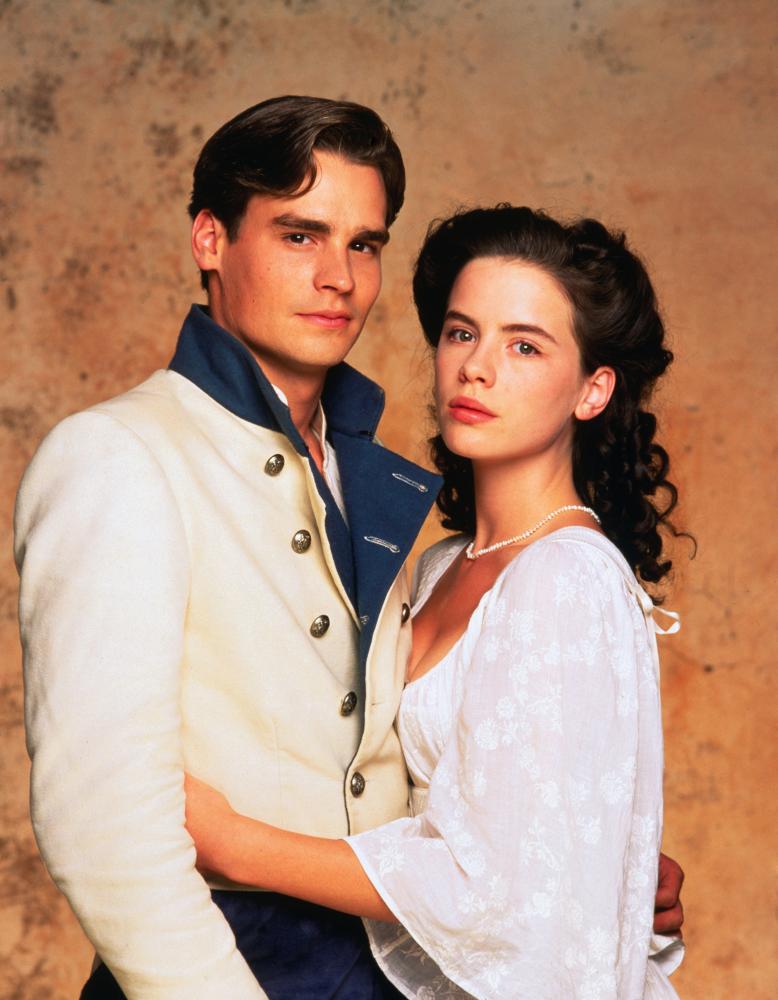
What changes their minds are the fabricated accounts of restless lust devised by their compatriots, the "noting" of which entertains powers of unlikely union to surpass Cupid. Aragon prince Don Pedro (Washington), Count Claudio of Florence (Robert Sean Leonard) and Leonato (Richard Briers), governor of the play's setting of Messina, are somehow giddier than the women in their scheming. But where there's smoke, you can count on fire: Don John (Reeves), the brooding half-brother to Don Pedro, corrals his own associates, Borachio (Gerard Horan) and Conrade (Richard Clifford), into sabotaging Claudio's impromptu nuptial with Leonato's daughter, Hero (Kate Beckinsale). One fraudulent display of infidelity causes the sun-kissed revelry to explode with raw anger and bloodlust. It is the slander of Hero that brings Beatrice and Benedick closer together, but this time out of Beatrice's demand of retribution against Claudio for his misjudgment of her maiden cousin.

Leonard, who first stood out as Perry from Dead Poets Society, is exceedingly adept at handling the dramatic and comedic requirements of the noble young Claudio. His character undergoes a lot of personality changes en route to the uplifting finale, shifting from moony to mischievous to malevolent to mournful. And yet he plays each mode with tremendous sincerity and conviction. Beckinsale, a beatific 19 years of age in her screen debut, is uncommonly wrenching during her accusatory firestorm. The supporting cast of English stage vets and Branagh regulars acquit themselves incredibly well. Briers' regal, perpetually wronged Leonato provides a solid interactive bedrock, with sparkling assistance from Brian Blessed as his temperamental brother, Antonio. Phyllida Law, mother of Thompson, also makes the most of her den mother Ursula when we get her.

The more unconventional casting decisions, however, stick out in differing ways. Denzel Washington has not been as successful in comedy as he remains in drama. The same man who excelled as martyrs against apartheid Stephen Biko and Malcolm X also wound up cheated by inferior material as early as 1981's Carbon Copy. As Don Pedro, gently forsaking his own love life out of soldierly honor, Washington demonstrates remarkable gaiety whilst retaining his reliably dignified composure. In a way, he generously underplays the role of Don Pedro so as to enhance the contributions of Emma Thompson and Robert Sean Leonard.

Alas, Keanu Reeves doesn't benefit as much as Denzel. Shirtless and in leather pants at the dawn of his discontent, he carries all the unintended peculiarity of a rawk star who is punching disastrously beyond his weight. And that's odd considering Reeves doesn't lack for cunning awareness of his limitations (as in his many effective action movie roles, from Johnny Utah to John Wick) or even basic comic timing (see here and here). Don John never becomes anything more than an obvious menace, and though I won't be as harsh on his struggles with Shakespearean prose as, say, The Critic, Reeves seems unnecessarily stolid and joyless. There's no mischief in his delivery or his countenance.

And galloping just as treacherously in the reverse path is Michael Keaton, who hasn't looked this mangy and acted this dementedly since Betelgeuse. You want to give yourself a tick bath, he's so three-dimensionally filthy. But Keaton has an irresistible panache which Branagh certainly has followed since Night Shift, and the particular brand of linguistic lunacy inherent in Dogberry ("Thou wilt be condemned into everlasting redemption for this!") cries out for a fervency which someone like Keaton, here embracing up a screwy Irish brogue, has extensively specialized in. That combination of disgustingly gonzo physicality and egomaniacally crude lawfulness doesn't make an ass out of Michael Keaton. Dogberry, forsooth; Keaton, negotiatory.

The Villa Vignamaggio of Tuscany is perhaps Branagh's biggest coup, more so than the superstar ringers. Rich in shrubbery, fountain pools and courtyards, Branagh and cameraman Roger Lanser encounter the perfect natural environment to unleash everyone's inner pixie. Though they introduce the royal soldiers on horseback in a style that is more American Western than Italian Renaissance, the sudden explosion of shower-and-swim ecstasy which follows is truly bold. Placed alongside the montage of masquerade ball jubilation, these stylistic concessions turn out to be rewarding rather than constricting, especially since so much of the movie colorfully embraces outdoor expansion. Branagh has achieved some of the most majestic long takes I have ever seen in a straightforward Shakespeare adaptation (granted, I could stand to see more).

Branagh's Much Ado About Nothing invests the deception from both sexes with sterling dramatic and comic dynamism. For every moment such as when Benedick stands idly by Beatrice in Russian mask (and hilariously thick burlesque accent) listening to her shoot him down ("She speaks poniards! And every word stabs!"), there's her solemn entreaty to Benedick to kill Claudio for his hot-blooded confusion. The same Claudio, Leonato and Don Pedro who stir amorous second thoughts within Benedick will splinter into heated confrontation when Don John's damage is done. And for all of Dogberry's illiteracy, there's still a mad fire in his eyes and earned lower-class nobility in setting things right for the broken unions. It remains to be seen how well Kenneth Branagh can marshal his resources for the parlor mystery tropes of Agatha Christie, but his phenomenal work with Shakespeare will earn him a lifetime's reception of "Hey nonny nonny."


Wednesday, August 2, 2017

Homeward Bound: The Incredible Journey + Alive + Toy Soldiers + The Good Son


HOMEWARD BOUND: THE INCREDIBLE JOURNEY
(G, Walt Disney Pictures, 84 mins., theatrical release date: Feb. 12, 1993)

Homeward Bound: The Incredible Journey first roamed as a children's book by Sheila Burnford in 1961 before Disney commissioned a live-action adaptation two years later. Both Burnford's tome and Fletcher Markle's movie hew closer to something like The Journey of Natty Gann compared to the cutesier Homeward Bound, which shares more in common with The Adventures of Milo & Otis but with a Look Who's Talking! twist. Don Ameche, Sally Field and Michael J. Fox (reportedly recast from Donald Sutherland, Annie Potts and Jon Cryer) speak the animal characters' inner dialogue in this case, a trio of happy pets forced to traverse the Sierra Vistas to reunite with their young masters.

Bulldog Chance (Fox), in spite of being rescued by the Burnfords (the central family here named after the story's author, yes), isn't the least bit serious about loyalty and more interested in slobbering havoc. Golden retriever Shadow (Ameche) and Himalayan cat Sassy (Field) have their own solemn bonds to child companions Peter (Benji Thall) and Hope (Veronica Lauren) to uphold when they're not trying to keep rascally Chance in line. But when Peter, Hope and Jamie's (Kevin Chevalia) mother, Laura (Kim Griest), remarries to schoolteacher Bob Seaver (Robert Hays), the Burnfords have to uproot to San Francisco on business, leaving the animals behind at the ranch home of Kate (Jean Smart).

It isn't long before Shadow starts fearing the worst, and flees Kate's sanctuary with Chance and Sassy towing behind him. All of the all-natural wilderness pitfalls greet them, from grizzlies and porcupines to waterfalls and forest rangers, but the furry leads are steadfastly adorable and the name-brand voice stars taunt each other with glee, specifically the pugnacious Fox and prissy Field (Mr. Ameche, in his last hurrah, convinces us of Shadow's bountiful wisdom). Chance has been beefed up considerably from the original prototype in terms of breed (no longer the button-eyed Muffy the Bull Terrier) and presence, the screenplay from Linda (Beauty and the Beast) Woolverton and Caroline (The Addams Family) Thompson, with uncredited punch-up from Jonathan (The Sure Thing) Roberts, allowing Fox's hound to out-wisecrack Arnold Schwarzenegger, referenced in the presence of a mountain lion.

More surprising is the choice of director, Duwayne Dunham, a reliable editor for David Lynch who has momentum on his side as much as the locale and the cute animals. The movie can't help but lag whenever Dunham focuses on the humans, mostly because the writers simply trot them out for melodramatic relief. A late-inning stretch at an animal control center goes the other way just as roughly. But Dunham's knack for adversity does allow for a couple of raw heart-clenchers: Sassy is swept away by a raging salt river, and the aged Shadow suffers a crueler fate due to unstable woodworks.

By that point, Homeward Bound: The Incredible Journey does leave you whimpering like Chance for the prospect of a happy ending, which is delivered on pure family-oriented terms. Having spent a year in post-production repair, Homeward Bound is undemanding, to be true (this isn't a game-changer like Babe), but with a surefire paw up on Look Who's Talking Now! or any of the Benji films (watch out for Joe Camp's credit as "animal coordinator").


ALIVE
(R, Touchstone/Paramount Pictures, 120 mins., theatrical release date: Jan. 15, 1993)

Whereas the strays of Disney's Homeward Bound cure their hunger pains via a stream of fresh fish, the survivors in Touchstone's (and Paramount's) Alive dine on philosophical and primitive red meat. Piers Paul Read's literary document of the 1972 Andes flight disaster lends itself less to feel-good perseverance than The Incredible Journey, unless I missed the part where the golden retriever was devoured whole by the saucer-eyed kitty and the spotted mutt. Indeed, an ordeal like the one experienced by the Uruguayan rugby players, God-fearing alumni of Montevideo's Stella Maris, and their extended family would've been slightly improved by having Homeward Bound's critters scurry through the snow. Knowing my Touchstone Pictures, chances are they would've encountered Sidney Poitier and Tom Berenger instead.

Actually, the leveling of Flight 571 on Friday the 13th, October 1972, is more unsettling than any Jason kill. An unforgiving cloud blinds the pilots to craggy disaster, with both wings and the tail end clipped off on collision. The dismembered aircraft slides violently to a halt, all of the passengers' seats thrusting forward to suggest a flesh-and-blood highway accident. The aftermath doesn't skimp on visceral images of women's legs pinned down by metal rods or the accompanying mania brought on by "altitude sickness." By the time the food and drink supply is rationed, only 27 out of the initial 45 boarders remain, the pilots and a dozen-plus others dead. The mantle of leader eventually shifts from team captain Antonio Balbi (Vincent Spano) to the revived Nando Parrado (Ethan Hawke, embodying this very film's technical advisor) as the situation grows further desperate.

Indeed, it is Nando who declares his budding stewardship with the immortal line: "Well, then I'll cut some meat off the pilots. After all, they got us into this mess."

Director Frank (Arachnophobia) Marshall and writer John Patrick (Moonstruck) Shanley downplay grisly sensationalism in favor of a rousing emphasis on perilous endurance. When one poor hiker sinks into the snow and the ground falls away right in front of him, it's got a charge above and beyond the call of Rene Cardona. Alive doesn't hack it as a group portrait, given the cast is predominantly nondescript even while their numbers are thinning, but Marshall and Shanley do convey the plight tougher than most disaster movies have been known to muster. For a while at least...

...Because what they cannot do is reconcile the tactful horror of the situation with the pronounced spirituality of the characters. Portentous wraparounds featuring John Malkovich as one of the athletes (we're never clear who) speak of enlightenment in the eeriest of tones. Even though guilt and "innocence" are queried as sacrificial, the direct connotation made between cannibalism and the Communion has the effect of making those corpse cuts take on the significance of altar bread. As the lone female survivor, Illeana Douglas takes no place at this Donner Party until she whimsically decides to be fruitful, but given that the one agnostic of the bunch pays for his refusal to pray, tragedy is inevitable, and curiously weightless. Collapsing in on itself despite the technical finesse, Alive makes like an Outward Bound expedition convinced it's a vision quest.


TOY SOLDIERS
(R, Tri-Star Pictures, 111 mins., theatrical release date: Apr. 26, 1991)

Ethan Hawke may be nobody's image of South American machismo, but Andrew "The Djinn Genie" Divoff is a native Venezuelan with the same hot-blooded grit as Robert Davi's Sanchez from Licence to Kill. Toy Soldiers wants to position him as Hans Gruber in this particular hostage crisis, but first-time director Daniel Petrie Jr. is frustratingly adept at cannibalizing proven action flick tropes in as perfunctory a manner possible (cf: Shoot to Kill). Co-scripting this time with David Koepp, Petrie's own "triumph of the spirit" is a Red Dawn Reform School where the unruly sons of privilege outwit heavily-armed Latino and Aryan thugs under the volatile lead of Luis Cali (Divoff), whose biggest crime is loving his own cartel-kingpin daddy a bit too much.

Sean "Goonie 4 Life" Astin, Wil Wheaton (angstier here than he was in Stand by Me) and Keith Coogan (the twice-babysat misfit, inheriting Mikey's asthma) play a thrice-expelled discipline case, the bitter progeny of a Mafioso (Jerry Orbach) and the gawky offspring of a Republican figurehead. These self-described "rejects" of the Regis academy fall in line once Luis arrives; having arrived too late to single out a judge's son for vengeance in his father's imprisonment, he blockades the campus with remote-controlled plastic explosives, rooftop snipers and all manner of military-grade firepower. Cali also devotes hourly intervals to head counts where for one missing student, five are to be executed.

Billy Tepper (Astin) leads the kiddie insurgence and manages to deliver crucial information to the authorities within one recess period. But both parental attention and Special Forces tend to stifle (in this case, fatally) young minds, so Billy and his buds, as well as two preteen electronics whizzes, risk a do-or-die attempt to diffuse the bombs and defeat the terrorists. But the only real urgency resides in Michael Kahn's proficient editing, brisker than it was in the equally-lengthy Alive so as to be on the level of his Indiana Jones assignments. Despite the ventilation shafts, clandestine confrontations and adrenaline-fueled heroism, Die Hard, this movie's closest forebear, packed a meatier punch. The youthful hunks tend to spend their free time sans pants, and it apparently made no sense for Petrie & Koepp to damage the merchandise even slightly. 

Toy Soldiers, adapted from a novel by William P. Kennedy, bears no relation to the '84 film of the same name nor does it utilize Martika's hit ballad ("We all fall down...") as Eminem eventually would. Aside from Kahn and Divoff, the film's major assets include dependable supporting turns from Louis Gossett Jr. as the stern but lenient dean and Denholm Elliott's wryly funny headmaster. And I would be remiss if I didn't say that Sean Astin does the best he can with his overbearing delinquent hero, who in one moment is subjected to corporal punishment by Cali, once a private school attendee in his teens. Spare the rod, as they say, but spoil the child by seeking out Class of 1999. Lil' Petrie still needs to learn some discipline himself.


THE GOOD SON
(R, 20th Century Fox, 87 mins., theatrical release date: Sep. 24, 1993)

What's trashier than Toy Soldiers, grimmer than Alive and fraught with more behind-the-scenes turmoil than Homeward Bound? The Good Son. Novelist Ian McEwan whipped up the screenplay in 1986 as commissioned by 20th Century Fox, but the studio balked until 1991, during which time it reached pre-Blacklist levels of curiosity. With Michael (Heathers) Lehmann attached to direct and a cast including Jesse Bradford and Mary Steenburgen, McEwan watched with growing disillusionment as Kit Culkin blackmailed Fox into casting his golden boy son Macaulay in the titular role and Lehmann was traded for Joseph Ruben, no stranger to iconoclastic star vehicles thanks to Sleeping with the Enemy, who unceremoniously brought in a friend to rewrite McEwan's script. McEwan fought to claim sole writing credit, keeping distance from the finished product on his own terms.

His is not the only disgrace. The same Joseph Ruben who crafted 1987's low-budget creeper sleeper The Stepfather only has formalism going for him here; thus, he's prematurely interchangeable with John (Pacific Heights) Schlesinger. Cajoled into rewiring his endearingly bratty image, the distressingly humorless Macaulay Culkin doesn't seem to be having as much fun as his wicked Henry Evans suggests we should. So numbingly interested in death Henry is that he seems to have stumbled out of River's Edge rather than The Omen. The adults are mindless pushovers devoid of any psychological investment, cheating us out of a revelatory performance on a par with Terry O'Quinn, Margaret Colin (cf: True Believer) or Kevin Anderson. And no matter how effectively it is lensed, Maine is so synonymous with Stephen King as to invite unfair if educational contrast (watch out for Daniel Hugh Kelly, of the movie version of Cujo, as another father on a poorly-timed business trip).

Only Elijah Wood, who for all intents and purposes is the focal character, assures us of McEwan's sullied integrity. Cousin Mark's guilt-addled devotion to his deceased mother, which he projects onto the similarly mournful Aunt Susan (Wendy Crewson), is a solid hook for a psychological fable that declares a tyke war. The mind reels as to how Joseph Ruben could've handled the material back when The Stepfather showed he could deconstruct the idea of a nuclear family, resonantly pitting '50s idealism against '80s cynicism. Repackaged for Macaulay, whose burglar-bashing Home Alone fame could have been subverted in surer hands, every malevolent misdeed, spot of profanity and vindictive overture is patently calculated. The antagonism Mark endures from Henry and his blind protectors is ludicrously contrived. And the cliff top showdown is the only point where the film spills over with juicy camp.

More than any post-Bad Seed celebration of adolescent sadism in the first degree (or even the excellent Nick Cave song written sympathetically about Cain), The Good Son stirred within me memories of David Keith's The Curse. In it, Wil Wheaton acted alongside his own real-life sibling Anne, who in her only film credit is remembered for being attacked by a coop of homicidal chickens. Macaulay's sister Quinn Culkin experiences a similar fate, as Henry tries to dispose of his last biological rival, 8-year-old Connie, by tossing her onto thin ice. Had Joseph Ruben enjoyed himself in this case, the latent dysfunction would've made for some sprightly (or is that spritely?) mischief. Alas, that old adage of resignation sets in early and never gets lifted: "Playtime's over."

Monday, June 19, 2017

The Identical


THE IDENTICAL
(PG, Freestyle Releasing, 107 mins., theatrical release date: Sept. 5, 2014)

The idea of "faith-based" entertainment is not without its virtues. Whether optimistic or misanthropic, a film instilled with some kind of moral angle can prove stimulating, if not transcendental. But the deal breaker, the most important aspect I look for, is that is has to be tangibly grounded. Capra understood this, even if one's path is blocked by the rising corn stalks. Archetypes work better with a real environment, if not other all-importants as credible dialogue or a biological allergy to arrogance. Dipping my toes into today's Christian-baiting cinema, alas, has not made me feel newly baptized.

I singled out the atrocious Old Fashioned as a ground zero offender in this movement. The rust belt condescension, its disturbing romantic doctrine and the pervasive leadenness of Rik Swartzwelder's driving hands has haunted me since first watch. But in today's culture of heightened ironic appreciation, Swartzwelder's homely regression has nothing on THE IDENTICAL. Much like the Cannon movies of yesteryear or the current crop of midnight movie figureheads, some people laugh off the unhinged shoddiness as a defense mechanism. And Dustin Marcellino has given this cult the Bible-thumping successor they've craved, knowingly or not.

You can easily deduce this as fan fiction from a church organist gone to the Land of Nod, borrowing freely from the biography of Elvis Presley as it drifts off into madcap Zionist screeds and pining for the edgeless assimilation of Pat Boone. In Howard Klausner's script, the King's mythically-stillborn twin Jesse Garon Presley survived birth and was raised as the dumbfounded adopted son of a tent show minister, breaking away from his daddy's idea of living and embracing divine career consultation. Had this been written for the secular market, the premise could have had a chance at prestige. Crafted for the modern day pulpit, it's more hysterical than the apocalyptic barrage of imagery in Nick Cave's "Tupelo."

The Identical begins in Depression-era 1935, where William and Helen Hensley (Brian Geraghty, Amanda Crew) arrive via boxcar to start a family in Decatur, Alabama. With employment not being so gainful, William picks cotton while house-sitting Helen gives birth to two baby boys. William frets over the financial woes posed by this fruitful circumstance as he takes in a sermon by Reverend Reece Wade (executive producer Ray Liotta), a traveling preacher who, in the midst of declaring "better to give than to receive," reveals his wife Louise's (Ashley Judd) infertility in a show of vulnerability. And thus the Hemsleys painfully agree to give up one of their tots to the Wades, with a shoebox burial staged for the absent Dexter Ryan Hemsley.

This child, now simply known as Ryan Wade, grows up under Reece's God-fearing tutelage and parameters. Ryan instinctively develops a love for music to where the crux of his teenage rebellion is sneaking into juke joints to hear R&B, never once smoking or drinking unlike his rowdy best friend Dino (Seth Green). But Ryan (Blake Rayne) is not the only one; his twin brother Drexel Hemsley (Rayne) heeds the same call and becomes a superstar in the process, nicknamed "The Dream." But because of their separation at birth, Ryan remains unaware of his lineage even as his resemblance to Drexel thrusts him into the limelight as "The Identical," playing Drexel's hits to audiences just as oblivious as he. It's not long until Ryan's attempts at independence finally lead him to both the secret of his bloodline and the path of righteousness.

A lot of specifics were left out of that synopsis, but it's those details which turn this potentially engrossing film into a ridiculous pretender. Begin with one of the most unavoidable topics: the American South in the 1950s. Were dusk-till-dawn road houses there really alive with the sound of black music back then? Did we achieve integration that easily and civil rights was never an issue again? Isn't it odd that the stereotypical redneck officer makes more of a fuss over Ryan than the people who had every right to fear for their safety at this point in time? When Elvis burst onto the scene, it was inflammatory to both sides of the racial divide, whereas scandal is scrubbed clean away in The Identical. There's even a couple of stereotypical mammy surrogates (a house maid, a nurse's aide) thrown in mindlessly.

Putting aside that revisionism in the name of "alternate reality," it's amazing how much Elvis is in this movie, which couldn't be more anti-Elvis if Michael J. Fox played a supporting role. Rather than try a different tack for Ryan and Drexel's musical awakenings, Marcellino & Klausner lift all the basics from the Elvis Presley timeline. There are impromptu concerts while in the Army, recording sessions in a faux-Sun studio, a private getaway called Dreamland, and even a kitschy beach blanket pastiche called "Sunrise Surfin'" which was done better in Top Secret! In fact, since the King's music remains out of the producers' reach, the original soundtrack tries for facsimiles of the classic Elvis sound that are nowhere near as uncanny as when Val Kilmer sang "Straighten Out the Rug." Drexel Hemsley is even spiffed up Jim Morrison-style in his later years, and he's still no huckleberry let alone Mr. "Hound Dog."

And yet, in a pivotal scene where Ryan shuns his Drexel-impersonating fame on the grounds of not being able to work in his original songs, Klausner has the irate manager scream "There's only one Elvis!" This is easily the most hilarious line in the movie, especially considering Drexel and Ryan are played by Blake Rayne, who we all know was cast for his striking resemblance to Fabian. No, Rayne is actually the screen name of Ryan Pelton, an Elvis impersonator who gets to parlay his act toward leading man stature. An identical playing an identical of an identical…of an identical.

Not that Rayne is given a chance to channel Elvis in any way but appearance's sake. The real life dichotomies of the once-in-a-lifetime singer of both "One Night" and "In the Ghetto" are glossed over to focus on Ryan's blandly overfamiliar growing pains. This allows not only for the pervasive chasteness and multi-periodic anachronisms, but also for Dustin Marcellino and his extended clan (including father Yochanan, who plays a record executive whose label boasts the same name as his production company, City of Peace) to work in a more Judeo-Christian angle than expected. The first clues are there in that Depression prologue, in the dialogue and design. By the time it's rendered explicit with a messianic lecture about the Six-Day War, such a quirky tack fades away to reveal yet another "faith-based" movie where the inspiration doesn't merely take a back seat to the agenda, but is pushed out of the car and off of the bridge.

The Identical is a hard movie to fully hate, which is a blessing in itself compared to Old Fashioned. I am touched by certain themes of reconciliation (watch for Chris Mulkey in a minor role) and uncertainty which play out in the arc of Ryan Wade. Ray Liotta, undergoing an unintentionally non-flattering aging process, convinces richly in several emotionally-charged scenes even though a couple, like when he holds infant Ryan in his arms on a dark night, are irredeemably hammy. And as a black sheep myself, I am open to a story about distanced siblings who never get the chance to truly unite. The highlight of The Identical is a genuinely moving scene where Ryan sneaks into the hospital room of his gravely ill birth mother and serenades her in a way that reminds her just enough of the boy she raised. Coincidentally, it's the sole time any of the overreaching original songs works in any scene.

But there's not a whole lot of struggling going on with Ryan, who should've been written and acted to be less of a nonentity. Marcellino's promo clip style favors senseless montages and repetitive musical cues at the expense of real engagement. At one point, Drexel appears at a contest to judge his own best impersonator, Ryan being the clear shoo-in. With the passing of Helen Hemsley and Ryan being told non-stop of his resemblance to Drexel (including from Joe Pantoliano's saintly mechanic), the stage is set for resonance which Marcellino doesn't capitalize on. Blake Rayne is just striking overrripe poses in his self-confrontation. The incident doesn't have any bearing afterwards, even as tragedy strikes from all sides.

These melodramatic contortions are made worse by the narration, which we come to learn very belatedly is voiced by the character of Jenny (Erin Cottrell), Ryan's sweetheart who lives up to her name by hopping in and out of the narrative to help this rock-n-rolling Forrest Gump believe in love. On screen, Jenny does precious little except join the gallery of subservient wives alongside Ashley Judd and Amanda Crew. Speaking aloud, Jenny is even more worthless, an insufferable vessel for solemn homilies, wishy-washy historical accounts and even repeating verbatim lines of dialogue spoken seconds prior. When Reece tells his wayward son "it's time to grow up and start being a man," it's terrible strategy to have the narrator parrot it from her POV.

Despite the involvement of Liotta, Pantoliano, Judd, and lifetime adolescent Seth Green (the Robot Chicken lampoon of his involvement here is preordained), The Identical is as cut-rate as they come. There is indeed only one Elvis, and no amount of innocuous plagiarism can erase that, let alone such pitiful tunes as "Boogie Woogie Rock and Roll," "Nashville Tonight" and "City Lights." I could easily re-christen this The Imitation for sarcasm's sake, but I deeply anticipate a RiffTrax commentary to take care of that for me. Indeed, The Identical may just be manna from heaven for guilt-free fans of Grease 2 or The Apple. Everyone else can leave the building.

Wednesday, May 31, 2017

Porky's II: The Next Day + Old Fashioned + 'I Know Where I'm Going!'

PORKY'S II: THE NEXT DAY
(R. 20th Century Fox, 98 mins., theatrical release date: June 24, 1983)

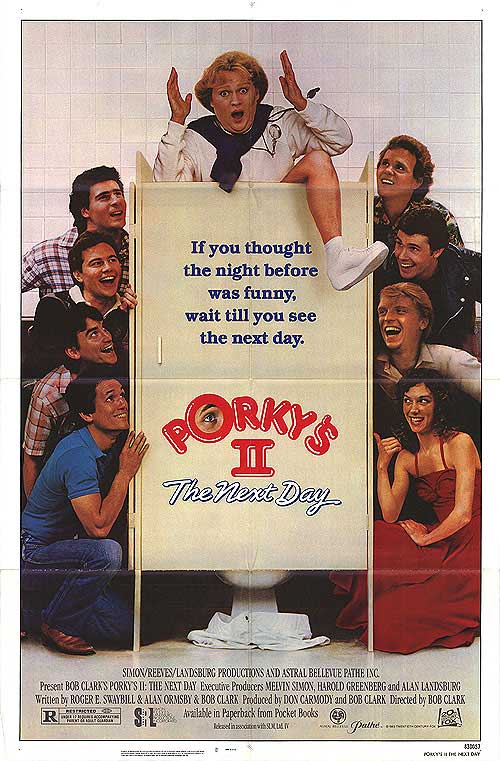
Beyond epitomizing the teen sex farce when it became the surprise hit of 1982, Porky's may also be the definitive prankster comedy of its decade. The problem many had at the time was that those japes were mostly at the expense of females, with the safest male target being Pee Wee, the gullible runt with the bird chest and growth chart. Making a sop to social consciousness in the presence of Jewish teen Billy and his pitiful antagonist Cavanaugh, such finger-wagging mired the hormonal momentum, especially with Lassie and the Shower Scene around the bend. In the meta-defensive Porky's II: The Next Day, the victimizing mantle shifts from Billy (Scott Colomby), who now takes greater part in the foolishness, to John Henry (Joseph Running Fox), the Seminole student on the sidelines who has been cast as Romeo for a Shakespeare-themed class project. Before you can say "Moral Majority," along comes a much wider net of deplorables (religious fanatics, graft-crazed commissioners, Klansmen), alongside bad ol' Balbricker (Nancy Parsons), for Angel Beach's resident miscreants to catch with their pants down.

Bob Clark, whose A Christmas Story was waiting for the coming winter, is somehow operating even broader than the last sty, Not only is the prejudice subplot here a nonentity, but Porky's II doesn't climax so auto-destructively, instead allowing the girl to have all the fun. She is, naturally, Wendy Williams (Kaki Hunter), the one whom the boys all say is the campus bicycle but actually takes a shine to Pee Wee Morris (Dan Monahan). Not that their consummation on the bus has done much for his incredulity, as his attempt to settle the score for that Cherry Forever incident goes very familiarly wrong. Her confessional doesn't even dissuade Pee Wee from leveling the same unfounded suspicion towards a band geek immediately afterwards. But away from their peers, Wendy does talk more sense than the interchangeable sausage party. Even Billy (Mark Herrier), cast as "big fairy" Oberon, has to play straight man to his moronic buds, although you can still count on Meat (Tony Ganios) to thrust his lower weight even while in tights.

Luckily for Clark (and his two fellow writers, including longtime collaborator Alan Ormsby), the uptick in amiability offsets the exaggerated arrogance and hypocrisy of their straw enemies, chief among them Reverend Flavel (Bill Wiley), who tests even the timid principal's (Eric Christmas) patience when they trade indecent passages from both the Bard and the Bible. It doesn't freshen the smutty humor, recycled beat for beat from its predecessor, or encourage Clark to direct with a lighter touch. But like the original, there are a few undeniable elements which escape Clark's belaboring expertise, from the abovementioned literature slam to an impromptu replacement for Billy's defective sword to Wendy's show-stopping jailbait incrimination scheme. Stirring greater havoc with gag boas and breasts in a five-star restaurant than the boys do by scalping and stripping the Kartoon Klan, Kaki Hunter obliterates the subgenre's rosy-palmed loyalty to the He-Man Womun Oglurs Club.


OLD FASHIONED
(PG-13, Freestyle Releasing, 115 mins., limited release date: Feb. 6, 2015)

Beware the kind of quaint romance pitched at the intellectual capacities of Reverend Flavel and the Angel Beach boors. Porky's II painted its barn-door strokes in a manner that suggested Bob Clark reeling from the critical smack downs of his earlier smash. Old Fashioned was released on Valentine's Weekend 2015 as a Christian-friendly alternative to Fifty Shades of Grey, despite the whips-and-chains eroticism in the mainstream being no less passé than the amateur pornography, sexist radio DJ and Manic Pixie Dream Girl used to spice up its spiritual contender. Whatever the opiate of the masses, Rik Swartzwelder is oblivious to the naked truth that his ideals of courtship are as toxic as the Stephenie Meyer/Marquis de Sade drivel he's rebuking. And it's not like he is witty enough to make like Wendy Williams and quote the wisdom of Groucho Marx to mitigate his autumnal frostiness.

Clay Walsh (Swartzwelder) is basically to his sleepy Ohio town what Johnny from the The Room was to his San Francisco burg, although he dabbles in antiques rather than accounting. And Clay's a reactionary scold with serious intimacy problems, which he tries to sermonize as an Abstinence Pledge. So when runaway eccentric Amber Hewson (Elizabeth Roberts) rents the room above his carpentry shop, the frigid Clay tests his domineering philosophies in his courtship of Amber. When her stove breaks, she is sent outside until Clay has finished maintenance. Clay consults a needling, traffic light-themed guide book to determine their compatibility during their dates. He even tests Amber's efficiency in slicing up pears into baby food. Swartzwelder wants us to believe these are gateways to true love, yet the vacant chemistry between these opposites and Clay's validated self-righteousness allows for Swartzwelder to recoil from romance as much as he does sexuality.

Drearily formulaic when it's not transparently demagogic, Old Fashioned slogs on for nearly two arduous hours on rote "boy loses girl" drama, tedious moments of solitude, lifeless side characters with no bearing on any of the plot (including Clay's elderly aunt and third banana black friend), and numerous heavy-handed, one-sided potshots against modern day impurity. Not that references to silent movies and Sleepless in Seattle in any way justify the stultifying portentousness. It's the vanity that kills: Swartzwelder writing clunky dialogue (read: worst proposal ever), deifying himself in the name of "folksiness" and looking/acting like a suicidal Jeff Daniels clone is a lousy advertisement for chivalry. I came into Old Fashioned hoping for innocent erotomania and was rewarded instead with passive-aggressive egomania, a love story whose target audience I imagine composed solely of now and future cat ladies (perky doormat Amber included) and dog dudes.


'I KNOW WHERE I'M GOING!'
(Unrated, Universal Pictures, 91 mins., U.S. theatrical release date: August 9, 1947)

You want old fashioned? Go right to the source. 'I Know Where I'm Going!' is every pound and pence the charmer Swartzwelder's spew isn't. Michael Powell & Emeric Pressburger rapturously weave folkloric imagery and local color in a wartime tonic that still plays on the heartstrings 70 years later. Having demonstrated forward motion ever since infancy, Joan Webster (Dame Wendy Hiller) takes the next leap by marrying into wealth. This means trekking out to Kiloran, an island on the Scottish Hebrides, to wed Lord Bellinger, thereby getting hitched to his Consolidated Chemical Industries in the process (a notion made even more hilarious in dreamtime). An impenetrable fog and furious gale winds sidetrack Ms. Webster from boarding the last boat to her destination, so she is stuck on the Isle of Mull in the raffish company of naval administrator and Kiloran laird Torquil MacNeil (Roger "Colonel Blimp" Livesey).

A bond develops between Webster and MacNeil as they gaze out from across-the-way windowsills, take separate places at lunch tables and eavesdrop on a Ceilidh, a Gaelic wedding anniversary jamboree. The Archers (Powell & Pressburger) are more enraptured with the scenery and its well-drawn inhabitants than setting an agenda or spelling out the unlikely union until where it counts, in a surprise finale where a curse on MacNeil's family is confronted head-on by the wary laird. Along the way are such "magical realist" touches as the phone booth nearby a crashing waterfall, the fantastical use of model trains navigating the Tartan hills to bridge Webster's journey and, most awesomely, a treacherous whirlpool nicknamed Corryvreckan.

Hiller and Livesey, both invaluable, flesh out their roles to match Erwin Hiller's singularly evocative cinematography (locations scouted by Powell himself), with Webster less of a grating stock socialite and more a wayward dreamer who can count beams on the ceiling to achieve her prayers but could stand to count her blessings. MacNeil is princely in all the right ways, too, discerning the difference between being poor and having no money. The Archers also show impeccability in casting such secondary players as Pamela Brown (as Catriona Potts, a lonely bride who shepherds goats and skins rabbits with ease), C.W.R. Knight (as Col. Barnstaple, a proud falconer who names his prize eagle after MacNeil) and George Carney as Joan's father/banker, who is about the same age as Lord Bellinger (heard briefly in the voice of Norman Shelley). There's even a wee Petula Clark as a studious girl who reflects Webster's headstrong qualities.

'I Know Where I'm Going!' got lost in the shuffle among the Archers' more ambitious productions (even Scorsese didn't get around to it until he was in the midst of Raging Bull), but it tames the wild appetite for intelligent, tactful and wistful romance in a way most of today's Hollywood pictures as well as their opportunistic faith-based indie ilk cannot. Take the highland over the low, and you'll get to paradise before thee.