Showing posts with label 1993. Show all posts

Friday, December 1, 2017

The Crush + The Hand


THE CRUSH
(R, Warner Bros. Pictures, 89 mins., theatrical release date: April 2, 1993)

There's an old maxim about horror movies and thrillers where one's enjoyment is directly proportional to the grandiosity of the villain. How many of the most beloved hair-raisers can you recall which were as good as their principal antagonist? Die Hard remains a towering inferno of a popcorn pic largely because of Alan Rickman's deceitfully debonair Hans Gruber, whose propensity to praise designer suits in one moment and then blow someone's brains out the next brought out the fiery urgency in the equally interesting hero, John McClane. In the Line of Fire worked a similar magic between Clint Eastwood and John Malkovich (Cyrus the Virus, anyone?), and who can forget Hannibal Lecter even after all those inferior spin-offs? There's even poker-faced appreciation of such slasher behemoths as Freddy, Jason and Leatherface, mythical characters who were never meant to be relatable to in the first place. The Crush wants to be on that plain so badly, you can hear writer/director Alan Shapiro's back snap like chilled celery at his self-elevation. 
His anti-heroine is certainly a familiar type even by the lax standards of 1993, where Drew Barrymore graduated to femme fatale (cf: Poison Ivy) and Amy Fisher was a gossip rag fixture. But what really got me interested in revisiting The Crush reaches past an entire decade prior to Shapiro's film (and the year before my birth date), way back when a TV movie called Summer Girl premiered on CBS. That Diane Franklin vehicle casts a large shadow over every and all subsequent film I will ever see involving a teenage girl whose sexuality is so sociopathic, it threatens to expose the adult victims as even more childish than their adolescent tormentor.

And thanks to Shapiro, I've never felt more confident about such a generalization in my entire life, because The Crush is just that shallow.

This has nothing to do with nostalgia in regards to Alicia Silverstone, who rode MTV's gravy train to It Girl super-stature on the back of this film. Surely, I can remember seeing Aerosmith's string of Get a Grip video singles ("Cryin‘" and "Crazy" and "Amazing") knowing full well that the blonde starlet anchoring them was the joint winner of the network's trophies Best Breakthrough Performance and Best Villain for her portrayal of  "Adrian" Forrester. And I grew up watching Silverstone's career reach the heights of Clueless and plumb the depths of Batman & Robin. And once Blast from the Past with Brendan Fraser came and went, so did Ms. Silverstone, making way for Reese Witherspoon and fading into the ether of '90s kid memories just like Diane Franklin at the end of the '80s.

More important is that The Crush occupies that nutty boom in Hollywood post-Fatal Attraction involving that most programmable of stock villains, the Deranged Interloper. I saw it in Pacific Heights, The Good Son and a dozen other movies involving crazed lovers, roomies, policemen, and nannies. There was hardly anything subversive about them except for their vocation, concocting cheap paranoia among the upwardly-mobile who had every reason to believe their temp secretary or their fruit-of-the-loom progeny were out to get them. The Crush is the jailbait-next-door equivalent of those films, and as good a reason as the death of the music video to feel upset stomach at the rise of MTV as pop culture gatekeeper.

Alicia Silverstone's first-time luck is certainly more fascinating than anything in The Crush, including the central character. While MTV and Fangoria latched onto her star, nobody in 1993 was singing the praises of Cary Elwes, not even with the forthcoming release of Mel Brooks' Robin Hood: Men in Tights, a deliberate echo of the goofy charm Elwes demonstrated in The Princess Bride. The Londoner was instead saddled with one of the weakest lead roles in cinematic history, his "hero-victim" Nick Eliot being the epitome of complicit dullardry. A bespectacled milquetoast and journalistic writer of the teensiest skill evident, Nick nevertheless cruises out to Seattle once hired for Pique magazine, a coastal tabloid whose managing editor (Matthew Walker) thinks his investigative talents are esteemed enough to land an interview with a notorious embezzler. He finds suitable living and working residence in the guest house of Cliff and Liv Forrester (Kurtwood Smith, Gwynyth Walsh), but nearly mows down their 14-year-old daughter Adrian before setting one foot on their property.

Nick's apparent detriments of intuition and acclimation come into greater focus once Adrian starts making her play on the dopey if handsome writer. No review would be complete without mentioning that Silverstone's character was named Darian when the movie initially circulated, based on a genuine underage suitor Alan Shapiro had the misfortune of attracting. The real life Darian's parents threatened to sue James G. Robinson, thus the name was changed to protect the guilty for subsequent television and home video releases, including its BD debut from Shout! Factory. Soundalike actors dubbed all instances of the name "Darian" and an obvious insert appears at one point, although those who still have eagle eyes at the end will notice one slip. And the theatrical trailer has yet to be tampered with, either on disc or YouTube.

Anyway, "Adrian" (quotes will be dropped as long as you know who I'm actually referring to) is half of Nick's 28 years and the Valley Girl as bookish overachiever, with advanced knowledge of entomology, equestrianism and classical piano performance. It's hard to watch The Crush in any format and not see Cher Horowitz shoehorned into the role of a lonely, disturbed prodigal child, albeit one with a truly Californian hardbody Shapiro ogles in scantily-clad close-ups to the tune of Auto & Cherokee's "Taste," which was previously heard in the end credits of Stay Tuned minus the female moans. This happens after she has stolen a kiss and sucked Nick's fingers whilst assuring him "Don't be afraid of me." She even calls him up to taunt him with the phrase "I got my period," getting a rise out of Nick despite no actual puppy sex going on.

Teasing is the nature of Adrian's game, as when Nick sneaks into her bedroom looking for a missing photograph and hides in her closet while she disrobes for a bath. He bumbles further, she turns around and flashes him full frontal with a grin. Making a break for the front door, Nick is greeted by Cliff Forrester, who takes him up to the attic where his failed childhood present, a restored carousel, sits in neglect while he does the usual possessive daddy shtick with a pair of pliers. Forget about the name change: this doting fruitcake of a father alone seems more like a lynchpin for legal matters. No wonder Kurtwood Smith's insult of choice on That '70s Show was "dumbass."

When voyeurism fails to sway him, Adrian gets really steamed and scratches an obscene word onto Nick's snazzy car. Having screwed herself out of any future acts of endearment, she erases the floppy disk containing his deadline interview with the reclusive embezzler after having successfully rewritten his previous article. In the single most ludicrous moment of this consistently overheated film, Nick realizes Adrian's sabotage during a staff meeting, drives all the way back to his house, calls out for Adrian, wanders into the girl's candlelit shrine to him in the basement, gets duly creeped out, seals up the basement with hammer and nails, rewrites the entire article from memory whilst ignoring Adrian's desperate phone calls, drives all the way back to the office, and arrives with his salvaged article well before sundown. We see that Nick had asked his photographer girlfriend Amy Maddk (Jennifer Rubin: A Nightmare on Elm Street 3: Dream Warriors, Screamers) to stall for him, and I can only assume that she performed the same trick Winona Ryder used to wow the troops in South Park: Bigger, Longer and Uncut.

Nick sleeps with Amy, who is then attacked in her bolted-up darkroom by a hive of wily bees...erm, wasps (?) fed through her air duct in a plastic bag but reappears at the end looking just as Karen Duffy-ish as ever, if not more so. Adrian also promptly arranges the horseback "accident" of her best friend Cheyenne (Amber Benson) when she sees her attempting to warn Nick somewhere more private. Only after Nick is evicted, fired and arrested on a sexual assault charge does Cheyenne, who was clearly out of the hospital before his disgraces (and why didn't he visit her there?), does she confess to Adrian's murderous past in time for her to be tied to Mr. Forrester's prized merry-go-round for a predictably vicious, slow motion-enhanced climax. You see what I mean about the previous paragraph highlighting the film's piece de ridicule?

There will be those in the bottom-feeding world of online critics who will tell you The Crush succeeds on some dubious camp level. Don't bother. Not only does Alan Shapiro, who previously toiled in Disney's made-for-TV wing, fail to measure up to the entertainingly lurid gaslighting and dementia found in Summer Girl let alone the rabbit-stewing tension of Fatal Attraction, but The Crush is far less provocative and sexier than David Fincher's music video for Billy Idol's 1990 hit "Cradle of Love." For all her deliberate Lolita poses, Adrian emerges as another somnambulant psychotic akin to Macaulay Culkin from The Good Son. And the exceedingly passive and bland Nick is a torpid substitute for Humbert. Romanticism is evoked through another literary staple, Emily Bronte's Wuthering Heights, both physically (a poster for the 1939 William Wyler movie adaptation) and verbally, but the contributions of first-rate cinematographer Bruce Surtees and veteran suspense composer Graeme Revell are staggeringly unambitious, tailored as they are to Shapiro's prevalent crassness.

If his autobiographical elements are to be believed, The Crush is at once embarrassing and reprehensible. Nick is a hack writer whose work is improved by the proofreading of a 14-year-old girl and who, for all his supposed snooping credentials, can't even creep inside her house without acting the fool. He seems completely devoid of moral confidence let alone common sense (these have to be voiced by Jennifer Rubin, who makes the best of her ancillary love interest role), cloddish qualities unbecoming of a mature professional and which hinder any genuine sympathy for his mounting plight. Cary Elwes' faltering American accent attests to the lack of real sophistication in Shapiro's handling of this mild-mannered victim. 

Adrian functions in a psychological vacuum just as well, nothing more or less than a vindictive brat whose fanatical devotion to Nick is, as is often the case with these movies, skin deep. Proffered as sumptuous virgin flesh ("You can taste it if you want"), Shapiro fails to establish Adrian as a social misfit from an wealthy if unhappy family and instead ratchets up the pout-lipped pathology to numbing indifference. She's a prurient sop to male vanity who makes a handy punching bag knowing you're too stupid to match wits with her. And because Elwes and Kurtwood Smith are that dense, it's naturally appalling to see Adrian taking a hit which sends her literally flying across the room.

But don't worry about a thing. Adrian gets such great psychiatric care, they don't even straitjacket her so as to prevent her from writing letters to the man whose life she tried to ruin. And there's a friendly staffer who keeps the cycle intact for the open ending. At which point, I mourned tearfully not for the direct-to-video which never was, but for the Channel Awesome episode that remains to be seen.


THE HAND
(R, Orion Pictures/Warner Bros. Pictures, 104 mins., theatrical release date: April 24, 1981)

Oliver Stone's The Hand comes with an equally auteur-minded reputation for having aired some deep psychological sludge from the toxic waste barrel of the mind. To be fair, Stone (already having won an Oscar for his script for Midnight Express) is working from a Marc Brandel novel, The Lizard's Tail, whose bitter aftertaste was too strong not to fester into the movie adaptation. And given the choice between The Hand and The Crush, I'll take Oliver Stone over Alan Shapiro in a millisecond. He directs Michael Caine to an edgy, volatile extreme that is more grounded yet cheerfully over-the-top than Alicia Silverstone was allowed. Tinges of honest humor shake up the nastiness, especially when Caine's Jon Lansdale, a displaced comic strip creator, pounces on a lucrative teaching engagement only to wind up in California's closest equivalent to Hicksville, with its redneck bar, doltish students and woodsy cabin home raring to fall down around his ears.

Sadly, The Hand has a ridiculous plotline of its own and even shakier execution that draws more from classic creature features than contemporary baby boomer thrillers. A dispute between Lansdale and his unfulfilled wife Anne (Andrea Marcovicci) over her relocation to New York is settled prematurely by the accidental severing of Lansdale's right hand. The appendage is lost in the nearby grass field, and Lansdale finds his career takes a similar nosedive given he's no longer able to draw anymore. His burbling resentments are reciprocated by the missing hand, which goes about killing those who have angered him. These murders proceed even after Lansdale relocates to his professor gig, and come Christmastime with his family (also including Mara Hobel from Mommie Dearest as the Lansdales' daughter), he's dreading Anne's killing at either his loose hand or its mechanical replacement.

David Cronenberg made his name on a similar demonstration of biological revenge with The Brood, but Stone gets it started only to shut it down with attack sequences worthy of Ed Wood and a mean streak at the expense of fleshing out a juicy pulp premise. It's not required that a film about a repressed man's seething anger over his dippy wife's yoga fetish and his comic strip's unauthorized overhaul try to be tactful, since it does achieve a slow-burning cauldron of rage deserving of spillage. When Annie McEnroe (Beetlejuice, Howling II) as lustful local girl Stella Roche, a checkout clerk who plays teacher's pet in a fit of boredom, gets strangled by Thing for her carnal indiscretions, it's like...sheesh, the slasher movie lives. 

The sentient hand restrains itself by not wrapping its rotting fingers around the neck of Charles Fleischer as the opportunistic "collaborator," David Maddow, who essentially overthrows Lansdale with the blessing of his agent, Karen Wagner (Rosemary Murphy). This makes Stella's demise seem all the more queasy and sexist, especially given Lansdale's grudge against Anne's self-help guru, a stereotypically fruity sensitive man. Caine's egomaniacal loner operates on a level of mental darkness that doesn't mesh with the B-movie revelation that he may himself be the real killer, an expository dump which falls upon the lovely Viveca Lindfors, guest appearing as a psychiatrist and who is as welcome here as in Creepshow and The Sure Thing.

Oliver Stone sacrifices himself by playing a drunken vagrant whose laughably convulsive death scene is made worse by the lack of a zipper on the front of his hobo pants. Needless to say, this doesn't mitigate the bilious disappointment of the ensuing movie, which doesn't earn all of its male pattern paranoia. Michael Caine, for what it's worth, remains a class actor who brings measured intensity to his character and who isn't as shouty as The Hand's reputation suggests. He did more braying in the opening scenes of Deathtrap, a better film but also a more deliberately stagy one. My own memory of The Hand is inexorably tied to viewing it Joe Bob Briggs' late night cable show MonsterVision, where the drive-in critic was caught off guard by faulty censorship during Caine's most vulgar dispute between him and Andrea Marcovicci (The Stuff, Jack the Bear). What better endorsement can you give Caine's work other than the fact that the folks at TNT were so invested in Lansdale's meltdown that they let a couple of four-letter words slide? Top that, Vincent Canby!

Stone bettered himself easily once he finally got to direct Platoon (again for Orion Pictures) and Born on the Fourth of July, projects which needed an intriguing failure like The Hand and a couple of sideline gigs for Milius and De Palma to attain some gravity as well as the all-important greenlight. The Hand tries for atmosphere even during its requisite POV shots and it all leads to nothing. At least here, as opposed to The Crush, tech levels appear to have more finesse. Can you imagine an effects team including Carlo Rambaldi, Stan Winston and Tom Burman giving it the college try? James Horner on the soundtrack, Richard Marks' editing prowess and J. Michael Riva doing the production design? Bruce McGill and Tracey Walter in supporting roles? That's my idea of Hollywood catnip if there I ever imagined such a brand.


Tuesday, October 24, 2017

Much Ado About Nothing (1993)


MUCH ADO ABOUT NOTHING
(PG-13, The Samuel Goldwyn Company, 111 mins., theatrical release date: July 2, 1993)

"Sigh no more, ladies/Sigh no more/Men were deceivers ever," intones Lady Beatrice (Emma Thompson) as the most empathetic bachelorette in literary history. As merry as the day is long, this particular Shakespearean shrew is anything but a buzzkill. She's cheerfully enamored with her own wit and belligerence, firing tart-tongued arrows at the foundation of love but with a radiant beauty and self-security to make rewarding her eventual thawing. The witnesses to her unmarried ramblings, namely her uncle Leonato and cousin Hero, can see the guarded sexiness as much as we do. Ditto Benedick (Kenneth Branagh), full of himself and his own theoretical freedom from the silly games of courtship. They aren't opposite numbers by a long shot, and once Signor Benedick did in fact shoot the "false dice" in what they both consider the craps game of amore. They're simply the wiser, wiseacre parallels of naïve youth and familial matchmaking which has everyone Much Ado About Nothing.

Kenneth Branagh's forthcoming return to the big screen with Murder on the Orient Express compelled me to go back into the scrapbook of teenage memories, where I once played Leonato in a high school production of the Bard's gift to romantic tragicomedy. And where I was first acquainted with the 1993 screen version despite a passing awareness of Branagh as the contemporary revivalist of Shakespeare's work. It was a kick to see the queen of this Apache Junction Glee Club play mush-mouthed, addle-brained constable Dogberry, and there was one tall handsome man who gave Keanu Reeves a run for his goatee as Don John the Bastard. I must have had some inkling of an old man's dignity to wind up a Leonato instead of a Verges, but knowing what I feel now, I sure do wonder if my heart betrays my thirtysomething stature. I don't need spirit gum anymore to cultivate facial hair.

That's another story. Much Ado About Nothing was, in Branagh's own words, a present to teachers in that it had enough cleavage and tight trousers to get modern students to sit still and pay attention. What it also had was star power akin to another American Playhouse offering I reviewed earlier, Bloodhounds of Broadway. That one, if you don't remember, was a Damon Runyon pastiche which accommodated Madonna, Matt Dillon and Randy Quaid among others. Branagh's pedigree was enough to land Michael Keaton, Denzel Washington and [ahem] Keanu Reeves. Luckily, Much Ado About Nothing doesn't have the troubled post-production of Howard Brookner's unheralded period piece. More fortunately, Branagh does true justice to his source in the scenery, his direction and some of the principal performances.

Casting himself and his former wife as the sparring loners, Branagh relishes the bawdy wit and poetic dialogue enough to renew interest in such an academic and thematic mainstay. He finds the earthly slapstick and ribald repartee within the text almost effortlessly. The real test is of characterizing the combatants to the broader mass without sacrificing loyalty. Benedick, the owner of those "false dice," is not merely a card but a full hand of conflicting thoughts; Beatrice is a 17th century diva who has to come to terms with her range of desires as much as Benedick. The union of these two is combustible, and very hilarious, but their moments in isolation are handled just as wittily. Having grown up with John Cusack movies, I've been conditioned enough to delight in the way Branagh as Benedick prides his own individualist intelligence only for his heart to outsmart him, causing him to reframe his verbal cunning in a lighter capacity ("The world must be peopled!"). And when Thompson bursts out of her cocoon, her smile is pasted on the viewer‘s face.

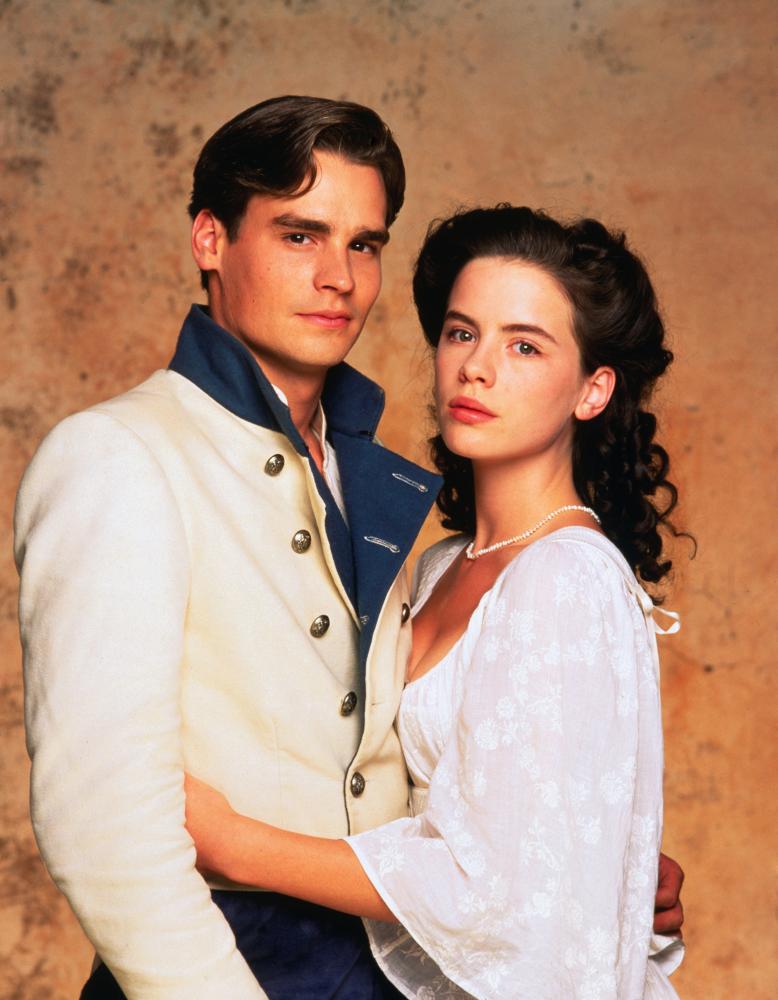
What changes their minds are the fabricated accounts of restless lust devised by their compatriots, the "noting" of which entertains powers of unlikely union to surpass Cupid. Aragon prince Don Pedro (Washington), Count Claudio of Florence (Robert Sean Leonard) and Leonato (Richard Briers), governor of the play's setting of Messina, are somehow giddier than the women in their scheming. But where there's smoke, you can count on fire: Don John (Reeves), the brooding half-brother to Don Pedro, corrals his own associates, Borachio (Gerard Horan) and Conrade (Richard Clifford), into sabotaging Claudio's impromptu nuptial with Leonato's daughter, Hero (Kate Beckinsale). One fraudulent display of infidelity causes the sun-kissed revelry to explode with raw anger and bloodlust. It is the slander of Hero that brings Beatrice and Benedick closer together, but this time out of Beatrice's demand of retribution against Claudio for his misjudgment of her maiden cousin.

Leonard, who first stood out as Perry from Dead Poets Society, is exceedingly adept at handling the dramatic and comedic requirements of the noble young Claudio. His character undergoes a lot of personality changes en route to the uplifting finale, shifting from moony to mischievous to malevolent to mournful. And yet he plays each mode with tremendous sincerity and conviction. Beckinsale, a beatific 19 years of age in her screen debut, is uncommonly wrenching during her accusatory firestorm. The supporting cast of English stage vets and Branagh regulars acquit themselves incredibly well. Briers' regal, perpetually wronged Leonato provides a solid interactive bedrock, with sparkling assistance from Brian Blessed as his temperamental brother, Antonio. Phyllida Law, mother of Thompson, also makes the most of her den mother Ursula when we get her.

The more unconventional casting decisions, however, stick out in differing ways. Denzel Washington has not been as successful in comedy as he remains in drama. The same man who excelled as martyrs against apartheid Stephen Biko and Malcolm X also wound up cheated by inferior material as early as 1981's Carbon Copy. As Don Pedro, gently forsaking his own love life out of soldierly honor, Washington demonstrates remarkable gaiety whilst retaining his reliably dignified composure. In a way, he generously underplays the role of Don Pedro so as to enhance the contributions of Emma Thompson and Robert Sean Leonard.

Alas, Keanu Reeves doesn't benefit as much as Denzel. Shirtless and in leather pants at the dawn of his discontent, he carries all the unintended peculiarity of a rawk star who is punching disastrously beyond his weight. And that's odd considering Reeves doesn't lack for cunning awareness of his limitations (as in his many effective action movie roles, from Johnny Utah to John Wick) or even basic comic timing (see here and here). Don John never becomes anything more than an obvious menace, and though I won't be as harsh on his struggles with Shakespearean prose as, say, The Critic, Reeves seems unnecessarily stolid and joyless. There's no mischief in his delivery or his countenance.

And galloping just as treacherously in the reverse path is Michael Keaton, who hasn't looked this mangy and acted this dementedly since Betelgeuse. You want to give yourself a tick bath, he's so three-dimensionally filthy. But Keaton has an irresistible panache which Branagh certainly has followed since Night Shift, and the particular brand of linguistic lunacy inherent in Dogberry ("Thou wilt be condemned into everlasting redemption for this!") cries out for a fervency which someone like Keaton, here embracing up a screwy Irish brogue, has extensively specialized in. That combination of disgustingly gonzo physicality and egomaniacally crude lawfulness doesn't make an ass out of Michael Keaton. Dogberry, forsooth; Keaton, negotiatory.

The Villa Vignamaggio of Tuscany is perhaps Branagh's biggest coup, more so than the superstar ringers. Rich in shrubbery, fountain pools and courtyards, Branagh and cameraman Roger Lanser encounter the perfect natural environment to unleash everyone's inner pixie. Though they introduce the royal soldiers on horseback in a style that is more American Western than Italian Renaissance, the sudden explosion of shower-and-swim ecstasy which follows is truly bold. Placed alongside the montage of masquerade ball jubilation, these stylistic concessions turn out to be rewarding rather than constricting, especially since so much of the movie colorfully embraces outdoor expansion. Branagh has achieved some of the most majestic long takes I have ever seen in a straightforward Shakespeare adaptation (granted, I could stand to see more).

Branagh's Much Ado About Nothing invests the deception from both sexes with sterling dramatic and comic dynamism. For every moment such as when Benedick stands idly by Beatrice in Russian mask (and hilariously thick burlesque accent) listening to her shoot him down ("She speaks poniards! And every word stabs!"), there's her solemn entreaty to Benedick to kill Claudio for his hot-blooded confusion. The same Claudio, Leonato and Don Pedro who stir amorous second thoughts within Benedick will splinter into heated confrontation when Don John's damage is done. And for all of Dogberry's illiteracy, there's still a mad fire in his eyes and earned lower-class nobility in setting things right for the broken unions. It remains to be seen how well Kenneth Branagh can marshal his resources for the parlor mystery tropes of Agatha Christie, but his phenomenal work with Shakespeare will earn him a lifetime's reception of "Hey nonny nonny."


Wednesday, August 2, 2017

Homeward Bound: The Incredible Journey + Alive + Toy Soldiers + The Good Son


HOMEWARD BOUND: THE INCREDIBLE JOURNEY
(G, Walt Disney Pictures, 84 mins., theatrical release date: Feb. 12, 1993)

Homeward Bound: The Incredible Journey first roamed as a children's book by Sheila Burnford in 1961 before Disney commissioned a live-action adaptation two years later. Both Burnford's tome and Fletcher Markle's movie hew closer to something like The Journey of Natty Gann compared to the cutesier Homeward Bound, which shares more in common with The Adventures of Milo & Otis but with a Look Who's Talking! twist. Don Ameche, Sally Field and Michael J. Fox (reportedly recast from Donald Sutherland, Annie Potts and Jon Cryer) speak the animal characters' inner dialogue in this case, a trio of happy pets forced to traverse the Sierra Vistas to reunite with their young masters.

Bulldog Chance (Fox), in spite of being rescued by the Burnfords (the central family here named after the story's author, yes), isn't the least bit serious about loyalty and more interested in slobbering havoc. Golden retriever Shadow (Ameche) and Himalayan cat Sassy (Field) have their own solemn bonds to child companions Peter (Benji Thall) and Hope (Veronica Lauren) to uphold when they're not trying to keep rascally Chance in line. But when Peter, Hope and Jamie's (Kevin Chevalia) mother, Laura (Kim Griest), remarries to schoolteacher Bob Seaver (Robert Hays), the Burnfords have to uproot to San Francisco on business, leaving the animals behind at the ranch home of Kate (Jean Smart).

It isn't long before Shadow starts fearing the worst, and flees Kate's sanctuary with Chance and Sassy towing behind him. All of the all-natural wilderness pitfalls greet them, from grizzlies and porcupines to waterfalls and forest rangers, but the furry leads are steadfastly adorable and the name-brand voice stars taunt each other with glee, specifically the pugnacious Fox and prissy Field (Mr. Ameche, in his last hurrah, convinces us of Shadow's bountiful wisdom). Chance has been beefed up considerably from the original prototype in terms of breed (no longer the button-eyed Muffy the Bull Terrier) and presence, the screenplay from Linda (Beauty and the Beast) Woolverton and Caroline (The Addams Family) Thompson, with uncredited punch-up from Jonathan (The Sure Thing) Roberts, allowing Fox's hound to out-wisecrack Arnold Schwarzenegger, referenced in the presence of a mountain lion.

More surprising is the choice of director, Duwayne Dunham, a reliable editor for David Lynch who has momentum on his side as much as the locale and the cute animals. The movie can't help but lag whenever Dunham focuses on the humans, mostly because the writers simply trot them out for melodramatic relief. A late-inning stretch at an animal control center goes the other way just as roughly. But Dunham's knack for adversity does allow for a couple of raw heart-clenchers: Sassy is swept away by a raging salt river, and the aged Shadow suffers a crueler fate due to unstable woodworks.

By that point, Homeward Bound: The Incredible Journey does leave you whimpering like Chance for the prospect of a happy ending, which is delivered on pure family-oriented terms. Having spent a year in post-production repair, Homeward Bound is undemanding, to be true (this isn't a game-changer like Babe), but with a surefire paw up on Look Who's Talking Now! or any of the Benji films (watch out for Joe Camp's credit as "animal coordinator").


ALIVE
(R, Touchstone/Paramount Pictures, 120 mins., theatrical release date: Jan. 15, 1993)

Whereas the strays of Disney's Homeward Bound cure their hunger pains via a stream of fresh fish, the survivors in Touchstone's (and Paramount's) Alive dine on philosophical and primitive red meat. Piers Paul Read's literary document of the 1972 Andes flight disaster lends itself less to feel-good perseverance than The Incredible Journey, unless I missed the part where the golden retriever was devoured whole by the saucer-eyed kitty and the spotted mutt. Indeed, an ordeal like the one experienced by the Uruguayan rugby players, God-fearing alumni of Montevideo's Stella Maris, and their extended family would've been slightly improved by having Homeward Bound's critters scurry through the snow. Knowing my Touchstone Pictures, chances are they would've encountered Sidney Poitier and Tom Berenger instead.

Actually, the leveling of Flight 571 on Friday the 13th, October 1972, is more unsettling than any Jason kill. An unforgiving cloud blinds the pilots to craggy disaster, with both wings and the tail end clipped off on collision. The dismembered aircraft slides violently to a halt, all of the passengers' seats thrusting forward to suggest a flesh-and-blood highway accident. The aftermath doesn't skimp on visceral images of women's legs pinned down by metal rods or the accompanying mania brought on by "altitude sickness." By the time the food and drink supply is rationed, only 27 out of the initial 45 boarders remain, the pilots and a dozen-plus others dead. The mantle of leader eventually shifts from team captain Antonio Balbi (Vincent Spano) to the revived Nando Parrado (Ethan Hawke, embodying this very film's technical advisor) as the situation grows further desperate.

Indeed, it is Nando who declares his budding stewardship with the immortal line: "Well, then I'll cut some meat off the pilots. After all, they got us into this mess."

Director Frank (Arachnophobia) Marshall and writer John Patrick (Moonstruck) Shanley downplay grisly sensationalism in favor of a rousing emphasis on perilous endurance. When one poor hiker sinks into the snow and the ground falls away right in front of him, it's got a charge above and beyond the call of Rene Cardona. Alive doesn't hack it as a group portrait, given the cast is predominantly nondescript even while their numbers are thinning, but Marshall and Shanley do convey the plight tougher than most disaster movies have been known to muster. For a while at least...

...Because what they cannot do is reconcile the tactful horror of the situation with the pronounced spirituality of the characters. Portentous wraparounds featuring John Malkovich as one of the athletes (we're never clear who) speak of enlightenment in the eeriest of tones. Even though guilt and "innocence" are queried as sacrificial, the direct connotation made between cannibalism and the Communion has the effect of making those corpse cuts take on the significance of altar bread. As the lone female survivor, Illeana Douglas takes no place at this Donner Party until she whimsically decides to be fruitful, but given that the one agnostic of the bunch pays for his refusal to pray, tragedy is inevitable, and curiously weightless. Collapsing in on itself despite the technical finesse, Alive makes like an Outward Bound expedition convinced it's a vision quest.


TOY SOLDIERS
(R, Tri-Star Pictures, 111 mins., theatrical release date: Apr. 26, 1991)

Ethan Hawke may be nobody's image of South American machismo, but Andrew "The Djinn Genie" Divoff is a native Venezuelan with the same hot-blooded grit as Robert Davi's Sanchez from Licence to Kill. Toy Soldiers wants to position him as Hans Gruber in this particular hostage crisis, but first-time director Daniel Petrie Jr. is frustratingly adept at cannibalizing proven action flick tropes in as perfunctory a manner possible (cf: Shoot to Kill). Co-scripting this time with David Koepp, Petrie's own "triumph of the spirit" is a Red Dawn Reform School where the unruly sons of privilege outwit heavily-armed Latino and Aryan thugs under the volatile lead of Luis Cali (Divoff), whose biggest crime is loving his own cartel-kingpin daddy a bit too much.

Sean "Goonie 4 Life" Astin, Wil Wheaton (angstier here than he was in Stand by Me) and Keith Coogan (the twice-babysat misfit, inheriting Mikey's asthma) play a thrice-expelled discipline case, the bitter progeny of a Mafioso (Jerry Orbach) and the gawky offspring of a Republican figurehead. These self-described "rejects" of the Regis academy fall in line once Luis arrives; having arrived too late to single out a judge's son for vengeance in his father's imprisonment, he blockades the campus with remote-controlled plastic explosives, rooftop snipers and all manner of military-grade firepower. Cali also devotes hourly intervals to head counts where for one missing student, five are to be executed.

Billy Tepper (Astin) leads the kiddie insurgence and manages to deliver crucial information to the authorities within one recess period. But both parental attention and Special Forces tend to stifle (in this case, fatally) young minds, so Billy and his buds, as well as two preteen electronics whizzes, risk a do-or-die attempt to diffuse the bombs and defeat the terrorists. But the only real urgency resides in Michael Kahn's proficient editing, brisker than it was in the equally-lengthy Alive so as to be on the level of his Indiana Jones assignments. Despite the ventilation shafts, clandestine confrontations and adrenaline-fueled heroism, Die Hard, this movie's closest forebear, packed a meatier punch. The youthful hunks tend to spend their free time sans pants, and it apparently made no sense for Petrie & Koepp to damage the merchandise even slightly. 

Toy Soldiers, adapted from a novel by William P. Kennedy, bears no relation to the '84 film of the same name nor does it utilize Martika's hit ballad ("We all fall down...") as Eminem eventually would. Aside from Kahn and Divoff, the film's major assets include dependable supporting turns from Louis Gossett Jr. as the stern but lenient dean and Denholm Elliott's wryly funny headmaster. And I would be remiss if I didn't say that Sean Astin does the best he can with his overbearing delinquent hero, who in one moment is subjected to corporal punishment by Cali, once a private school attendee in his teens. Spare the rod, as they say, but spoil the child by seeking out Class of 1999. Lil' Petrie still needs to learn some discipline himself.


THE GOOD SON
(R, 20th Century Fox, 87 mins., theatrical release date: Sep. 24, 1993)

What's trashier than Toy Soldiers, grimmer than Alive and fraught with more behind-the-scenes turmoil than Homeward Bound? The Good Son. Novelist Ian McEwan whipped up the screenplay in 1986 as commissioned by 20th Century Fox, but the studio balked until 1991, during which time it reached pre-Blacklist levels of curiosity. With Michael (Heathers) Lehmann attached to direct and a cast including Jesse Bradford and Mary Steenburgen, McEwan watched with growing disillusionment as Kit Culkin blackmailed Fox into casting his golden boy son Macaulay in the titular role and Lehmann was traded for Joseph Ruben, no stranger to iconoclastic star vehicles thanks to Sleeping with the Enemy, who unceremoniously brought in a friend to rewrite McEwan's script. McEwan fought to claim sole writing credit, keeping distance from the finished product on his own terms.

His is not the only disgrace. The same Joseph Ruben who crafted 1987's low-budget creeper sleeper The Stepfather only has formalism going for him here; thus, he's prematurely interchangeable with John (Pacific Heights) Schlesinger. Cajoled into rewiring his endearingly bratty image, the distressingly humorless Macaulay Culkin doesn't seem to be having as much fun as his wicked Henry Evans suggests we should. So numbingly interested in death Henry is that he seems to have stumbled out of River's Edge rather than The Omen. The adults are mindless pushovers devoid of any psychological investment, cheating us out of a revelatory performance on a par with Terry O'Quinn, Margaret Colin (cf: True Believer) or Kevin Anderson. And no matter how effectively it is lensed, Maine is so synonymous with Stephen King as to invite unfair if educational contrast (watch out for Daniel Hugh Kelly, of the movie version of Cujo, as another father on a poorly-timed business trip).

Only Elijah Wood, who for all intents and purposes is the focal character, assures us of McEwan's sullied integrity. Cousin Mark's guilt-addled devotion to his deceased mother, which he projects onto the similarly mournful Aunt Susan (Wendy Crewson), is a solid hook for a psychological fable that declares a tyke war. The mind reels as to how Joseph Ruben could've handled the material back when The Stepfather showed he could deconstruct the idea of a nuclear family, resonantly pitting '50s idealism against '80s cynicism. Repackaged for Macaulay, whose burglar-bashing Home Alone fame could have been subverted in surer hands, every malevolent misdeed, spot of profanity and vindictive overture is patently calculated. The antagonism Mark endures from Henry and his blind protectors is ludicrously contrived. And the cliff top showdown is the only point where the film spills over with juicy camp.

More than any post-Bad Seed celebration of adolescent sadism in the first degree (or even the excellent Nick Cave song written sympathetically about Cain), The Good Son stirred within me memories of David Keith's The Curse. In it, Wil Wheaton acted alongside his own real-life sibling Anne, who in her only film credit is remembered for being attacked by a coop of homicidal chickens. Macaulay's sister Quinn Culkin experiences a similar fate, as Henry tries to dispose of his last biological rival, 8-year-old Connie, by tossing her onto thin ice. Had Joseph Ruben enjoyed himself in this case, the latent dysfunction would've made for some sprightly (or is that spritely?) mischief. Alas, that old adage of resignation sets in early and never gets lifted: "Playtime's over."

Wednesday, March 25, 2015

A Midnight Clear + Inside Monkey Zetterland


A MIDNIGHT CLEAR
(R, InterStar Releasing, 108 mins., theatrical release date: April 24, 1992)

INSIDE MONKEY ZETTERLAND
(R, I.R.S. Media, 93 mins., theatrical release date: August 25, 1993)

Let's get hypothetical for a moment. Now, imagine you are a casting director in the year 1986, and you were hired to assemble the stars of a generic teen movie. This is a project that clearly requires actors to play the reliable roles of the bookish boy everyone picks on and the boorish alpha who instigates his humiliation. The nerd and the jock stereotypes, devoid of all subtlety and no different than any characters from B-movies past.

Suppose you were so hard up that you hedged your bets, and, based on the resumes given to you, you would cast these two parts based entirely on experience. You want to choose male performers who not only fit these parts to a T, but have done it many, many times before. There's no time to subvert anybody's image or launch a new career, you just typecast without prejudice. And no, Anthony Michael Hall and William Zabka did not get the memo to try out.

Now, given the scenario, what if two of the guys auditioning were Keith Gordon and Steve Antin? I think your work is officially done, my friend. You don't have to keep searching. You got your men.

If you evaluated the careers of Gordon and Antin throughout the entire 1980s, you'd realize that for as bad as female actors get it having to play idealized, objectified ciphers over and over again, typecasting is generally anti-discriminatory. I couldn't think of a single actor who embodies the tape-rimmed dweeb more than Gordon, and I couldn't imagine a more preening, noxious stud than Antin. Their respective cult successes are based entirely on them playing interchangeable variations of the Dork and the Dick.

Dressed to Kill and The Last American Virgin. Christine and The Goonies. Back to School and Survival Quest. Do I have to spell it out more?


Eventually, both Keith Gordon and Steve Antin got bored with this and broadened their ambitions to honest-to-goodness filmmaking. In Gordon's case, he didn't have to wait too long, as he was already acquiring on-the-job training from the directors whom he worked for, including Brian De Palma, Bob Fosse (on All That Jazz) and John Carpenter. Also, he had read Robert Cormier's best-selling novel The Chocolate War on the set of Jaws 2, and he held onto the prospect of a film adaptation until the moment he started getting offers in the wake of his Mark Romanek collaboration Static (1985).

Antin, meanwhile, was building up connections within the industry and lucked into a partnership with a USC film school professor named Jefery Levy. Yes, the same Jefery Levy who co-wrote Ghoulies, for God's sake. The duo produced a pair of indie movies in the early 1990s that didn't make much of a splash outside the festival circuit, and Levy's own S.F.W. (think a Gen-X version of The Legend of Billie Jean, which was another acting vehicle for Keith Gordon) was a critical and commercial failure in early 1995. Antin kept a low-profile until the 2000s, creating the failed WB series Young Americans, but it was through his sister Robin's neo-burlesque troupe The Pussycat Dolls that he truly began to resurface, parlaying that into 2010's Burlesque, his second directorial effort following a 2006 TV-movie sequel to the teen suspense film The Glass House.

But around the time Antin's maiden effort at screenwriting was coming to fruition, Gordon was already on his second major motion picture. And it is this period in time, 1992 to be exact, which will be the focus of my first dual-movie review since Brian Yuzna's Society and Tobe Hooper's Spontaneous Combustion. I didn't have to work hard on that because both of those movies were on the same DVD, but I rented Gordon's A Midnight Clear and the Antin-penned Inside Monkey Zetterland separately to size up the aesthetics and attributes of both these former actors and budding creators.

And also because I love a good showdown as much as anybody.


First up is A Midnight Clear, based on the 1982 novel by William Wharton, whose debut tome Birdy was previously filmed by Alan Parker and won the Grand Jury Prize at Cannes in 1985. Taking place prior to the Battle of the Bulge, December 1944, this WWII psychodrama focuses on a six-man U.S. Army intelligence & reconnaissance squadron shipped out to the Ardennes Forest to suss out the Nazi Party's next move. This oppressively wintry No Man's Land could be Belgium, Luxembourg, France, or even Germany, as the film's central character and narrator Sgt. Will Knott (Ethan Hawke) relays. But in the thick of the conflict, he admits that "I'm not even sure of my name," the name which he has been ribbed for since the third grade and whom his platoon have affectionately abbreviated to "Won't."

These I&R grunts have been fatally pared down from their original dozen, but that doesn't deter Major Griffin (John C. McGinley), a mortician in civilian life, from handing them their latest raw deal of an assignment. Fortunately, a family dynamic has developed between Will and his comrades in arms, with the eldest of the group, Vance Wilkins (Gary Sinise), nicknamed "Mother" because of his orderly personality and the seminary trainee Paul Mundy (Frank Whaley) as their "Father." The ranks are filled out with dry-witted equipment specialist Bud Miller (Peter Berg), the Yiddish-proficient Stan Shutzer (Arye Gross) and the more-than-capable star soldier Mel Avakian (Kevin Dillon).

They situate themselves in a deserted country house where a previous patrol team went lost, which logically translates to "they're dead," for the week's duration. With plenty of wine, sardines and four satin-blanketed mattresses, this is their rare brush with the Life of Riley. Alas, it isn't long before enemy movement and speech put the squad on their guard, specifically the phrase "Schlaf gut!" ("Sleep well!")

Driven on by Major Griffin to locate their command post,  Will, Stan and Bud find themselves in the enemy's rifle sights on the trek back, but the situation doesn't escalate into violence. The Germans disappear like a mirage, leaving the Americans further confused. The next night out in the foxhole, after Stan has built a snowman as an insult to Hitler, the Germans continue to taunt them, only this time with a snowball fight. Stan is convinced that this is a sign of genuine pacifism or possible surrender, suggesting this theory first to Will and then the rest of the group.

The German soldiers they are surveying appear willing to negotiate an armistice in the wake of getting creamed on the Russian front. The only caveat is that both sides have to fake a battle so that there is no accusation of treason. The culmination of this acquired intelligence, which is duly kept under wraps by the Yanks from their superiors, is a festive pageant of peace in which the Germans mount a Christmas tree and offer presents and carols to the befuddled but humane Americans, not unlike the similar holiday ceasefire on the Western Front during the previous world war.

How this development implodes is not surprising, nor are the film's equally sobering themes of lost innocence, weathered humanity and the many tolls visited upon the psyches of the varied troops. The real brilliance of A Midnight Clear is in Keith Gordon's preternatural knack for economy as both writer and director. Working within limited means both scenic and sensational (filmed as it was in a vengefully chilling Park City, Utah), Gordon strips the firepower and narrative clutter from the mostly Vietnam-centric war films before him to craft a character piece about intelligent if inexperienced young men demonstrating grace under pressure.

Birdy, as you may recall, was as much about the poignant friendship between two teenage boys of distinct social skills as it was the damage inflicted upon them after the war, be it physical or mental. The titular Philadelphia youth's avian obsessions became a self-defense of the soul. Wharton's A Midnight Clear is more linearly aligned, but the real life G.I. and impressionist artist's empathy was at its peak. And Gordon is singularly passionate enough to realize the story's mournful power on the screen, without descending into unsubtle madness like Alan Parker or erstwhile influence Stanley Kubrick.

The six protagonists demonstrate boyish humanity and an appreciation for beauty, whether it be in the joint sexual awakening of Will, Stan & Mel by a suicidal, widowed waif named Janice (Rachel Griffin, the future Mrs. Gordon) or Mother's awe at the paintings preserved in the chateau's attic: "Somebody made something, probably not even for money. For love." Mother is the most frail-minded of the soldiers, established as early as the opening scene, his surrogate children now in the position of protecting him and devising some scheme of honorable discharge as mortal intervention.

Gary Sinise, forever known as Lieutenant Dan, offers the most heartbreaking characterization of the ensemble in one of his first film roles. There's not a weak link in the entire cast, with rising stars Peter Berg (another major grower in the industry like Gordon and Antin), Ethan Hawke and Kevin Dillon all turning in their most proficient, natural performances. Even the reliably gruff John C. McGinley (like Dillon, another Platoon vet) as the power-mad Major Griffin doesn't fashion a caricature out of a performance that with a little more screen time and a lot less discipline could have been truly worthless. The same goes for Larry Joshua as Lt. Ware, Griffin's less bellicose but equally no-nonsense flunky.


Gordon has himself copped to anti-war intentions in his story, but they are more organic than matter-of-fact when you watch his film. Compositionally, Gordon is on-point in the bleak humor, realistic dialogue and tableaux of frostbitten violence which he has sourced from Wharton's tome. There are images as disturbing as they are divine, from the saintly statue clutching its own decapitated head to the way two sparring soldiers are trapped under ice in an eternal dance, no different from when their living counterparts show off their USO choreography to lighten the mood.

A Midnight Clear left me deathly eager to view Gordon's subsequent Kurt Vonnegut adaptation Mother Night and Waking the Dead, his celluloid tone poem to lost romance. And also to ponder the injustice of this film not getting the high-definition restoration for the U.S. home video market like it recently received in the U.K. Gordon and his regular DP Tom Richmond (whom Ethan Hawke would draft for his 2001 directorial debut Chelsea Walls) deserve to remaster this personally, as this is a Criterion Collection catalog title in limbo.

I re-watched A Midnight Clear out of joy as opposed to Inside Monkey Zetterland, which was more out of the kind of mercy Gordon's film encouraged. And even then, I felt like I wasted my time twice.

Jefery Levy and Steve Antin's previous low-fi effort Drive (1991) earned a healthy respectability thanks to the former's visual flair and the latter's ability to play straight man to the unhinged British thesp David Warner. You could call it the 1990s heir to Alex Cox's Repo Man if you were feeling charitable, maybe even a rewrite of Elmer Rice's play The Adding Machine, replacing its vibration-metering calculator for monochrome chrome.


The pseudo-autobiographical Inside Monkey Zetterland, alas, is an insider's joke which makes the poor viewer feel like Antin's Passenger from their earlier film, desperate to be dropped off for the good of your soul. Antin, morphing from the poor man's Eric Freeman into the poorer man's Eric Stoltz, casts himself as the depressed title character, an out-of-work actor who openly derides his career of "teenage exploitation shit" to those who recognize him and laments his wayward passage into adulthood in psychiatry sessions he volunteers to have publicly studied by med students.

Monkey really wants to be left alone to pursue a film project based on the corporate demise of L.A.'s Red Car transit system (the exact same scandal referenced in Who Framed Roger Rabbit?), but is beset on all sides by the inequities of the selfish (i.e. carjackers, overzealous cops) and the tyranny of family.

Monkey's mother Honor (Katherine Helmond), an aging soaps queen, is pugnacious and pushy to a breakpoint. His younger sister Grace (Patricia Arquette) is an emotional wreck upon learning her lesbian lover Cindy (Sofia Coppola) has gotten herself illicitly pregnant in an attempt to start a family. His swish brother Brent (Tate Donovan) works at a salon and is constantly distracted by his cordless phone. And his absentee father Mike (Bo Hopkins), a deadbeat hippie, returns home for Thanksgiving with his pet parrot Joey, although he is greeted with comparatively less disgust than Grandma Zetterland (Frances Bay).

Such a contentious kinship dutifully courts bedlam, but there's nothing genuinely comedic or compelling about the wall-to-wall petulance on display. Every character, even Antin's ostensible mild-mannered woobie, seems to have been written and directed with an unwavering emphasis on mundane narcissism, without a trace of wit in the dialogue or progression in plotting. It's too lethargic to be farcical; even the time-honored snuffing of the parakeet or the goodbye obscenity shouted by a little old lady fall as flatly as the conflicts which set up these hackneyed jokes.

The episodic nature of the film, which more often than not comes across as improvisational (not for nothing is Brent groomed up by his appearance on the Groundlings stage), makes Bloodhounds of Broadway and Singles resemble prime Robert Altman or Alan Rudolph. The result means that this distinctly plays out as an outline more than a real, staged script. And Jefery Levy's quirky aesthetics render them no less insufferable. Visually, he locks down his camera as actors wander out of frame or are heard behind walls, straining to juice vicarious vérité from insipid cliché. The sound design is equally sour, deploying Tchaikovski passages on both piano and calliope and indulging ear-splitting impressions as Monkey pitches his screenplay and recites passages from it like the world's worst puppet show entertainer. It's almost as if Levy wants to leave me as tin-eared and dead-eyed as his supposed proficiency.

The combined vanity of both Levy and Antin trickles down into the kind of stunt-casting which ought to grant Quentin Tarantino eternal critical clemency, even from Mark Kermode. For it's not enough that Monkey Zetterland's home life be a parade of the horribles, but Antin keeps tossing in outsiders to test his faith and our patience simultaneously.

Monkey's girlfriend Daphne (Debi Mazar) dumps him out of boredom and has taken his beloved yellow bedroom drapes with her. Meanwhile, Sandra Bernhard as girl-next-door(!) Imogene flirts mysteriously and maniacally with Monkey at the local library. Less welcome attention is provided by Bella (Ricki Lake), a disturbed fan of Ma Zetterland who stalks about their not-unlisted abode. And then there are Sasha and Sofie (Rupert Everett, Martha Plimpton), anarchic new neighbors who prove a bad influence on the vulnerable Grace.


Bernhard and Mazar are, for all intents and purposes, each recycling their verbally castrating shtick. Imogene shrieks a loony lullaby whilst giving Monkey a lift from a taco stand, deliberately passing his home as she inquires if he's a fan of Faulkner. Later, she will greet Monkey from out of his daydream by gabbing on about a gang-banged friend and then immediately asking "Do you wanna have lunch?" Bernhard gives the most charming performance of the entire film, which most certainly cannot be said of either Debi Mazar, whose Queens accent has never been more abrasive, or Ricki Lake in a major downgrade from her work with John Waters.

However, it's the gross misuse of both Rupert Everett and Martha Plimpton which finally awards Keith Gordon the victory by K.O. Like much of the cast, Everett is a real life icon of the gay community and a performer not lacking for charisma. He deserves a plum role every go, but the material here reduces him to a dime-store Mel Gibson. It's even worse for Ms. Plimpton as the bulimic firebrand, a role so irredeemably nasty it would backfire on anybody who performed it, no matter their degree of fame. Even accepting her involvement as a kindly favor for her Goonies co-star, this whip-smart actress still should have said no.

All of the trendy star power on loan here fails to distract from the crashing realization that Steven Antin's male ingenue insularity and Jefery Levy's coarse amateurism amounts to a legit endurance test. Let's be honest and admit that these guys' true destiny is creating outright schlock, not satirical dispatches from the Hollywood fishbowl. At least The Last American Virgin (Kimmy Robertson gets a special thanks) and Ghoulies (Luca Bercovici appears in a cameo) struck a chord with the intellectually-challenged 1980s children who grew up with them, no matter if you agree or not with Antin that they are "teenage exploitation shit." I, personally, find them very inessential rather than quintessential. But Inside Monkey Zetterland is frivolity with pretensions, which means both Antin and Levy are in way over their heads.

Red Car? Good point! Now do yourself a favor and seek out A Midnight Clear on home video, or, as an added alternative to Inside Monkey Zetterland, any of Bobcat Goldthwait's movies from Shakes the Clown to Willow Creek.


Wednesday, June 25, 2014

Coneheads


CONEHEADS
(PG, Paramount Pictures, 88 minutes, theatrical release date: July 23, 1993)

"Mibs!"

The moment Prymaat Clorhone implores her "genetomate" Beldar, puffing an entire pack of cigarettes with an exaggeratedly nervous pacing, to "phone home" to their home planet of Remulak, you could easily be forgiven that you stumbled into F.T. the Franco-Terrestrials. It's such a random, slight pop culture nod that only emphasizes how far removed the Coneheads are from their late-1970s popularity on Saturday Night Live in the post-Wayne's World assembly line of Lorne Michaels-produced spin-off movies. In 1983, there were plans for a Rankin-Bass cartoon series based on Dan Aykroyd and Jane Curtin's pyramid-shaped…I mean, flindar-resembling exiles which ultimately fell by the wayside, leaving Aykroyd to make his bones in blockbusters like Trading Places and Ghostbusters as well as unexpected dramatic turns in Driving Miss Daisy and My Girl, occasionally stumbling into the occasional flop, such as the buddy cop pic Loose Cannons and his fatally grotesque directorial debut Nothing But Trouble.

Coneheads did not do much to reverse Aykroyd's fortunes, being a critical and commercial borp mip despite many commercial tie-ins, namely through Subway, and a soundtrack album which spawned a hit pleasure tone spewer in the Red Hot Chili Peppers' "Soul to Squeeze," which led to Dan and Jane becoming guest video jockeys on MTV for a programming block (alas, I don't believe they played the 1981 Frank Zappa song "Coneheads"). And since Coneheads was the only feature spawned from the vintage SNL years, the world was spared the sight of Eddie Murphy returning to his Buh-Weet persona to sing "Bwane Eat on da Wane" or the reunion of those pre-Roxbury "wild and crazy guys" themselves, The Brothers Festrunk. The world may never know.

Both the characters and the movie come off in retrospect exactly like the flyover, fish-out-of-water types seen in the opening credits. The McGuire Air Force Base locate an unidentified aircraft, its occupants of course being Beldar and Prymaat, and duly open fire, causing it to plunge into the Hudson River. They gather themselves up by lodging at a nearby motel, with Beldar proposing that they assimilate into their peculiar unfamiliar environment while they await a rescue vessel to arrive in, oh…seven zerls, approximately 16 Earth years. Turns out an entire roll of toilet paper constitutes cerebellum-stimulating congestibles for our hyper-logical Remulakian overlord.

Also not helping the movie's timeliness was the fact that by 1993, we already had both Matt Groening's The Simpsons and Barry Sonnenfeld's adaptation of The Addams Family, with its sequel arriving the same year as Coneheads. Watching these pointy-domed if all-American totems show up the square life of the modern family was not exactly fertile ground for brilliant satire. If Coneheads could be said to bring anything new to the table, it would be a purely analytical subtext equating the Coneheads' gradually upward suburban mobilization to the typical immigrant experience.

It took a whole lot trying just to get up that hill.

Indeed, the antagonists are not your usual black-suited Central Intelligence authorities but the INS branch of governmental affairs, led by the dementedly dogged Gorman Seedling (Michael McKean, joyously deadpan). And even he is just a lackey seeking to climb the bureaucratic ladder to Washington, where he would be promoted Assistant Deputy Commissioner were it not for a nagging loose end involving one Donnie DiCicco, the black-market identity purchased for Beldar by initial employer Otto (Sinbad), owner of an appliance repair shop. Aiding Mr. Seedling in this deportation case is Eli Turnbull, which is most certainly not Steve Martin reprising his taxman role from the 1970s skits but a smarmy brownnose played by David Spade, one of a dozen SNL stars from the past and then-present (Adam Sandler, Phil Hartman, Jon Lovitz, the original Connie Conehead performer Laraine Newman) given bit parts throughout the film.

Chief among them is Spade's late cinematic foil Chris Farley as Ronnie, the flop-sweating mechanic who courts teenage daughter Connie (Michelle Burke) once the family settles for good in Paramus. Indeed, most of the rare positive raves concerning the film were directed towards Farley, who many saw as the second coming of John Belushi on either the big or small screens. Farley brings a nervous, wiry charm to his stock role which merits his promise despite his unfortunate passing in several years, whereas the beatific Burke gives younger viewers a more accessible adolescent perspective.

The brightest moments remain those between the impeccable team of Aykroyd and Curtin, each bringing warming, warped dimensions to their previously caricatured television personalities even as they dive back deeply into their familiar tics. Their meals consist as ever of mountainous "mass quantities" of bacon ("seared strips of swine flesh"), eggs ("flattened chicken embryos") and Eggo waffles ("gridlike breakfast slabs"), although their palates aren't too rejecting of window cleaner and dust bunnies. Their hyper-defined colloquialisms and mock-Klingon jargon allow for ample one-liners, such as when Beldar admits that his mission failure will surely not appease their Highmaster ("He will surely cut off my plarg and hand it to me") and also to scare off Ronnie after he exhibits the unwelcome behavior of a flandap, or "an uninvited grasper of cone," as Prymaat defines it.

A bizarre sweetness develops in the presence of the new-and-improved Mr. and Mrs. Conehead, which culminates in the familiar act of marriage-spicing shenanigans passed on to Prymaat through multiple women's magazine articles. Both Curtin's feral growl and Aykroyd's goofily lovestruck reaction to the Senso-Ring tossed atop his noggin are funny enough to invoke canker sores.

This sense of comedic goodwill goes into mentalion surge to compensate for the episodic and predictable nature of the plot, which eventually does involve a homecoming when the Coneheads return to Remulak and Beldar is sentenced to "narfle the Garthok" (challenge a carnivorous, tusked beast in a gladiatorial capacity) by the merciless Highmaster (Dave Thomas from SCTV) for his supposed treason. The Garthok itself is a refreshingly primitive stop-motion creation in a sea of computer-animated sub sandwiches and prosthetic buttocks, but for much of the film, director Steve Barron gets a surprising amount of mileage from two simple special-effects showcases: his leading actors.

The Dublin-born Barron, of course, began his directorial career through the early years of music video and is of great renown for directing handfuls of iconic early MTV staples ("Take on Me," "Money for Nothing," "Billie Jean," "She Blinded Me with Science," "Don't You Want Me," etc. etc.). Compared to Penelope Spheeris, who had enough credentials within the rock scene to bring a personality to her work on Wayne's World, Barron is of a more nostalgic science fiction mind, thus the distinctly Harryhausen appearance of the Garthok, the ironic use of a clip from Star Trek at the onset and all manner of playful camera angles and wide shots. The soundtrack itself is also part of this wistful fabric, with A-ha singer Morton Harket turning up to croon Frankie Valli's "Can't Take My Eyes Off You," the giddily-received appearance of Soft Cell's "Tainted Love" (see if you can recognize the actresses playing Connie's friends without reading the credits, and know they all went to high school together again) and, in a fun little touch, Paul Simon's 1973 hit "Kodachrome" scored against a montage condensing Super 8-shot home movies of Connie's childhood.

But the joke of the original SNL series remains refreshingly free from revision, that the Coneheads are all-consuming, all-American and, in spite of their eccentricities, all-too-human. They know heartbreak as the busting of their blood valve chambers, and come to grips with their endless "chromobonding" for each other with inhumanly verbal and emotional precision. They get along well with their blunt-skulled neighbors (played to perfection by Jason Alexander and Lisa Jane Persky), face temptation (one of Beldar's driving instruction students is a desperate debutante played by Jan Hooks) and socialize at both pep rallies and Halloween costume balls with bemused glee. They aren't as severely self-contained as either the Addams or the Simpsons, which gives Coneheads the advantage of a very, very strange nobility.

Greetings, Earth citizens. I will enjoy you.