JOHN WICK: CHAPTER 3 - PARABELLUM
(R, Lionsgate/Summit Entertainment, 130 mins., theatrical release date: May 17, 2019)
Not only does Keanu Reeves' pistol-packing "boogeyman" bleed throughout the course of JOHN WICK: CHAPTER 3 - PARABELLUM, but the tagline could have read "More of the night he couldn't come home." In the original John Wick, the sanctity of his abode was violated by Slavic thugs and resulted in the stolen car and murdered dog that brought him back to the gruesome lifestyle he worked to retire from. Chapter 2 simply burned that shelter to ash thanks to the Italian schemer who demanded Wick honor a blood debt to usher him into the assassin's version of the Round Table. This loyalty was rewarded with a $7 million price tag for Wick's corpse, and as the series picks up where we left off, that bounty has doubled now that Wick has been declared excommunicado, leaving him nowhere to hide and with more enemies than allies, to put it lightly.
Frantically surveying the final 30 minutes of his running start, and being treated for a puncture wound as the last seconds are counted down (the doctor played by none other than the Keymaker himself, Randall Duk Kim), Wick gives chase during the first act of Chapter 3, marshalling whatever reluctant resources at his disposal into guiding him towards making amends for his life-threatening transgression. The High Table, that aforementioned shadow committee whom Wick defied in his murder of Santino D'Antonio on consecrated ground, has sent an operative known as the Adjudicator (Asia Kate Dillon) to ensure those who abetted Wick swear their fealty anew or pay the gory consequences. The life of one dog doesn't amount to a hill of pencils in this universe.
Series director Chad Stahelski inherits the thankless task of expanding the most meat-and-potatoes motive for revenge into a full-blown mythology where for every 25 kill shots to the head, there's a solemn vow or an existential crisis. John Wick's laser focus and five-star survival instincts, reflected in the giddy ultra-violence that has been packing them in, is bound to be recalibrated once again at the cliffhanger ending of Parabellum, which really does prepare you for war.
The NYC Continental, the scene of Wick's disgrace, becomes ever more the battleground this time, with manager/mentor Winston (Ian McShane) and concierge Charon (Lance Reddick) up to their torsos in spilled blood. So is Wick, who calls upon the Russian ballet instructor/mercenary trainer (Anjelica Huston) of his orphaned youth ("I am Jardani Jovonovich") to tear his "ticket" to Casablanca, where he seeks further assistance from Sofia (Halle Berry), manager of the Moroccan branch of the Continental. Both Sofia and the Director are amusingly blunt about the danger Wick's presence will surely invite, represented by the Adjudicator's hired cadre of sushi-serving shinobi (a couple of whom are veterans of Gareth Evans' The Raid). Their leader, Zero (Mark Dacascos) is starstruck at the opportunity to combat Wick and proves a more formidable foe than any of the brats Wick has perforated previously.
There was a time before Point Break erected his action hero stature in earnest where Keanu Reeves' prime talent was for comedy (the Bill & Ted adventures, Parenthood, I Love You to Death). The John Wick persona not only refines what made the 54-year-old actor such a draw in the Speeds and Matrices of yore, but has allowed Reeves to channel his droll timing into a Zen-like sarcasm. When Wick makes his initial errand at the New York Public Library, an ogre (Boban Marjanovic) is there to collect early on that $14 million contract. It's a lot of money, the giant reasons, but "not if you can't spend it," Wick retorts. The ensuing scuffle is as much a knockout for the viewer, with Wick using one of the many found weapons at his disposal, a book of Russian fairy tales which doubles as his storage locker, to make his towering foe practically eat his words.
Stahelski, Reeves' ex-stunt double made good, alternates confrontations like these, boffo and balletic simultaneously, and graced with the proper amounts of wry humor, with plenty of screw-turning surprises. At one point, Wick finds himself up against the High Table's very own SWAT team, all of them armored to a tee, which puts welcome strain on Wick's God mode-style impenetrability. In a reprise of the shopping montage from Chapter 2 ("I need something robust...precise"), Wick has to march back to the weapons room and upgrade his arsenal with hilarious frustration. Another spin on the second film has the museum installation showdown, previously involving Mr. D'Antonio, moved to a hall of glass panels and crystal skull displays, which ups the ante on an old action movie chestnut in a nervously rousing style.
This is where the final confrontation occurs between Wick and Zero, and it has to be said that Mark Dacascos, the Iron Chef who was once a leading man of martial arts vehicles in the days when the late Brandon Lee was similarly poised for stardom, reminds me of all the fine qualities that Lee demonstrated in his tragically short career. There is a boyish enthusiasm and elation in his scenes with Wick, including one of those uncomfortably silent truces between professionals itching to beat each other to a pulp (cf. Common's Cassian and Wick demonstrating their "professional courtesy"). The way Dacascos breaks the ice in that moment is priceless. And he matches Wick's never-say-die prowess with every particle of his being.
Laurence Fishburne, parodying Morpheus as a gloating pigeon whisperer, returns as the Bowery King, and without giving anything away, he's like the upscale Winston in he refuses to give up his turf without a self-righteous but sassy vengeance. Anjelica Huston, who has drawn flak for asking that her golden years allow her more dignified roles than that of sitcom-style geriatrics, makes the most of her snarling cameo as The Director, and in much the same way that Ian McShane (excellent, it should go without saying) wrings the right amount of subtle cockiness in the way he says "Enjoy your stay at the Continental," there is a recurring line throughout Parabellum about service that are like verbal bullets the way Huston spits them out. Halle Berry is in prime form, too, freshly adrenalized and endearingly surly as the tragic hotel proprietor who shares Wick's fondness for dogs. In Sofia's case, her best friends are two Belgian Malinois who defy the odds to turn junkyard nasty after a pivotal interrogation.
The union of star and director, however, remains a tailor's dream. Keanu Reeves, the once and future Wyld Stallyn, continues to step up his game and throw himself into a new variety of mano a mano overkill. Stahelski's continued attention to unbroken shots and spatial detail, which is where you'll once again find the projected image of Buster Keaton, brings urgency to even the most incredulous of circumstances. The Cannon films of the ‘80s which touted Bronson and Norris never once had their He-Men switch to riding side saddle in Manhattan traffic to get that perfect aim, nor were they blessed with directors as inventive as Stahelski. His style is a Cuisinart of at least 10 feverishly adored pulp filmmakers, from Walter Hill and John Carpenter to John Woo and Kinji Fukasaku, but with its own sardonic, soulful personality. Granted, its two-hour length does causes one to suggest further tightness, yet Reeves' charisma and Stahelski's color ensures perpetual investment, excess and even pleasure. Wick breaks into an antique shop in a futile attempt at coveting firepower, but ends up making human pincushions in a frenetic knife fight that awaits to be topped.
John Wick: Chapter 3 - Parabellum expands upon the brutal truth that John Wick may thinking, yeah, he's back, but that the consequences have effectively cost him any true peace until the entire system of safe havens and bureaucrats and top-ranking mobsters consumes itself whole. When he finally gets his meeting with the Elder (Said Taghmaoui) out in the Moroccan desert, he fights to reaffirm his life for love, but both his sacrificial offering and the task assigned to him push him further into the mythology of John Wick, the nightmare vision of the criminal overworld (I don‘t call it underworld because of that climax), and away from the man he was just weeks earlier. Keanu Reeves' face is that of a samurai warrior lost at the bottom of the pond he got sucked into. As a matter of fact, John Wick truly IS the boogeyman. Here's hoping Stahelski and Reeves carry on like they do until Wick's reckoning day.
(If you liked this take on John Wick: Chapter 3 - Parabellum, and have the means to support further reviews that would also benefit me in a time of need, please donate via the PayPal button or through this GoFundMe campaign that is dedicated to the memory of Gertrude Bishop, August 23, 1934-May 2, 2019)
https://www.gofundme.com/4ufnd-emergency-rent-payment
Gil Buckman seems like a former latchkey kid frantically seeking out the door for his own young son. In his head, he still feels the disappointment of his own paterfamilias taking him to baseball games without the added element of bonding, except for when dad has paid off a stranger to talk to him. Decades later, and close to his own family in ways his father never was, Gil is happier, more confident and surprisingly well-adjusted, and he wants things to pan out similarly for nine-year-old Kevin, whom he coaches on the Little League team and who is exhibiting signs of abnormal psychology which Gil and his wife Karen cannot rationalize.
This is but one of several generational anxieties which unfold in Ron Howard's Parenthood, where well-meaning adults butt heads with the inevitable dysfunction practically hereditary in nature. Gil, not unlike his father (as well as Mr. Howard), has a family of four to his credit and his three siblings are also at loggerheads with responsibility. The youngest, Larry, is black sheep cloth all the way, chasing after easy money through schemes and wagers but with an illegitimate child whom he brings to Thanksgiving dinner as a sign of his supposed well-being. The two sisters, Helen and Susan, haven't run from their crises, whether it's concern over grooming a three-year-old as a hyper-intelligent prodigy or facing loneliness when son and daughter alike discover sex.
"It never, never ends," says Frank Buckman about the ties that bind. Luckily for Howard, Parenthood is far breezier and good-humored than the retiring head of the bustling Buckmans. Nowadays, Steve Martin has parlayed Gil Buckman into a new life as family movie figurehead and Ron Howard's done his own dirty work with the novels of Dan Brown. In 1989, Parenthood was a sign of growth for both these showbiz stalwarts. The young star of American Graffiti and Happy Days was at his peak a few films deep into his career as director, which began under Roger Corman's auspices (Grand Theft Auto) and encapsulated Night Shift, Splash, Cocoon, and Willow. Martin, meanwhile, saw his face-pulling legacy balloon into genuine stardom by 1987 thanks to Roxanne and Planes, Trains and Automobiles.
But Parenthood is an ensemble piece, with as much proven talent as well as rising newcomers across the board. Oscar-winners Mary Steenburgen and Dianne Wiest under the same roof as SCTV's mega-talented Rick Moranis and Tom (Amadeus) Hulce. Goonies standout Martha Plimpton acting opposite her Running on Empty co-star's kid brother Leaf (Joaquin) Phoenix as well as Keanu Reeves. Jason Robards on one end, Harley Jane Kozak at the other. Child actors who'd go on to the likes of 1990's excellent The Witches, John Hughes' final directorial effort and...erm, Problem Child 2. There's also Dennis Dugan and Clint Howard, for what it's worth, too.
Reeves is the most interesting of the bunch, his performance as "That Tod" (whom Wiest's Helen refers to derogatorily) completing the trio of hilarious breakout roles Reeves launched himself with. At first, Tod comes off like another cad boyfriend who can't balance allegiance to Helen's daughter Julie (Ms. Plimpton) and ambitions of stock car racing. He inspires a particularly blunt mother-daughter exchange due to his negligence, but turns out to have more noble qualities than even the supremely disappointing Larry (Mr. Hulce). Tod even breaks the shell of Helen's moody young son Garry (Phoenix), whose rebellious pastime is coveting porno tapes in defiance of both his eager, distressed mom and the absentee dentist dad who wants nothing to do with him. He's hep to the same spiritual awareness as Gil, but in his own recklessly youthful way.
Harley Kozak had previously done walk-on parts (Clean and Sober) as well as one vintage slasher effort (The House on Sorority Row), but proves to be a find herself as Susan. She's paired with Moranis' Nathan Huffner, an orderly intellectual who has taken to child rearing with scientific madness. "They're like sponges just waiting to absorb," he tells Gil after wee Patty (Ivyann Schwan) demonstrates her precocious mathematical skills. Nathan fills his pint-sized vessel with all manner of intellectual and cultural delicacies at the expense of his wife's restlessness over having a second child as well as training the firstborn to be more sociable. Nathan, like his wisecracking brother-in-law, is chasing blindly after his own ideals of parental perfection.
Parenthood in Parenthood is a game of extremes. If Gil succeeds in his own affections toward Kevin (Jasen Fisher), he grows up as a model college graduate ready to take on the world. Should Gil fail, Kevin is tomorrow's terrorist, shouting "You made me play second base!" as he picks off another of his campus mates from the bell tower. Gil is so hung up on his pride that in both imagined outcomes, his doting wife Karen (Ms. Steenburgen) is nowhere to be found, let alone the adult analogues of his other children. Not that Gil is totally selfish, as he rescues Kevin's birthday party when the cowboy balloon artist they've hired is waylaid by a scheduling snafu. He genuinely loves Karen as well as Taylor (Alisan Porter) and Justin (Zachary Lavoy), but as the school psychiatrists have it in for Kevin, Gil sees Kevin's adolescence as a one-man crusade to avoid the failures of father Frank (Mr. Robards).
And then there's the phenomenal Dianne Wiest (nominated here for an Academy Award following her deserving win on Hannah and Her Sisters) as Helen, a bundle of nerves and repository of the script's most honest dialogue. A single mother who cannot hide the scars from her divorce, Helen puts on a brave face even as her children out-sophisticate her and the advice she tries to offer gets subverted. A romance with Garry's biology teacher Mr. Bowman (Paul Linke) hints at salvation and satisfaction not battery-powered, but she needs to find common ground with teenage Julie as well as grade schooler Garry. Wiest's droll realism rivals Martin's own sardonic humor, whether Helen's flipping through photos of Julie & Tod's bedroom antics or putting the odds to their impromptu wedding and pregnancy.
Much like Patty, Parenthood is itself a sponge which collects all the foibles and neuroses between Ron Howard, producer Brian Grazer and Howard's frequent writing partners, Lowell Ganz & Babaloo Mandel, family men all. Their success with Parenthood is one which most MOR filmmakers have since had the hardest time trying to replicate, the union of broad comic vignettes with hard-earned emotional honesty. Howard's deft touch with light/heavy-hearted character interactions is on constant display, especially whenever Frank alternates between protecting his youngest son Larry, who is the true chip off the old block, and revealing his own guilt to Gil. Rich with one-liners as Parenthood is, many of those mingle with moments of devastation and cruelty, particularly in the scenes between Helen and her children.
Episodic and sitcom-sterile as it may look, Parenthood's storylines have more than enough bite to belie the size. An ambiguity hangs over the many strained relationships Howard and his crew depict. Larry is desperately trying to recoup overdue gambling debts to the point where he sneaks out his father's 1935 Ford DeLuxe to get it appraised. Both he and Frank share more quality time together than they are willing to spare for Larry's son Cool (Alex Burrall), whose mother was an ebony showgirl with whom Larry had a one-night stand. Frank tries to set his reckless son on the straight-and-narrow with a well-thought compromise, inducting Larry into his plumbing supplies business, but it turns out to be a bitter failure. The circular drama which finds Frank essentially adopting the fatherless Cool is understated but powerful.
There are many strands like these woven throughout. Gil is disgusted when he is passed over for a lucrative partnership to a man with shady child support practices, and he quits his job hoping for a righteous allegiance to family only to discover Karen is bearing his fourth child. "Women have choices, men have responsibilities," he protests in a tense moment, although he will have an epiphany that will let him concede in peace in a way Larry stubbornly denies. Susan will leave the supercilious Nathan feeling that romance is gone, and Nathan's sincerely embarrassing atonement is endearing though not a proper resolution. Helen and Julie stand by each other as Tod makes his disastrous racing debut, and contrary to Frank's negative philosophy, Kevin does something on the Little League field that allows Gil the opportunity to do the rare "happy dance."
Triumphs are where you can find them, often small but immensely gratifying, which is certainly a characterization of real adulthood. This culminates in a waiting room finale which is also a touch pat but is best taken as a warm victory for one of the many expecting mothers in the movie, including Karen and Julie (and the biologically anxious Susan, who pricks holes in her diaphragm). It also feels like one more group portrait of unified contentment before the pain and pleasure waves start crashing down all over again. "It never, never ends," indeed. If you are as invested in the characters as I, there's bound to be more squabbles and soul-searching to match the many bundles of joy.
Steve Martin would finally become a father in his 67th year, but he fits well in Ron Howard's suburban surroundings. A lot of it is the reflexive wit and outrage Martin brings out in Gil, but there is also his priceless Cowboy Gil routine, dressed up in modified rugs and boasting kitchen utensils for spurs. He's always been a marvelous physical goof, and that side of Martin gets to play regularly, but like in his Hughes collaboration, Martin calibrates it to the moods of his character. He bounces well off the beaming Steenburgen (the inspiration for Randy Newman's "I Love to See You Smile") and has one choice moment with Moranis, his Little Shop of Horrors/My Blue Heaven companion. If the picture lost something in order to fit it into two hours, one wonders if it was more time spent between Gil and Nathan, who share kindred woman troubles that a nice double date could fix.
Parenthood is a film of constant interactivity which has been calibrated very exquisitely by Howard and his team. You get the "Diarrhea" sing-a-long, improper bedtime attire and vomit gag early on to ease you into the more potent adult-oriented comedy which immediately follows and the unabashed gem of a birthday party set piece. It works on a level of true cross-generational appeal which doesn't trivialize the subjects it condenses and embellishes, a testament to the skills of its large cast as well as its creative hub. No matter how desperate the characters become or how pressing the situations, Ron Howard loves to see them smile. And so do I.
THE ROCKETEER
(PG-13, Walt Disney Pictures, 108 mins., theatrical release date: June 21, 1991)
Clint Howard turns up in Parenthood as the archetypical ballgame loudmouth mocking Coach Buckman from behind the fence, but apparently he also appears in Joe Johnston's failed blockbuster The Rocketeer. Having watched the movie three times, I can't place Clint at all. Either he's the frustrated day player dressed in friar's robes storming off a movie set or the diminutive mobster on the right side of the frame during the final act showdown. He doesn't have a single line of dialogue and his unmistakable mug never commands the camera's attention. Still, when Clint Howard turned up to play the Ice Cream Man, what was the name of the preteen clique he tormented? It sure wasn't called the Rugheads.
Johnston, an ILM visual designer who graduated to associate producer for Ron Howard's Willow and finally director on Honey, I Shrunk the Kids, moulds The Rocketeer in the image of a Lucas/Spielberg adventure yarn. The time and place is southern California in 1938, taking off from the lavish recreation which kicked off Indiana Jones and The Temple of Doom for feature length while incorporating tropes from Return of the Jedi and the inaugural Raiders of the Lost Ark. Cliff Secord, the Fearless Freep, tests the jet pack on his back in an attempt to rescue a drunken townie spinning out of control in the skies above only to skip across the pond once the device gets the better of him. When the forces of institutionalized evil come looking for Secord, the main threat turns out to be Nazis who covet the rocket for a marquee name spy.
Errol Flynn, W.C. Fields, Clark Gable, Jimmy Stewart, and Rondo Hatton (cf. "Tiny Ron" Taylor as the slope-faced assassin Lothar) are all clearly evoked amongst its cast, but not Bettie Page. In the original Dave Stevens creation which premiered in 1982, a year after Raiders modernized our Republic Pictures past, Cliff Secord's girlfriend was modeled after the pre-Marilyn sex symbol who was in reality 15 years old in the era favored by Stevens. Not that the new model love interest Johnston's film subs in is any less achingly sexy: Jennifer Connelly, a former child actress turned 20-year-old knockout in Dennis Hopper's The Hot Spot, could've been the queen of pinups herself in 1991 on the strength of both The Rocketeer and the shrewdly/lewdly-marketed John Hughes throwaway Career Opportunities, had these two films performed better.
The Rocketeer harkens back to the antiquated Commando Cody serials in which a tweak of the nipple knobs (thanks, J. Elvis Weinstein) allowed for a homegrown Superman changeover. No purple nurples or star-spangled tights for Cliff Secord, a gum-smacking model of boyish fearlessness who sees "borrowing" the experimental engine as a chance to revive his flagging fortunes as a pilot. In just the opening scene, his test run of a prize airplane, the Gee Bee, is rudely interrupted on the ground by one of the Cirrus X-3 rocket's gangster smugglers, who fires his tommy gun in the air and takes out one of the plane's legs. Secord, who can be self-absorbed and klutzy at odd intervals, listens to reason and even considers returning the Cirrus to the FBI before the jeopardy becomes expectedly personal.
Joe Johnston's hero caper, alas, was produced by Disney during an inter-company backlash dictated by Jeffrey Katzenberg in the wake of the faulty Dick Tracy blitzkrieg. The Rocketeer, which isn't as opulent as Warren Beatty's own pulp throwback, unravels on a small scale plotwise as opposed to budgetary. It operates on a strange kind of cult movie disposability where it looks sumptuous but tastes unfulfilling, and thrice have I watched it with rapt admiration but no lingering affection. The elements are all there for a transcendent if nostalgic crowd-pleaser on the order of the decade-old (at the time) Raiders of the Lost Ark, but they don't gel as craftily as they should.
Bill Campbell, who was romantically linked to Connelly off set and on, plays the hotdog stunt pilot Secord without setting off sparks in the manner of Harrison Ford or Mark Hamill (it's more a problem with the script than the capable performer). Timothy Dalton, fresh off his double 007 duty, gleefully
sinks his teeth into the role of swashbuckling warmonger Neville
Sinclair yet minus the humor he got to demonstrate a decade later in
Edgar Wright's Hot Fuzz. Paul Sorvino, who was also in Dick Tracy, is the all-American mobster who holds his own against the vain Sinclair. And as Howard Hughes, presented as the brain behind the rocket pack which lands in Secord's hangar, Terry (The Stepfather) O'Quinn is as commendable as ever.
The Rocketeer's true marvels are of the visual kind, however. Johnston, who'd later launch the Captain America franchise during the modern comic book superhero boom, orchestrates a few pips of set pieces as grand as anything past its $40 million price tag. You can't deny the brilliance of the production design whether its the small town Bulldog Café which Secord and his mentor Peevy (Alan Arkin) frequent alongside ole reliable William Sanderson or the more ritzy South Seas Club which the devious Sinclair takes Secord's day player paramour Jenny Blake (Connelly) to upon overhearing the true identity of the famous Rocketeer (his headline-dominating name coined by Jon Polito as Bigelow). And I loved the animated newsreel of doom which lays out the Third Reich's plans of jet-propelled conquest more convincingly than all of the dialogue which involves Sinclair. It reminded me of Brad Bird's The Iron Giant, which was more confident in its Spielbergian heritage than The Rocketeer.
MOVING VIOLATIONS
(PG-13, Twentieth Century Fox, 90 mins., theatrical release date: April 19, 1985)
Moving Violations, alas, confirms the nagging suspicion I had about the writing team of Neal Israel & Pat Proft plagiarizing the blockbuster legacy of producer Ivan Reitman. In just three examples: 1) they still can't write a role worthy of the real Bill Murray, so this time, they've caved into nepotism and hired Bill's younger brother John for a deliberate imitation; 2) not content to rehash their own Police Academy, which was already coasting on borrowed Stripes, the finale of Moving Violations is a direct steal from National Lampoon's Animal House (there's also a motivational speech from John Murray that is clearly a half-assed echo of John Belushi's legendary "Was it over when the Germans bombed Pearl Harbor?!" spiel); 3) the Israel-directed Moving Violations demonstrates not only that the success of the same year's Real Genius was attributable to outsider Martha Coolidge, but that even Police Academy 2: Their First Assignment managed fresher comedy with a new creative hub as well as the unforgettable screen debut of Bobcat Goldthwait.
Bob Zemeckis regular Wendie Jo Sperber starred in the uproarious Used Cars five years prior to this, Sally Kellerman benefited as much as Rodney did by going Back to School the next summer and Fred Willard, who is the lone spark of comic life to be found in Moving Violations, was previously in This Is Spinal Tap. Brian Backer plays another lovesick dweeb as if to remind us that the worthier Fast Times at Ridgemont High would forever be his career highlight. Ned Eisenberg (who co-starred with Backer in 1981's The Burning) does the goofy gorehound shtick owned by Dean Cameron's Chainsaw in Summer School. James Keach was in Walter Hill's The Long Riders (opposite brother Stacy) and National Lampoon's Vacation. Jennifer Tilly would become a worthy comedienne on the basis of Let It Ride and Liar Liar.
I named all these actors and their past or future accomplishments to stress one simple point: You could see them all do much better than Moving Violations. I've already listed a dozen funnier movies, 13 if you want to be kind to Police Academy. At least that had some surefire R-rated set pieces, a more amiable batch of misfit stereotypes and the vocal talents of Michael Winslow as Larvell Jones, who I know can do a better Bill Murray impression than even his sibling can. I've read one reviewer compare the pudgy-cheeked John Murray to a teenage George Takei, but he's easily a dead ringer for a younger Bill Hicks, especially the one seen in Sane Man.
There. My baker's dozen of superior comedy is now officially complete.
Moving Violations is a flunky starring James Keach as Deputy Halik, the bike cop responsible for busting John Murray's slobby Dana Cannon, who immediately retaliates by baiting Halik into a misdirected rage which costs the policeman a recent promotion. That particular punchline you notice in advance like a train you'd hear hurtling towards your stalling automobile perched atop the railroad tracks. Don't laugh (easy to do in regards to this film), but that very cliché turns up at one moment. Other hoary chestnuts include the inadvertent conjugation of jailbait, replete with mad dash out of the bedroom window, and a bumbling examination ride that doesn't even try to one-up a similar moment with Officer Hooks from the first Police Academy. And these happen to the same character, Brian Backer's hapless puppeteer Scott (Backer would go on to Police Academy 4 as a skater boy, opposite a pre-SNL David Spade). He, Dana and several others are thrown together in court-appointed traffic school taught by the disgraced Halik.
Wendie Jo Sperber is Joan , a dim hypochondriac who misconstrues the terminology of auto body doc Terrence Williams (Fred Willard, with a corn-cob pipe and seasoned straight man sincerity) as a regimen for physical wellness. Thus, when he advises Joan to lube up her rear end, it's not the Valvoline she reaches for. The joke is pushed further than Neal Israel can handle it when Joan turns up at his repair shop office and undresses for a supposed physical. Nadine van der Velde (Critters) plays the aforementioned underage love interest, closet punkette Stephanie. Nedra Volz (Lust in the Dust) is the requisite senior demolitionist who drives friend Clara Peller (of Wendy's commercial fame) onto an airport runway. Willard Pugh (The Color Purple) is on hand simply to say "My father's going to kill me!" Again, you could be watching Fast Times at Ridgemont High instead of this.
As for Jennifer Tilly, she is curiously unfunny as the requisite Stupid Smart Girl, known in this script as Amy. She looks like Julie Kavner and tries to sound like Julie Hagerty, and her love for Cannon is too much a placebo to even suggest Bad Medicine. There's one cute sight gag in an anti-gravity chamber, but the dialogue and performances don't justify it. Israel & Proft cram the movie with too many dud one-liners, musty innuendos and hackneyed anti-establishment sniggers. Sally Kellerman's Judge Nedra is an unflatteringly unsexy bondage case (seriously, I can't watch her leather-studded straw dog without hearing Fred Willard's Buck Laughlin) who conspires with the bitter Halik to deny the rejects their confiscated licenses as well as make a profit off their impounded vehicles.
Israel has effectively diluted the convivial anarchy of his forebears, thus resulting in a painfully episodic structure which emphasizes humiliation, banality and tangential dead ends. In his petty vengeance, Halik goes so far as to frame Cannon for a convenience store robbery, but at that point, throwing the book at the charmless jester is likely to be on the majority of people's minds. In any case, this development is worthless. A recurring joke is made about Halik's female partner, Deputy Morris (Lisa Hart Carroll: Terms of Endearment...really?!), being mistaken for a man because of her short, "butch" haircut (apparently, none of the manchildren has ever seen Jamie Lee Curtis in Trading Places). Wendie Jo Sperber and Brian Backer play characters who are nothing but objects of mean-spirited debasement, no different from the authority figures whom Israel & Proft code as authoritarian killjoys. Everything about Moving Violations tastes so much more curdled compared to not only Police Academy and Bachelor Party, but also Revenge of the Nerds and Ghostbusters.
And yet here I am reviewing it, having listened to charlatans and contrarians tell me it's some kind of discovery. That I'm supposed to overlook Neal Israel's pathetic direction, ripe with egregious continuity and ADR flubs, as well as the tired slapstick and tedious characters so as to appreciate it on the same level as Airplane! or Better Off Dead. I don't think so. If I had paid to see this theatrically, I'd have torn up my ticket like one would do any unfair writ. Even the Netflix DVD sleeve is steeling my hands for destruction: "Traffic school turns into a prison sentence in this comedy from Neal Israel, the director of Police Academy." If you're dumb enough to believe that, then Moving Violations is the perfect movie for you.
MUCH ADO ABOUT NOTHING
(PG-13, The Samuel Goldwyn Company, 111 mins., theatrical release date: July 2, 1993)
"Sigh no more, ladies/Sigh no more/Men were deceivers ever," intones Lady Beatrice (Emma Thompson) as the most empathetic bachelorette in literary history. As merry as the day is long, this particular Shakespearean shrew is anything but a buzzkill. She's cheerfully enamored with her own wit and belligerence, firing tart-tongued arrows at the foundation of love but with a radiant beauty and self-security to make rewarding her eventual thawing. The witnesses to her unmarried ramblings, namely her uncle Leonato and cousin Hero, can see the guarded sexiness as much as we do. Ditto Benedick (Kenneth Branagh), full of himself and his own theoretical freedom from the silly games of courtship. They aren't opposite numbers by a long shot, and once Signor Benedick did in fact shoot the "false dice" in what they both consider the craps game of amore. They're simply the wiser, wiseacre parallels of naïve youth and familial matchmaking which has everyone Much Ado About Nothing.
Kenneth Branagh's forthcoming return to the big screen with Murder on the Orient Express compelled me to go back into the scrapbook of teenage memories, where I once played Leonato in a high school production of the Bard's gift to romantic tragicomedy. And where I was first acquainted with the 1993 screen version despite a passing awareness of Branagh as the contemporary revivalist of Shakespeare's work. It was a kick to see the queen of this Apache Junction Glee Club play mush-mouthed, addle-brained constable Dogberry, and there was one tall handsome man who gave Keanu Reeves a run for his goatee as Don John the Bastard. I must have had some inkling of an old man's dignity to wind up a Leonato instead of a Verges, but knowing what I feel now, I sure do wonder if my heart betrays my thirtysomething stature. I don't need spirit gum anymore to cultivate facial hair.
That's another story. Much Ado About Nothing was, in Branagh's own words, a present to teachers in that it had enough cleavage and tight trousers to get modern students to sit still and pay attention. What it also had was star power akin to another American Playhouse offering I reviewed earlier, Bloodhounds of Broadway. That one, if you don't remember, was a Damon Runyon pastiche which accommodated Madonna, Matt Dillon and Randy Quaid among others. Branagh's pedigree was enough to land Michael Keaton, Denzel Washington and [ahem] Keanu Reeves. Luckily, Much Ado About Nothing doesn't have the troubled post-production of Howard Brookner's unheralded period piece. More fortunately, Branagh does true justice to his source in the scenery, his direction and some of the principal performances.
Casting himself and his former wife as the sparring loners, Branagh relishes the bawdy wit and poetic dialogue enough to renew interest in such an academic and thematic mainstay. He finds the earthly slapstick and ribald repartee within the text almost effortlessly. The real test is of characterizing the combatants to the broader mass without sacrificing loyalty. Benedick, the owner of those "false dice," is not merely a card but a full hand of conflicting thoughts; Beatrice is a 17th century diva who has to come to terms with her range of desires as much as Benedick. The union of these two is combustible, and very hilarious, but their moments in isolation are handled just as wittily. Having grown up with John Cusack movies, I've been conditioned enough to delight in the way Branagh as Benedick prides his own individualist intelligence only for his heart to outsmart him, causing him to reframe his verbal cunning in a lighter capacity ("The world must be peopled!"). And when Thompson bursts out of her cocoon, her smile is pasted on the viewer‘s face.
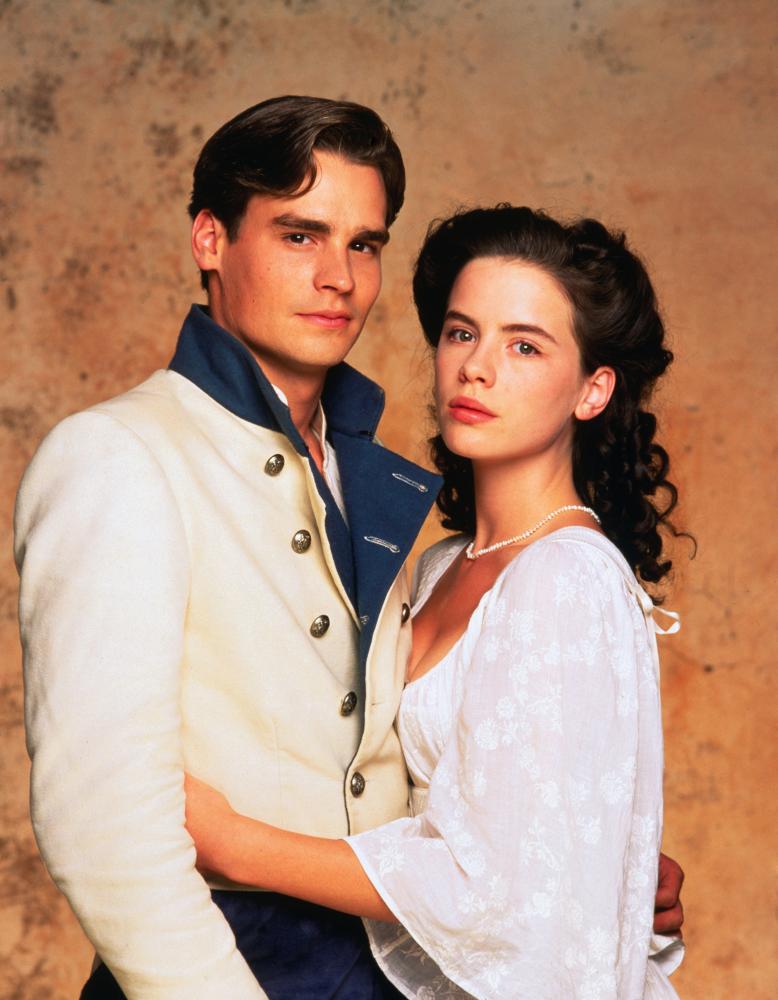
What changes their minds are the fabricated accounts of restless lust devised by their compatriots, the "noting" of which entertains powers of unlikely union to surpass Cupid. Aragon prince Don Pedro (Washington), Count Claudio of Florence (Robert Sean Leonard) and Leonato (Richard Briers), governor of the play's setting of Messina, are somehow giddier than the women in their scheming. But where there's smoke, you can count on fire: Don John (Reeves), the brooding half-brother to Don Pedro, corrals his own associates, Borachio (Gerard Horan) and Conrade (Richard Clifford), into sabotaging Claudio's impromptu nuptial with Leonato's daughter, Hero (Kate Beckinsale). One fraudulent display of infidelity causes the sun-kissed revelry to explode with raw anger and bloodlust. It is the slander of Hero that brings Beatrice and Benedick closer together, but this time out of Beatrice's demand of retribution against Claudio for his misjudgment of her maiden cousin.
Leonard, who first stood out as Perry from Dead Poets Society, is exceedingly adept at handling the dramatic and comedic requirements of the noble young Claudio. His character undergoes a lot of personality changes en route to the uplifting finale, shifting from moony to mischievous to malevolent to mournful. And yet he plays each mode with tremendous sincerity and conviction. Beckinsale, a beatific 19 years of age in her screen debut, is uncommonly wrenching during her accusatory firestorm. The supporting cast of English stage vets and Branagh regulars acquit themselves incredibly well. Briers' regal, perpetually wronged Leonato provides a solid interactive bedrock, with sparkling assistance from Brian Blessed as his temperamental brother, Antonio. Phyllida Law, mother of Thompson, also makes the most of her den mother Ursula when we get her.
The more unconventional casting decisions, however, stick out in differing ways. Denzel Washington has not been as successful in comedy as he remains in drama. The same man who excelled as martyrs against apartheid Stephen Biko and Malcolm X also wound up cheated by inferior material as early as 1981's Carbon Copy. As Don Pedro, gently forsaking his own love life out of soldierly honor, Washington demonstrates remarkable gaiety whilst retaining his reliably dignified composure. In a way, he generously underplays the role of Don Pedro so as to enhance the contributions of Emma Thompson and Robert Sean Leonard.
Alas, Keanu Reeves doesn't benefit as much as Denzel. Shirtless and in leather pants at the dawn of his discontent, he carries all the unintended peculiarity of a rawk star who is punching disastrously beyond his weight. And that's odd considering Reeves doesn't lack for cunning awareness of his limitations (as in his many effective action movie roles, from Johnny Utah to John Wick) or even basic comic timing (see here and here). Don John never becomes anything more than an obvious menace, and though I won't be as harsh on his struggles with Shakespearean prose as, say, The Critic, Reeves seems unnecessarily stolid and joyless. There's no mischief in his delivery or his countenance.
And galloping just as treacherously in the reverse path is Michael Keaton, who hasn't looked this mangy and acted this dementedly since Betelgeuse. You want to give yourself a tick bath, he's so three-dimensionally filthy. But Keaton has an irresistible panache which Branagh certainly has followed since Night Shift, and the particular brand of linguistic lunacy inherent in Dogberry ("Thou wilt be condemned into everlasting redemption for this!") cries out for a fervency which someone like Keaton, here embracing up a screwy Irish brogue, has extensively specialized in. That combination of disgustingly gonzo physicality and egomaniacally crude lawfulness doesn't make an ass out of Michael Keaton. Dogberry, forsooth; Keaton, negotiatory.
The Villa Vignamaggio of Tuscany is perhaps Branagh's biggest coup, more so than the superstar ringers. Rich in shrubbery, fountain pools and courtyards, Branagh and cameraman Roger Lanser encounter the perfect natural environment to unleash everyone's inner pixie. Though they introduce the royal soldiers on horseback in a style that is more American Western than Italian Renaissance, the sudden explosion of shower-and-swim ecstasy which follows is truly bold. Placed alongside the montage of masquerade ball jubilation, these stylistic concessions turn out to be rewarding rather than constricting, especially since so much of the movie colorfully embraces outdoor expansion. Branagh has achieved some of the most majestic long takes I have ever seen in a straightforward Shakespeare adaptation (granted, I could stand to see more).
Branagh's Much Ado About Nothing invests the deception from both sexes with sterling dramatic and comic dynamism. For every moment such as when Benedick stands idly by Beatrice in Russian mask (and hilariously thick burlesque accent) listening to her shoot him down ("She speaks poniards! And every word stabs!"), there's her solemn entreaty to Benedick to kill Claudio for his hot-blooded confusion. The same Claudio, Leonato and Don Pedro who stir amorous second thoughts within Benedick will splinter into heated confrontation when Don John's damage is done. And for all of Dogberry's illiteracy, there's still a mad fire in his eyes and earned lower-class nobility in setting things right for the broken unions. It remains to be seen how well Kenneth Branagh can marshal his resources for the parlor mystery tropes of Agatha Christie, but his phenomenal work with Shakespeare will earn him a lifetime's reception of "Hey nonny nonny."
I LOVE YOU TO DEATH
(PG-13, Tri-Star Pictures, 97 mins., theatrical release date: Apr. 6, 1990)
Aside from Marisa Tomei, Kevin Kline is one of the last Oscar recipients I can think of to be rewarded for his comedic prowess. In 1989, he won Best Supporting Actor as the blustery Otto from A Fish Called Wanda, where he breathed lustily from Jamie Lee Curtis' boot, insulted the "so superior" British every opportunity he could and gulped down Michael Palin's beloved aquarium, fin by fin. An impulsive, imperialist cad whose self-delusional claims of great intellect where debunked by his shapely partner-in-crime Curtis, Kline's portrayal of Otto remains the high mark for unctuous invention in the farcical game.
Kline's first role since nabbing that trophy doubles down on Otto's buffoonish machismo. I Love You to Death, which reunited him with director Lawrence Kasdan (The Big Chill, Silverado) and paired him with River Phoenix (whose performance in Running on Empty was also in the running when Kline won), casts him as Joey Boca, a swarthy pizzeria owner who is introduced confessing to a priest his sin of adultery, committed twice in one week. Or was it four times with two women? But what about the four women last week? Best to round it off at a dozen give or take a couple of times, which he makes up promptly by bedding both Victoria Jackson and Phoebe Cates (Kline's wife in an uncredited cameo).
Joey Boca sees neither harm nor foul in his indiscretions, simply an extension of the American dream which finds him at one point a good-natured family man and the next a lusty hedonist. "I'm a man," he tells Jackson's Lacey in a post-coital rationalization, "I got a lotta hormones in my body." His wife, Rosalie (Tracey Ullman), is dutiful and headstrong in her own way, but in denial herself. To her, Joey's merely flirting, despite the concern of smitten pizzeria co-worker Devo Nod (Phoenix), who catches Joey on the phone with a mistress, fondling pizza dough with all the sensuality he reserves for female flesh.
That Rosalie will discover the truth about Joey's routine plumbing excursions is unavoidable, but her thirst for revenge in the aftermath, deciding on murder as a suitable punishment on the advice of her tabloid junkie of a Mama Nadja (Joan Plowright), is a little less predictable. Joey is too full of life and marinara sauce for a first-degree consummation of "'til death do us part."
As scripted by John Kostmayer, I Love You to Death was inspired by the well-publicized case of Frances Toto from Allentown, PA, whose five unsuccessful attempts on her oafish hubby Tony's life were quickly forgiven by the husband, who went so far as to raise the $50,000 bail money to keep his family together. Though Frances was prosecuted and jailed for four years, they stuck together after her release and remain, to this day, a happy couple.
Kostmayer and Kasdan translate this incredible true story as a combination of ethnic comedy and black comic farce which could be pitched as "Moonstruck on the Verge of a Nervous Breakdown." But the result is far shaggier than either Jewison or Almodovar demonstrated, the zippy energy expected of screwball comedies traded in for the appeal of the various characters and their respective performances. Luckily for Kasdan, he's assembled a surplus of talent to keep the picture going even when the proceedings threaten to peter out.
Opposite the physically robust and carefully caricatured Kline, the equally talented Tracey Ullman opts for a warmer characterization of the cuckolded Rosalie. It's a valiantly humanized effort on her part, as there's nothing particularly funny about the epiphany Rosalie experiences while stopping at the library and her subsequent breakdown in a restroom. She's also an effective median given that Ullman is flanked by the loud presences of clown Kline and joker Joan, and not just in a particularly funny bilingual argument between Joey and Nadja during a public dinner.
Ullman's dedicated personification teases out the black comedy with ease. As scorned as she is, she hopelessly loves Joey enough to opt for a painless way out for her paramour.
Joan Plowright, meanwhile, lives up to her surname as Rosalie's mom, a feisty crone who just has to listen to Johnny Mathis when asked to put on a record to drown out a gunshot and inaugurates the first attempted hit on Joey with a family friend, paying him in cookies and speaking like the Serbian Marla Brando. The favor is accepted by the reluctant assassin, who bumbles into Joey's backyard with a baseball bat and ill-fitting Abe Lincoln mask and just as swiftly chickens out.
Just as inept in their services are Devo, too sensitive to fire a pistol despite having a brother in the Marines, and the supposed pros he hires to finish the job, lowlife cousins Harlan and Marlon James. While River Phoenix is comically spacey as Devo, William Hurt (another of Kasdan's good luck charms) and Keanu Reeves go even farther out there as the druggie James boys, dimwitted and amusingly unkempt casualties of their respective generations. Their banter is marked with pregnant pauses, slow-on-the-uptake realizations and general imbecility. They can't even locate Joey's heart without remembering, and then butchering, the Pledge of Allegiance.
Even Miriam Margolyes, who as Mama Boca arrives late in the game to beat Joey into shame, makes her single minute onscreen an uproarious delight.
The combined talents of this ensemble, all of whom are precise players (even Keanu Reeves, who is as smart being stupid here as Ted Logan), works strange magic onto the screenplay, which draws out the madcap murder games like it was simmering a pot full of spaghetti sauce to a roiling bubble, with Kline stumbling in as flesh-and-blood punchline. It's not particularly accommodating to certain character motivations, and the somnolent pacing isn't rewarded by much of a finale, which departs drastically from the facts of the Toto case for a rousing reconciliation.
And yet Kline remains sublime even when Joey is dosed with two bottles of barbiturates and takes a bullet clear through his chest. It just makes him all the more genial, in a bizarre way, as he offers Harlan & Marlon cheese and crackers with a pale, bleary face. Even when his Italian accent is laid on so thick that you'd expect him to suggest breadsticks, Kline is a physical marvel throughout the movie. Just the way he acts with his hinder is enough to put Jim Carrey to shame.
Kasdan and Kostmayer go lax with the pacing in ways that grossly simplify what should have been a crackerjack comedy of unreliable manners, their conclusion aiming too hard at achieving audience goodwill. If you don't get as much of a kick out of Hurt and Reeves like I do, their shenanigans will slow the procession down even as Ullman's and Plowright's energies barrel on. I Love You to Death has a piping hot ensemble yet a curiously undercooked slab of dough supporting them. Still, it got zestier laughs out of me than most of the retro comedies I've endured, so maybe it will come full circle in the future. Mama Nadja says it best: “I like you once. Maybe someday I like you again."
By the year 2688, Earth's civilization will have finally reached Utopia. Clean air, clean water, and even clean dirt. Bowling averages will reach an all-time high while mini-golf scores plummet, but everyone will agree that our planet owns the monopoly on waterslides. Ironically, the teller of such fortunes is George Carlin as Rufus, a native of this future paradise who doesn't pause to explain why bowling and golf are not officially sports. For as we all know, you have to rent the shoes from the lanes and golf is as boring as watching flies f…
…forget it. The point is that this New World Order would not exist had the two philosophers from San Dimas, CA who founded it flunked their history exam in a most heinous development.
Bill & Ted's Excellent Adventure is the sole blockbuster movie in Diane Franklin's pocket (for those of you who didn't recognize her the first time, myself included, she's the blue belle on the left of the late Mr. Carlin), but we've reached the turning point where our peerless 1980s innamorata suddenly becomes much less visible than ever before. Franklin has less than 10 minutes of screen time here, a dispiriting realization compared to the twin peaks of Better Off Dead and TerrorVision. Also, we've come full circle as her function in Bill & Ted is basically a more sophisticated version of the "babe" persona introduced in The Last American Virgin.
At least in Second Time Lucky (which is as close to a Bill & Ted movie tailored for Diane as you'll ever see) and Better Off Dead, her glorified love interests were given ample breathing room as characters. This is strictly square one.
Common knowledge tells us that Bill & Ted's Excellent Adventure was completed in 1987, when then-Ms. Franklin was still a working actress. The film was originally produced for Dino De Laurentiis, who gave the world Amityville II: The Possession, but his DEG distribution label was in the red. In stepped Orion Pictures and Nelson Entertainment, formerly Embassy Pictures, to give the film a proper push theatrically. After a few post-production tweaks, mainly to change the setting from 1987 to 1988 (there was also an alternate "prom" ending which got dumped), it opened in February of 1989 and spawned a most excellent franchise which is currently being groomed for a third entry.
Another well-known fact: 1991's Bill & Ted's Bogus Journey replaced both Diane Franklin (Princess Joanna) and co-star Kimberley LaBelle/Kates (Princess Elizabeth) with ‘90s starlet Sarah Trigger, who was born with her English accent, and Annette Azcuy.
And yet, after Diane Franklin spent over a decade transitioning to domestic life, her own daughter Olivia DeLaurentis made a short film in 2011 called Humanized in which she subconsciously named her character Alexis Winters. Betcha didn't know that!
So while The Last American Virgin and Better Off Dead vie eternally for cult supremacy in Diane's canon (seriously, where's the love for Summer Girl and/or TerrorVision?), Bill & Ted's Excellent Adventure became a legit phenomenon, spun-off into cartoon series, breakfast cereals, video games, and action figures. Better that than having an abortion clinic board game or a plush version of Ricky Smith.
Although if it were Charles De Mar ("This is pure snow!" he'd say after you pull his string), I'd sincerely consider it.
Bill & Ted's Excellent Adventure introduces its characters in way that suggests a sketch comic parody of Back to the Future starring the Spicoli Brothers. We get the over-juiced speaker catching fire, the "we're late for school" epiphany and their shaming by the school's authority figures. Unlike Marty McFly, though, they haven't the ability to get near a tune nor the wherewithal to attract girlfriends. Calling themselves Wyld Stallyns, Bill S. Preston, Esq. (Alex Winter) and Ted Theodore Logan (Keanu Reeves) don't even share the same train of thought, pondering a chicken-and-egg debate over whether their fame rests on Eddie Van Halen's tutelage or a bitchin' music video, skirting the obvious fact that they should actually learn some basic chords so that they approach even Link Wray-level proficiency.
Bill & Ted are just as clueless scholastically as they are musically; to them, Joan of Arc is "Noah's wife" and [Julius] Caesar is "a salad-dressing dude." The fate of the world is in doubt due to their consistent F marks in history class, for Ted's police captain father (Hal Landon Jr.) is one step away from sending his son off to a military academy (apparently in "Alaska," according to the ditzy Ted). Rufus is beamed into the present to act as emissary and salvation, materializing from out of the sky via a time-traveling phone booth and into the parking lot of the local Circle K.
Thanks to a freak accident during a test run of the device, it also rains Napoleon Bonaparte (Terry Camilleri), fresh from Austria 1805. Having returned at Ted's home, the duo place the discombobulated general under the care of Ted's older brother Deacon (Frazier Bain) as they embark on their manifest destiny: to travel back to the many time periods their history professor Mr. Ryan (Bernie Casey of Cleopatra Jones and Revenge of the Nerds) has outlined on their final and collect various iconic figures to give their own testimonials.
Looking back at the movie in context of Diane Franklin's decade-spanning exposure, its clear how far we've come from The Last American Virgin to Bill & Ted's Excellent Adventure. Whereas the trio of horny teens in Boaz Davidson's film required some major liberties to accept as tight-knit friends given their conflicting personalities, Bill & Ted are truly dudes of a feather, the ensuing comedy amiable in the best possible way. There is a pleasing absence of malice to the way the duo interact with the world, and even the introduction of an Oedipal complex in the lissome form of Bill's trophy stepmother Missy (Amy Stock-Poynton, graced with a humorous pout) is hardly catastrophic. Whereas the chauvinistic triad of that 1982 film would no doubt cry "Slut!" upon sight of Missy's cleavage, the worst that happens here is Ted's innocent razzing of his confused best friend ("Remember when I asked her to the prom?" "Shut up, Ted!!!").
As based on characters developed for the improvisational comedy stage, writers Chris Matheson and Ed Solomon (see if you can guess which scene they cameo in) get a lot of mileage out of the duo's vibrant lingo, one which combines the refined with the lowbrow. Bill refers to his "distinguished colleague" Ted in failing to bluff his way into convincing Mr. Ryan to go easy on them. Also there's Ted's priceless reaction upon seeing their future doppelgangers sing the praises of Rufus: "Bill...Strange things are afoot at the Circle K." The boys mangle the pronunciation of Socrates ("So-Crates"), tempt another ancient figure with a Twinkie and demonstrate their fullest knowledge of George Washington by referring to the Hall of Presidents exhibit at Disney World. And they call each other "Fag!" after a perfectly rational bro hug, which is hardly cause for alarm since they giddily resume japing.
These idiot savants wouldn't be half as charming, however, were it not for the serendipitous casting/chemistry of Alex Winter and Keanu Reeves. Winter, previously a bit player in Death Wish 3 and The Lost Boys (and currently a documentary director whom I previously spotlighted), resembles a curly-haired, midriff-baring goof on Emilio Estevez. More self-assured than the shaggy Ted, a cigar-chomping Bill tries to school his dopey bud on the art of the "poker face" during a high-stakes game with Billy the Kid (Dan Shor of Wise Blood and Tron), only to crack hilariously when he finds three aces in his hand. And Reeves, in his star-making role following River's Edge and the 1986 Babes in Toyland, nails down the elastic body language and dazed reaction shots to turn his comparatively more childish personality into a comical treasure.
Ted is the designated "ladies' man" of the team, demonstrated by their arrival in medieval London where they become smitten with Princesses Elizabeth (Kimberley Kates, who was in a DTV murder mystery called Dangerous Love with LAV's Lawrence Monoson) and Joanna (Diane!!!). Able to recite classic rock lyrics at will for the sake of philosophizing (and to happily confuse the torture device known as the iron maiden with the Iron Maiden), Ted charms these predetermined brides with this impromptu stanza:
"Oh, you beautiful babes from England,
For whom we have traveled through time...
Will you go to the prom with us in San Dimas?
We will have a most triumphant time!"
But it ends disastrously upon the arrival of their daddy, the royal ugly Duke (John Karlsen), and the duo are saved from the guillotine by Billy the Kid and Socrates (Tony Steedman). With no time left to lose ("The clock in San Dimas," Rufus told them, "is always running"), Bill & Ted continue forward by snatching up the likes of Sigmund Freud (Rod Loomis of The Beastmaster and Jack's Back), Joan of Arc (pop star Jane Wiedlin from The Go-Go's, also the dead messenger girl from Clue), Genghis Khan (Al Leong, the oriental heavy in Die Hard and Lethal Weapon), and Abraham Lincoln (Robert V. Barron, previously seen in Eating Raoul and Disorderlies).
Meanwhile, back in present-day San Dimas, the movie's trump card character, Napoleon, gets his literal day in the sun. Terry Camilleri, like much of the cast a relative unknown, might be familiar to the handful who fondly recall famed Aussie director Peter Weir's The Cars That Ate Paris from 1974 (he later had a cameo in Weir's The Truman Show). It's a shame he didn't land a fruitful career as a physical comic after this. Adapting the Revolutionary emperor's stoic tyranny to the modern world, Camilleri's perpetually wide-eyed Napoleon cheats at bowling, conquers the public pool Waterloo ("Mon dieu!") and wields a dessert spoon like a bayonet for the last precious drop of melted "Ziggy Pig" ice cream sundae.
Matheson and Solomon play a lot more loose with the time-space continuum than seen in previous pop fables like Time After Time or Back to the Future. Random occurrences crop up so frequently during the finale, mainly to help Bill & Ted break out their jailed charges after they all get arrested for various infractions at the mall, that it becomes a battery of satirical jabs at the nature of contrived happy accidents. On a meta level, it's forgivable, although the verdict is still out on the significance of Rufus' own mission. Everything is pretty much guaranteed excellent in 2688, so where's the conflict?
Again, if you approach it on the clever satirical angle, as a lampoon of the culture of rock star worship be it Elvis Presley or Eric Clapton, you won't need to get hung up on dubious logic. There's a reason the "Three Most Important People in the World" are members of The Motels, The Tubes and The E Street Band (deep-voiced saxophonist Clarence "The Big Man" Clemons, R.I.P.).
Director Stephen Herek's debut movie, 1986's Critters, began with a sublime, FX-powered visual joke at the expense of an intergalactic assassin borrowing the visage of a video star who is clearly a wannabe Mick Jagger (Terrence Mann as Johnny Steele). After the first Bill & Ted, he found a modest career as a hired gun in his own right, helming a battery of Disney productions (The Mighty Ducks, Mr. Holland's Opus, the live-action 101 Dalmatians) as well as many middlebrow trinkets (Don't Tell Mom the Babysitter's Dead, Rock Star, Life or Something Like It). Herek is the poor man's Chris Columbus, another once-promising craftsman who forsook imagination for assimilation.
That's a shame, because Herek's low-budget beginnings are further credits to the evolution of youth-friendly 1980s comedy away from the bastard sons of Porky's. And again, it's a huge relief when you look at Diane Franklin's resume from 1985 onward. Savage Steve Holland spun teen tropes on their heads like a dreidel in his Better Off Dead, although his gift for whirling dervish burlesque was eclipsed by Ted Nicolaou's TerrorVision and his outlandish parodies of nuclear families, materialistic scenesters and the cultural brain drain. Bill & Ted's Excellent Adventure, by its own rights, makes pleasant time-capsule material in its varied riffs on 1980s pop flotsam right at the dawning of a new decade.
Where else are you going to see Billy the Kid and Socrates act like libidinous boys on the make, only to be foiled by Freud with a corn dog? ("Geek!") Or Joan of Arc copping Flashdance-style spastic gyrations to an audience of refugees from the Jane Fonda Workout Video? Or Ludwig van Beethoven (Clifford David) discovering the magic of the synthesizer and extolling the virtues of "Livin' on a Prayer" by Bon Jovi?
Or, finally, when all is most triumphant in the universe, Honest Abe emancipates an entire auditorium from their boredom with the Wyld Stallyns' two most timeless credos: "Be excellent to each other and...PARTY ON, DUDES!"
My only rebuttal: "Awesome! Totally awesome!"
The next review in this retrospective is another academically-themed teen movie from 1989, yet there's good news and bad news. The good news is that Diane Franklin will reunite with the creator of her single most charming role. The bad news is that she will have even less screen time than in Bill & Ted.