Showing posts with label romance. Show all posts

Wednesday, April 25, 2018

A Little Sex + Casual Sex?


A LITTLE SEX
(R, Universal Pictures, 95 mins., theatrical release date: April 2, 1982)


CASUAL SEX?
(R, Universal Pictures, 88 mins., theatrical release date: April 22, 1988)

Nobody goes to the movies for a sex education class, but most coitus-based mainstream comedies are actually more invested in the equally dirty deed of romance. This is especially true for both A Little Sex and Casual Sex?, then-contemporary '80s throwaways whose forthright titles are pillow talk concealing more pressing concerns on the minds of voraciously carnal singles. Is marriage a surefire cure for a wandering eye? How do you measure physical compatibility when you're fretting over the danger of STDs? Can you be seduced by either of these movies tonight and not hate yourself in the morning?

In the case of Bruce Paltrow's A Little Sex, there's nothing a TV-based sensitivity and some pixie dust can't do for a naïve beeline to the Chapel of Love. This is only natural considering MTM Enterprises (as in Mary Tyler Moore, of course) optioned this as their first theatrical release, splitting the $6,000,000 bill with distributor Universal Pictures (who also loosed Casual Sex? upon us). Paltrow (creator of MTM-TV's The White Shadow) and writer/producer Bob DeLaurentis have ported over the fairytale of New York from Mary's flagship sitcom and skewed it to a more male curiosity, but their overall philosophy is no different than the one voiced in her theme song: "You're gonna make it after all." This is true even if you're a freshly-wedded stud who's been tirelessly cuckolding your future spouse during the 10 months you were live-in lovers.

Michael Donovan (Tim Matheson) works as a commercials director, so he's confronted with temptation no matter where he goes, be it on the set or at a dinner date or strolling down a Madison Avenue past a hallucination's worth of provocatively-dressed women. His older brother Tommy (Edward Herrmann), a veterinarian at the Central Park Zoo, knows via regular conversation that Michael's raging libido is as natural as a "birth defect" and bets the $82 in his wallet that his brother will slip up and cuckold his bride, Katherine Harrison (Kate Capshaw), who teaches at the Mother of Christ parochial school for girls.

And Michael does slip, first with Philomena (Wendie Malick), the clarinet-playing girlfriend of Kate's longtime friend and Julliard teacher Walter (John Glover), and then with an aggressive wannabe actress named Nancy (Susanna Dalton). Kate catches him in the latter clinch, and all comedy goes out the window as Michael stews in the resulting guilt and loneliness. The rest of the film is an arduous string of failed reconciliations (Mike types out a list of 18 past conquests to demonstrate previously nonexistent honesty) and pleas for advice from both sides. The dejected Kate turns to her mother, Mrs. Harrison (Joan Copeland), who relates the time she caught Kate's father in bed with her grade school teacher ("their own private PTA meeting"), an act she confronted first with sober discussion and then with a broken ankle.

DeLaurentis' script cheats as often as his central character, withholding substantial information about Michael & Kate's affair (they've been going together for years rather than months, which Michael offhandedly complains about at the onset) and indulging too much in cutesy tricks and on-the-nose banter. Their introductory encounter finds Michael and Kate, presented as perfect strangers, provoking "Why, I never!" reactions from old ladies at a fruit stand as he challenges her to a foot race. "You always cheat!" Kate protests after Michael trips her up on the stairs of their apartment complex. "And I always will," Michael counters, "as long as I get you in the end." This symptomizes the faults of DeLaurentis and Paltrow, who lack the genuine sophistication or the lively comedic touch needed to invest us in the splintered relationship at hand.

Tim Matheson and Kate Capshaw are underserved by such regressive schmaltz. Having hunked himself up considerably since Animal House, Matheson labors to find the sincerity in a caddish character limited by his entitlement and hang-ups. Michael appears to have real intimacy issues no amount of Bibbidi-Bobbidi-Boo on the part of Mary Tyler Moore can counter. He's open about his nuptial responsibility to an old flame, Sandy (P.J. Mann), who arrives out of the blue and asks him out to a harmless dinner. But he (and DeLaurentis) disregard this for dreary scenes of Michael being overpowered by callow stereotypes of maneater femininity: Philomena assures him he'll get better at removing his wedding band on the next tryst, and Nancy all but tears off her clothes in her seduction of Michael. Capshaw, in her feature debut, is infinitely more charming under Paltrow's boxy direction than even Steven could manage. But her Katherine never develops a consistent personality. She hops into bed with Walter seeking to understand the concept of loveless sex, but is finally reduced to an indignant doormat who delights in walloping Michael with a field hockey stick.

Tis a pity, since Walter is played with refreshing subtlety by John Glover. Known for officious supporting roles in the likes of 52 Pick-Up and Gremlins 2: The New Batch, Glover refuses to turn Walter into a cauldron of self-absorbed ressentiment. He demonstrates a beguiling warmth in his scenes with Capshaw epitomized by his farewell delivery of the inevitable question all platonic friends should ask when eyed for a rebound. The good sense Glover demonstrates is more abundant in Edward Herrmann's droll portrayal of Tommy, and both actors realize the amiable honesty DeLaurentis attempts in his script. Herrmann, bless his departed soul, is the movie's saving grace, providing a no-nonsense combination of intellectual and fraternal superiority. He also gets DeLaurentis' funniest one-liners. When his brother arrives late for his wedding rehearsal on account of a back massage from a buxom mattress spokesmodel, Tommy zings Michael thusly: "Science is the art of observation. You got lip gloss on your ears."


Casual Sex? has its own stifling mundanities to overcome, attempting a farcical look at female sexuality instead of male and with the death's-head specter of AIDS plaguing the "whole man-woman relationship thing." Lea Thompson, perky as ever, is Stacy Hunter, who played the field during the sexually active first half of '80s, with a peculiar weakness for artistic types. Her best friend Melissa (Victoria Jackson) has feared to tread, blooming late during her second year of college and nearly hitching herself to an inattentive slob. What with her straight-to-the-camera philosophy about "sex [being] a good way to meet new people," Stacy appears blithely disinterested in romantic union as opposed to revolving-door boyfriends and daredevil nymphomania. The next thing you know, Stacy is pondering celibacy in the face of mounting health scares and crinkling her face at the very thought of "safe sex," as if prophylactics were an automatic dealbreaker.

Stacy and Melissa opt for a week's vacation at the Oasis Spa, which caters to fitness-conscious singles and welcomes patrons with gift baskets full of condoms (enough to safeguard the entire planet, sez Melissa). On their first night, they and the other guests engage in a geographically-themed matchmaking party ("Ecuador? Ecuador?") where Melissa is paired with the negging Matthew (Peter Dvorsky) and Stacy is stuck with Vinny Valcone (Andrew "Dice" Clay), a palooka from Paterson, New Jersey, who refers to himself in the first person as "The Vin Man," often to the sing-songy refrain of Tom Jones' "She's a Lady" ("I'm the best from the East/I'm a wild, crazy beast"). Stacy would much rather be with aerobics instructor Nick Lawrence (Stephen Shellen), a bohunk with stunted adolescent dreams of becoming a rock god, while Melissa is pined for by another staffer, Jamie (Jerry Levine), the closest thing to a Perfect Man at the resort.

Screenwriters Wendy Goldman & Judy Toll have adapted their 1985 musical performance piece of the same name, the question mark at the end a reflection of the lip service paid to AIDS and other venereal maladies. But under Ivan Reitman's production auspice and his wife Genevieve Robert's one-shot direction, Casual Sex? wouldn't have felt out of place a year before the play's debut, when Blame It on Rio and Where the Boys Are '84 premiered theatrically. The heroines sunbathe at a nude beach and engage in slumber party conversations about vibrators and orgasms. Men and women alike are characterized in the broadest terms befitting the typical low-rate sex comedy of those "innocent" years. The caliber of actors and filmmakers here are surely better than the bulk of those, but Casual Sex? is only two steps up the evolutionary ladder from, say, The Allnighter.

This hedging of bets is there in the way the soundtrack flogs Buster Poindexter's "Hot Hot Hot" from the main titles on down to almost every scene transition to follow (a far more tolerable Kid Creole song is withheld until the end credits, and the nominal composer is Brian Wilson collaborator Van Dyke Parks). It's there in gags involving girl-watching goons getting hit in the groin by projectile tennis balls. It's there in the tender lovemaking scene between Stacy and Nick, only now the ingénue breaks the fourth wall a la Ferris Bueller for a wry punchline. And it definitely shows as the movie strains to wrap itself up by rewarding Stacy and Melissa their happily ever after coda. In much the same way as A Little Sex and its deliberately juvenile competition from Porky's on down, Robert takes a preoccupation with sex and removes all the pleasure from it. With the exception of Jessica Rabbit, the cold hard truth about cartoons is that they just aren't sexy.

The leading ladies certainly are, even Victoria Jackson as the inexperienced Melissa. Her spacey comic style is like Kimmy Robertson emulating Melanie Griffith, and it's wholly endearing. And yet the vivacious Lea Thompson, a seasoned starlet if ever there was one by 1988, runs into more trouble here than when she played Beverly Switzer in the woeful Howard the Duck. She is hardly the Ms. Matthew Broderick that Genevieve Robert tries to coax out of her (Elizabeth Shue would've been more natural were she willing to go au naturel), and Thompson's reliable effervescence peaks early on during a montage of Stacy's oversexed past (e.g.: her dilettantish guffaws at a hack comic's pelvic undulations) and never builds back up again.

And then Robert rolls the Dice.

Having declared his John Travolta parody the best thing about the otherwise lousy Making the Grade, Andrew "Dice" Clay builds upon that muscular goofiness to deliver an honest-to-goodness comic creation as the Vin Man. All the ingredients of his impending superstardom are here, the leather jacket and "bada bing, bada boom" dialect and dimwitted machismo (complete with pet name for his dong), but they fuse with Goldman & Toll's sketch-minded satirical acumen to make the Vin Man like something Clay could have conceivably workshopped for the Groundlings troupe. When he raps a long-winded confession joke at Melissa that lands with a plop, he bounces back with "Well, they're not all golden, honey." Although it is implied that Vinny and Melissa make a meatball sandwich on the beach, the Vin Man saves the cheese for Stacy, who is so initially charmed she refers to him as "a living argument for birth control."

The guido can't help it. Not even a demonstration of dating tips gleaned from "The Pretend You're Sensitive Handbook" makes him seem less of a nuisance to Stacy, who has agreed to let Nick live with her back home in L.A. But Nick turns out to be even more of a selfish deadbeat than Vinny, who retreats back to Paterson only to experience a rush of soul-searching ("I've forced myself to take a closer look at the Vin Man. Ya know, open 'im up, pull him out, dissect 'im like a frog"). A dynamite ending would've had Vinny arrive on the same soundstage as Stacy and Melissa, during which Stacy would say the rightful closing line ("What can I say? Life is bizarre!") and then proceed to jump him the same way she did her old sous-chef, Gunter Kroger. It would've made more sense than the tacked-on joint New Year's/Christmas epilogues we do get, which unbecomingly smothers both Clay and the film in creamed corn.

(An alternate ending, preserved on the DVD, involves a character played by Bruce Abbott of Re-Animator fame, whom I hate to admit I didn't notice at all when I watched the film.)

As it stands, Casual Sex? is another perfunctory late '80s studio comedy. Goldman & Toll don't really do much with the resort setting besides recycle the usual dream sequences (the funniest involves Nick sweeping Stacy off her feet as her past lovers interrupt to inform her of what else came next), schlock rock numbers (Nick miming a godawful Dan Hartman ballad to Stacy's face) and deadpan asides to the audience ("I'm concerned about this penis size thing"). On the evidence of their respective sex comedies, Genevieve Robert and Bruce Paltrow are the more compatible soul mates next to their hetero-genous seekers. Mating social commentary with celluloid conventionality, A Little Sex and Casual Sex? are, to quote Rick Moranis, "a long ceremony [leading to] a short honeymoon."


Tuesday, October 24, 2017

Much Ado About Nothing (1993)


MUCH ADO ABOUT NOTHING
(PG-13, The Samuel Goldwyn Company, 111 mins., theatrical release date: July 2, 1993)

"Sigh no more, ladies/Sigh no more/Men were deceivers ever," intones Lady Beatrice (Emma Thompson) as the most empathetic bachelorette in literary history. As merry as the day is long, this particular Shakespearean shrew is anything but a buzzkill. She's cheerfully enamored with her own wit and belligerence, firing tart-tongued arrows at the foundation of love but with a radiant beauty and self-security to make rewarding her eventual thawing. The witnesses to her unmarried ramblings, namely her uncle Leonato and cousin Hero, can see the guarded sexiness as much as we do. Ditto Benedick (Kenneth Branagh), full of himself and his own theoretical freedom from the silly games of courtship. They aren't opposite numbers by a long shot, and once Signor Benedick did in fact shoot the "false dice" in what they both consider the craps game of amore. They're simply the wiser, wiseacre parallels of naïve youth and familial matchmaking which has everyone Much Ado About Nothing.

Kenneth Branagh's forthcoming return to the big screen with Murder on the Orient Express compelled me to go back into the scrapbook of teenage memories, where I once played Leonato in a high school production of the Bard's gift to romantic tragicomedy. And where I was first acquainted with the 1993 screen version despite a passing awareness of Branagh as the contemporary revivalist of Shakespeare's work. It was a kick to see the queen of this Apache Junction Glee Club play mush-mouthed, addle-brained constable Dogberry, and there was one tall handsome man who gave Keanu Reeves a run for his goatee as Don John the Bastard. I must have had some inkling of an old man's dignity to wind up a Leonato instead of a Verges, but knowing what I feel now, I sure do wonder if my heart betrays my thirtysomething stature. I don't need spirit gum anymore to cultivate facial hair.

That's another story. Much Ado About Nothing was, in Branagh's own words, a present to teachers in that it had enough cleavage and tight trousers to get modern students to sit still and pay attention. What it also had was star power akin to another American Playhouse offering I reviewed earlier, Bloodhounds of Broadway. That one, if you don't remember, was a Damon Runyon pastiche which accommodated Madonna, Matt Dillon and Randy Quaid among others. Branagh's pedigree was enough to land Michael Keaton, Denzel Washington and [ahem] Keanu Reeves. Luckily, Much Ado About Nothing doesn't have the troubled post-production of Howard Brookner's unheralded period piece. More fortunately, Branagh does true justice to his source in the scenery, his direction and some of the principal performances.

Casting himself and his former wife as the sparring loners, Branagh relishes the bawdy wit and poetic dialogue enough to renew interest in such an academic and thematic mainstay. He finds the earthly slapstick and ribald repartee within the text almost effortlessly. The real test is of characterizing the combatants to the broader mass without sacrificing loyalty. Benedick, the owner of those "false dice," is not merely a card but a full hand of conflicting thoughts; Beatrice is a 17th century diva who has to come to terms with her range of desires as much as Benedick. The union of these two is combustible, and very hilarious, but their moments in isolation are handled just as wittily. Having grown up with John Cusack movies, I've been conditioned enough to delight in the way Branagh as Benedick prides his own individualist intelligence only for his heart to outsmart him, causing him to reframe his verbal cunning in a lighter capacity ("The world must be peopled!"). And when Thompson bursts out of her cocoon, her smile is pasted on the viewer‘s face.

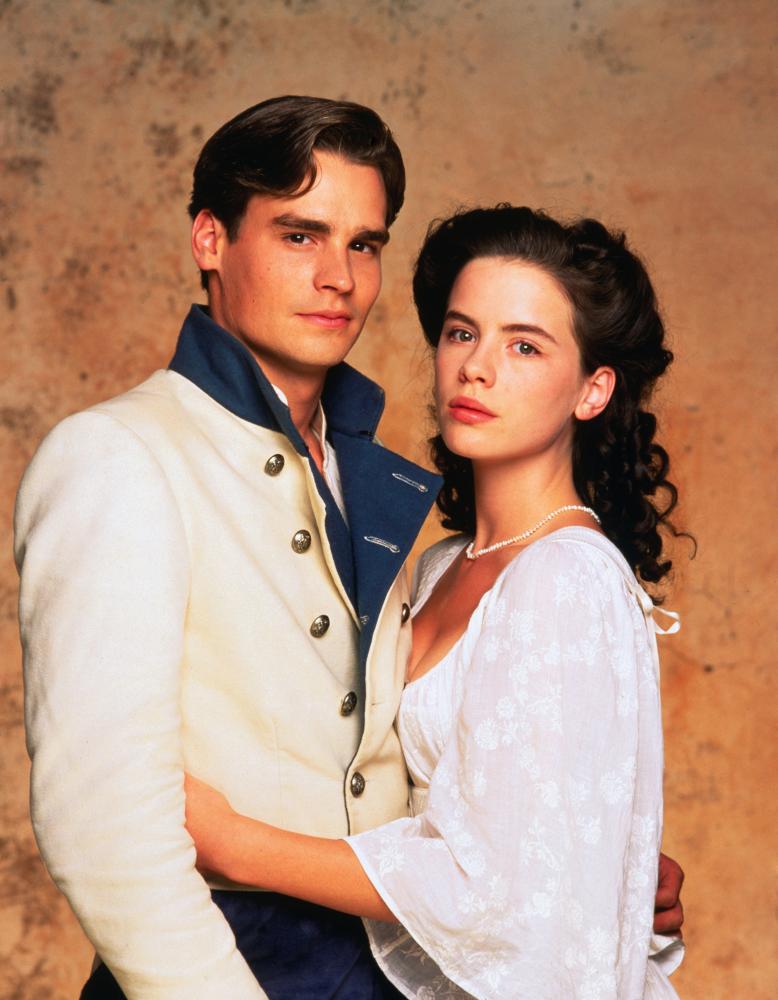
What changes their minds are the fabricated accounts of restless lust devised by their compatriots, the "noting" of which entertains powers of unlikely union to surpass Cupid. Aragon prince Don Pedro (Washington), Count Claudio of Florence (Robert Sean Leonard) and Leonato (Richard Briers), governor of the play's setting of Messina, are somehow giddier than the women in their scheming. But where there's smoke, you can count on fire: Don John (Reeves), the brooding half-brother to Don Pedro, corrals his own associates, Borachio (Gerard Horan) and Conrade (Richard Clifford), into sabotaging Claudio's impromptu nuptial with Leonato's daughter, Hero (Kate Beckinsale). One fraudulent display of infidelity causes the sun-kissed revelry to explode with raw anger and bloodlust. It is the slander of Hero that brings Beatrice and Benedick closer together, but this time out of Beatrice's demand of retribution against Claudio for his misjudgment of her maiden cousin.

Leonard, who first stood out as Perry from Dead Poets Society, is exceedingly adept at handling the dramatic and comedic requirements of the noble young Claudio. His character undergoes a lot of personality changes en route to the uplifting finale, shifting from moony to mischievous to malevolent to mournful. And yet he plays each mode with tremendous sincerity and conviction. Beckinsale, a beatific 19 years of age in her screen debut, is uncommonly wrenching during her accusatory firestorm. The supporting cast of English stage vets and Branagh regulars acquit themselves incredibly well. Briers' regal, perpetually wronged Leonato provides a solid interactive bedrock, with sparkling assistance from Brian Blessed as his temperamental brother, Antonio. Phyllida Law, mother of Thompson, also makes the most of her den mother Ursula when we get her.

The more unconventional casting decisions, however, stick out in differing ways. Denzel Washington has not been as successful in comedy as he remains in drama. The same man who excelled as martyrs against apartheid Stephen Biko and Malcolm X also wound up cheated by inferior material as early as 1981's Carbon Copy. As Don Pedro, gently forsaking his own love life out of soldierly honor, Washington demonstrates remarkable gaiety whilst retaining his reliably dignified composure. In a way, he generously underplays the role of Don Pedro so as to enhance the contributions of Emma Thompson and Robert Sean Leonard.

Alas, Keanu Reeves doesn't benefit as much as Denzel. Shirtless and in leather pants at the dawn of his discontent, he carries all the unintended peculiarity of a rawk star who is punching disastrously beyond his weight. And that's odd considering Reeves doesn't lack for cunning awareness of his limitations (as in his many effective action movie roles, from Johnny Utah to John Wick) or even basic comic timing (see here and here). Don John never becomes anything more than an obvious menace, and though I won't be as harsh on his struggles with Shakespearean prose as, say, The Critic, Reeves seems unnecessarily stolid and joyless. There's no mischief in his delivery or his countenance.

And galloping just as treacherously in the reverse path is Michael Keaton, who hasn't looked this mangy and acted this dementedly since Betelgeuse. You want to give yourself a tick bath, he's so three-dimensionally filthy. But Keaton has an irresistible panache which Branagh certainly has followed since Night Shift, and the particular brand of linguistic lunacy inherent in Dogberry ("Thou wilt be condemned into everlasting redemption for this!") cries out for a fervency which someone like Keaton, here embracing up a screwy Irish brogue, has extensively specialized in. That combination of disgustingly gonzo physicality and egomaniacally crude lawfulness doesn't make an ass out of Michael Keaton. Dogberry, forsooth; Keaton, negotiatory.

The Villa Vignamaggio of Tuscany is perhaps Branagh's biggest coup, more so than the superstar ringers. Rich in shrubbery, fountain pools and courtyards, Branagh and cameraman Roger Lanser encounter the perfect natural environment to unleash everyone's inner pixie. Though they introduce the royal soldiers on horseback in a style that is more American Western than Italian Renaissance, the sudden explosion of shower-and-swim ecstasy which follows is truly bold. Placed alongside the montage of masquerade ball jubilation, these stylistic concessions turn out to be rewarding rather than constricting, especially since so much of the movie colorfully embraces outdoor expansion. Branagh has achieved some of the most majestic long takes I have ever seen in a straightforward Shakespeare adaptation (granted, I could stand to see more).

Branagh's Much Ado About Nothing invests the deception from both sexes with sterling dramatic and comic dynamism. For every moment such as when Benedick stands idly by Beatrice in Russian mask (and hilariously thick burlesque accent) listening to her shoot him down ("She speaks poniards! And every word stabs!"), there's her solemn entreaty to Benedick to kill Claudio for his hot-blooded confusion. The same Claudio, Leonato and Don Pedro who stir amorous second thoughts within Benedick will splinter into heated confrontation when Don John's damage is done. And for all of Dogberry's illiteracy, there's still a mad fire in his eyes and earned lower-class nobility in setting things right for the broken unions. It remains to be seen how well Kenneth Branagh can marshal his resources for the parlor mystery tropes of Agatha Christie, but his phenomenal work with Shakespeare will earn him a lifetime's reception of "Hey nonny nonny."


Thursday, September 14, 2017

The Gumball Rally + The Allnighter


THE GUMBALL RALLY
(PG, Warner Bros., 105 mins., theatrical release date: July 28, 1976)

"Carsploitation" is in no way associated with Gary Numan, but is instead a handy, catchall term for the type of movie designed to show off chromium enhancements and monochromatic riders. The post-Easy Rider models usually crashed against the brick wall of existentialism, while the two-wheel designs were less heady and built expressly for hedonistic speed, with a catchall term of its own. With the release of both Gone in 60 Seconds and Dirty Mary Crazy Larry in 1974, the era of solemnly-fueled chase pictures like Vanishing Point and Two-Lane Blacktop was supplanted by undemanding, goofier action flicks which emphasized zany characters and projected demolition derby set pieces onto screens. Paul Bartel's Death Race 2000, made under Roger Corman's aegis, is the gonzo masterpiece of this particular lot, in which its annual Transcontinental Road Race is a dystopian blend of bread-and-circus and hit-and-run; Race with the Devil, also from 1975 and starring Peter Fonda and Warren Oates, is as bizarre as a Larry Miller Toyota salesman pitching you a hearse.

1976 was the year when Death Race writer Charles B. Griffith induced Ron Howard to pop the clutch and tell the world Eat My Dust! Another New World title, Moving Violation, recycled the familiar theme of lovers (Stephen McHattie, Kay Lenz) on the run from corrupt authority. And Bartel reluctantly followed up Death Race 2000 with a movie based unofficially on Brock Yates' well-publicized Cannonball Baker Memorial Dashes, only this time facing big studio competition when Warner Bros. rolled out The Gumball Rally in the same summer.

Directed by Charles Bail (Black Samson), The Gumball Rally acts as a PG-rated alternative to the saucier fare Corman marshaled. There's no nudity, the violence is strictly auto-destructive and the dialogue doesn't get any racier than the notion of sniffing butts. It confirms the sea change in carsploitation by repurposing not Easy Rider, but It's a Mad, Mad, Mad, Mad World. Norman Burton takes the Spencer Tracy role of the fanatical policeman who blows his top trying to trap the speed demons, and there's even a throwaway gag involving the incineration of a mass of fireworks. Alas, Stanley Kramer's ambitious slapstick, which built up to delirious chaotic juxtapositions, remains out of Bail's reach.

That's because the stakes in The Gumball Rally are comparatively lower, promising only a fleeting sensation of glory as opposed to the cash prize buried under that giant W. And the characters are less colorful not simply because of the lack of seasoned muggers, but primarily due to Leon Capetanos' dry-witted script. Michael Sarrazin, filling in for Peter Fonda, plays rally organizer and champion Michael Bannon, who starts the movie looking bored at a conference call and picks up little charisma during the race. At least Burt Reynolds, in the better of his Hal Needham collaborations, seemed liberated and sociable behind the wheel. That boardroom ennui extends to the ensemble, as very few of the characters appear truly joyful to be on the road, often times squabbling and screaming and enduring dopey setbacks which should've played a lot funnier than they come across. Broad comedy is handled either way too stoically or far too stridently for The Gumball Rally to ever reach the red line of hilarity.

The varied drivers Bannon puts out the call for include Barney (J. Pat O'Malley) and Andy (Vaughn Taylor, in his last role), elderly Englishmen who ride slow and steady in a classy Mercedes; Joanne Nail (Switchblade Sisters) and Susan Flannery (The Towering Inferno) as Jane & Alice, Beaver Falls housewives who take to a souped-up Porsche Targa; stock car daredevil Ace "Mr. Guts" Preston (Gary Busey) and his mechanic Gibson (John Durren), who drive each other crazy in their Camaro; Steven Keats and Wally Taylor as the LAPD officers comprising the Dodge team; and Bannon's longtime competitor Smitty (Tim McIntire), who brings in a ringer named Franco (Raul Julia) and whose Ferrari stands the closest chance of catching up with Bannon and Professor Graves (Nicholas Pryor) in their Cobra. A lone Hungarian on a Kawasaki (Harvey Jason as Lapchik) is the primary source of pratfalls, basically a human Wile E. Coyote on an Acme motorbike. A gofer (Lazaro Perez as Jose) answers a classified ad to commandeer a Rolls Royce and sweet-talks his buxom Queens girlfriend (Tricia O'Neil as Angie) into tagging along for the trek.

Having listed the makes of the vehicles as well as their pilots, The Gumball Rally is obviously far more interested in the former. Schlock cinematographer Richard Glouner frames the cross-country marathon in 'Scope, with ample shots of the automobiles bulleting down tunnels, bridges and wide open highways spanning Times Square to Tulsa to Long Beach. Every once in a while, the action pauses so that Lt. Roscoe (Burton) can be humiliated in some way, from getting robbed of his pants by Lou David (Cropsy from The Burning) or overlooking a cargo truck which carries Smitty and Franco past a checkpoint. Less amusing are the tangents involving the rally's participants, which tend to lack payoffs (the cops, who use state-specific decals to evade capture, are stopped by an expecting father in a traffic jam) or are just dully derivative (Jose and Angie being harassed by a noxious chopper gang).

Gary Busey is fittingly insufferable as the death-defying yokel who's a feeb outside of the stadium, but he'd need another decade to ripen into a real showboat. The only character here who is as sleek and magnificent as his/her ride is Franco, a lustful Italian whose hot-blooded confrontations usually end with him firing a squirt gun at his foes. He snaps the rearview mirror off his Porsche in accordance with the central rule of Italian driving: "What's-a behind me is not important!" In the middle of the contest, Franco leaves Smitty hanging so he can go to bed with Colleen Camp and then catches up with him the next morning, leaving Camp his scarf as a token of their one-night stand. Raul Julia, the Puerto Rican dynamo of stage and screen up until his untimely passing in 1994, is zestfully entertaining in his early showcase, even if Julia never gets to flash a mischievous smile to the viewer. The rest of the cast fail to rise above this affliction, but what can they do since Bail & Capetanos are themselves stuck in the mud? The Gumball Rally, true to its confectionary code name, is a chalky thing which gradually loses its flavor the longer you eat it up.


THE ALLNIGHTER
(PG-13, Universal Pictures, 108 mins., theatrical release date: May 1, 1987)

Issue another citation for pulling up lame to The Allnighter, which would've been the perfect title for a superior version of The Gumball Rally. It refers here to a sundown fiesta held by the imminent graduates of Pacifica College, a USC which looks like it only doles out GEDs. The valedictorian is a demure beach bunny named Molly who, just like Bo Derek before her, is a minor in Love. Her roommate is a totally bitchin' surfer boy (C.J., dude) who hangs a tubular ten but is, like, wow, a wipe out with the babes. Her best friends are Val, a bombshell blonde engaged to an emasculated preppie, and Gina, an oddball redhead preserving their eternal bond on VHS, a surrogate mother kissing her babies goodbye as well as the female equivalent of Mark Cohen from Rent.

And Gina is played by Joan Cusack! Like, reality bites, bud.

Cusack is perhaps the only good aspect of The Allnighter, in hindsight. Towing her camcorder, Gina catches the pre-hangover waves of the Latin-themed blowout, delivering cautionary commentary straight out of a B-horror film. Joan's got Boy George's fashion sense and Brother John's wry faculty with dialogue, a built-in mega-weapon defending her from the inanities of this script. And Dedee Pfeiffer, Michelle Jr., plays Val appealingly enough to merit a silent slow clap when she stands up for herself and her friends. Sadly, try as they can, this is neither Cusack nor Pfeiffer's film. The Allnighter is tailored specifically to The Bangles' pin-up attraction Susanna Hoffs, with her mother Tamar Simon H. co-writing, producing and directing. The result is All Over the Place, Everything for no one and too dismal to view in a Different Light nowadays.

Early in her career, Susanna was a beauty of Audrey Hepburn proportions who, along with the Peterson sisters and ex-Runaway Michael Steele, toughened paisley-tinted harmonies/guitars with lyrics that were from the unflinching eyes of women, not idealized "September Gurls." The glossy makeover which heralded their pop superstardom in 1986 caused mixed feelings, and Susanna's elevation to leading lady only worsened the suspicion. Instead of encouraging the starlet to honor Hepburn or Shirley MacLaine, The Allnighter taps from the drained keg of the '60s beach romp, which had been grossly modernized ad nauseum during The Bangles' inaugural prime. To wit: Where the Boys Are was remade badly in the same year their debut LP premiered.

Susanna is hung out to dry as just another naïve sex kitten, when she could've benefited from demonstrating a smidge of the photogenic grit she and her mates showed musically. The nonstarter of a plot involves the anxious Molly, who is staggeringly invisible to surfin' bohunk C.J. (John Terlesky), hoping for a whirlwind romance courtesy of elder Pacifica alumnus and has-been pop icon Mickey Leroi (Michael Ontkean), who isn't as eager and willing as she. Left stranded on the terrace of his luxury suite at the Playa Del Rey, Molly calls her girlfriends for help, but they get wrongfully imprisoned for solicitation (the hotel detectives, played by Mannequin's Meshach Taylor and The Wizard's Will Seltzer, assume they're hookers). Meanwhile, C.J. and Killer (James Anthony Shanta) trade secondhand Spicoli musings ("A babe in the kitchen is worth two on the beach") in between shooting the curl, or at least until a tidal wave washes C.J. up to some moot degree of common sense.

It's phenomenally bogus, all gleaming-teeth amateurism and suntanned stupidity. The coed camaraderie would've been a noble focal point for T.S. Hoffs to build upon (the three leads show some chemistry), but The Allnighter is more concerned with soft-core scenarios for its insipid main character. That poster art of passive Susanna Hoffs in a bikini IS how Molly is conceived. Molly is supposed to be a bright young woman, holding out for a Sam Shepard-style paramour, but the male population surrounding her is staggeringly ridiculous, from the imbecilic surfer dudes to Val's anal-retentive fiancé Brad to the worthless Mickey, who dismisses her as a groupie. She has to lower her standards to the shallow environment in a bid for affection, which makes the concluding sex scene a hollow bore. Val and Gina possess the spunky intelligence denied to the one-dimensional ingénue Susanna is stuck playing.

It should also come as no surprise that T.S. Hoffs arranges scenes with promo video redundancy, not just with her nubile daughter (she gives herself a lascivious makeover to the tune of Aretha Franklin's "Respect") but the characters of the surfer dudes, their ocean escapades serving as interminable relief(?) from the girls' rote dramedy. Timbuk 3's satirically chipper "The Future's So Bright, I Gotta Wear Shades" plays over one of the longer surf digressions, cementing its sad legacy as declawed montage music for dopey comedies (right, Tommy Boy?). The big doll house blues which greets Val and Gina, replete with Pam Grier as the icy sergeant, is also a comedic/narrative dead zone, robbing Dedee Pfeiffer, Joan Cusack and even Ms. Grier of their tested charms. And aside from the two songs I mentioned, even the soundtrack is negligible. When we hear Mickey's band, The Rhinos (which the grads keeps confusing for The Hippos in one of many strained attempts at comedy), it's clear that The Bangles sounded more convincingly like '60s relics. Speaking of, Susanna Hoffs doesn't sing a note in this movie, not even in front of the mirror. Why?!

The tedium is framed by Gina's earnest documentary ambition: both the starting and ending credits catalog her most extreme close-ups. She ends up showing more directorial finesse than T.S. Hoffs, although they both could do well to have Martha Coolidge as their cinematic guidance counselor. "And I hope, like, if you see this maybe in 20 years at a film festival or…maybe in a theatre," Gina warns at the onset, "you'll remember us this way." Her project is untitled, but The Allnighter serendipitously provides one for her: "Heroine Takes a Fall." And I'm feeling bad all over for writing that. Gee, didn't Frankie & Annette reunite in 1987, too?

Tuesday, June 27, 2017

Micki & Maude


MICKI & MAUDE
(PG-13, Columbia Pictures, 118 mins., theatrical release date: Dec. 21, 1984)

To paraphrase Peter Gabriel from the "Willow Farm" chapter of the Book of Genesis, MICKI & MAUDE transmogrifies from Dud to Bad to Mad to Dad.

Reuniting with Blake Edwards ("10"), the dashingly middle-aged Dudley Moore plays Rob Salinger, a chronically dissatisfied telejournalist for a puff program called "America, Hey!" He is introduced covering the inedible buffet spread at the election night victory of a California governor, yet this is by no means the most debasing or ridiculous story he's been tasked with (in his portfolio are such exposes as "Are Plants Seducible?" and "Lingerie for Animals"). It's actually quite beneficial to his lawyer wife, Micki (Ann Reinking), whom Governor Lanford is set on appointing to Superior Court judge. For Rob, it's another wrench in his now seven-year itch towards starting a family, as Micki's ruthless schedule won't even allow for a dinner date with her hubby.

And then Rob inadvertently goes bad, his next assignment introducing him to an unlikely replacement in the Cambodian String Quartet, cellist Maude Guillory (Amy Irving). Drunken sparks ignite and send the two of them into a passionate love affair which causes Rob to question his loyalty to Micki, especially after Maude announces she's pregnant. He's reluctantly ready to declare his divorce, until Micki confesses a reconciliatory epiphany in the wake of her own fertility. Rob marries Maude, anyway, and thus is forced to darting back and forth between two child-bearing wives, convinced he can handle it without either of his brides getting more the wiser ("As long as I don't get bedsores and the San Diego Freeway doesn't collapse..."). The madness is what happens when Micki and Maude go into labor simultaneously, and it all culminates in a deliciously ironic realization of Rob's sincere dreams of paternity.

If this synopsis makes Micki & Maude seem astoundingly wrong-headed for a farcical comedy, then I only thought about it when others brought up the touchiness of it all. Blake Edwards, first-time screenwriter Jonathan Reynolds and the three leads walk the thinnest line between guileless adult screwball and an inadvertent celebration of bigamy. What Rob does causes him guilt, as well it should, but the human element never goes astray in either of these relationships. Rob is hardly a creep, and though, as one colleague puts it, Rob's "value judgments are right up there with Carter and Nixon," you can't help but squirm along with Dudley Moore as he tries to put on a brave face.

Thank Edwards for warming up a little more towards Moore's impulsive cad, as well as matching him this time with two delightful personalities in Ann Reinking and Amy Irving. Irving, the De Palma fave from Carrie and The Fury, must have inherited the gene which allows her to excel at verbal comedy. For all her divine sex appeal, she imbues Maude with a sharp wit and towering affability. I believed she is the kind of woman who can have fun watching bad monster movies, especially when Maude and Rob scare off a suspicious, doped-up Micki. Statuesque Tony-winner Ann Reinking (best known for 1982's film adaptation of Annie) is endearingly frosty at the onset but with moments of vulnerability that can be either uproarious or touching ("What if the baby turns out to be manic-depressive? What if she grows up to be the first successful female assassin?").

A lot of this character-rooted charity might also be Off Broadway playwright Reynolds' own credit, as he alternates equally tender domestic scenarios in which Rob cares for the women in his life. In the case of Maude, there's also a gorilla in his midst, Mr. Guillory (H.B. Haggerty), a trained Jesuit priest cum professional wrestler (he even shares a locker room with Andre the Giant) who wants to pursue interior decorating when he retires. Most protective dads aren't built enough to body slam a bad boyfriend, and these two are thrust into express matrimony. When Micki's parents spot Rob outside the church, he and his boss/confidante Leo (Richard Mulligan, of Edwards' scabrous S.O.B.) improvise their way out of a tight spot by claiming they're attending a gangster's ceremony. As future complications drive Rob to even wilder desperation, the slapstick is framed within a delirious context and several welcome supporting roles, especially Wallace Shawn's OB-GYN and Lu Leonard's skeptical nurse, offer a droll relief from Rob's frantic façade.

This is Dudley Moore's best romantic comedy role mostly because it is so tethered to the need for engagement, the deceptions his Rob concocts in his own head and towards his paramours forcing him to react in the moment as well as turn up the charm. Should Rob slip, he takes the premise along with him and overcasts the light-heartedness Reynolds' script and Edwards' camera endeavor to sustain. Luckily, Moore finds expert subtleties in moments that lesser mortals would convey with eyes too bugged out or pathetically misty. He plays it so naturally that he can fight over an egg roll with Maude's pet cat and elicit a hearty laugh without shifting into overdrive.

Moore previously anchored a remake of Unfaithfully Yours which was a pox on the Rex Harrison black comedy classic of 1948. With Micki & Maude, he finally gets a movie worthy of Preston Sturges. It's the details Reynolds works into his script, even in Rob's wardrobe choices, one key instance involving a green sweater Maude presents him with during her second trimester. It's the ways in which an energetic, generous Moore plays off of Irving, Reinking and Richard Mulligan, who also benefits enormously from witty dialogue whenever he tries to make Rob see some sense: "You're about to get a plate of sautéed brains thrown in your face...and you're correcting my grammar?" It's Edwards' orchestration of those moments where Rob is in the same building with his wives, often inches away from each other, using long takes to his advantage.

So brisk and well-crafted Micki & Maude is that the only real letdown is the final stretch, in which faulty fire extinguishers and burglar garb allow for easy outs when the fallout should have been more sobering, or at least as giddily insane as Victor/Victoria. The compromise Rob has to accept does pay off considering how the film begins, with Rob entertaining Lanford's children with his camera and discussing the afterlife. But the three central characters, well-defined and sympathetic as they are, share a complicity which Rob, whose strained attachment with Micki and refreshing initial honesty with Maude provide him a human cushion, is solely burdened by. Reynolds' warm approach to dialogue escapes him almost entirely, and Edwards suffers a similar flatness.

Micki & Maude's reputation might have been unjustly tarnished in the Internet age, with misguided nitpicking robbing it of its surprising affability. And if this must be, allow me to relate what happened to much of the main personnel afterwards. Blake Edwards fell upon self-imitation so hard (including such lesser lights as Sunset, Skin Deep and Switch) that when he returned to the Pink Panther franchise in the early 1990s, it was the Mirriam-Webster example of "too little, too late." Hollywood lured Jonathan Reynolds into frivolity full-time, forsaking the maturity of Micki & Maude for the tedious silliness of Leonard Part 6 and My Stepmother Is an Alien. Dudley Moore revisited his star-epitomizing role of Arthur Bach to his own diminishing returns, Ann Reinking retired and Amy Irving became arguably more known for her brief marriage to Spielberg than any performance she gave post-1984.

Keep that in mind the next revisionist reviewer appoints a one-star rating to Micki & Maude, seek the movie out for yourself and prepare for two delightful hours in the company of various talents who united at their prime to make what may have been their last real winner. Should big mosquitoes come out of your ears when it's over, then maybe I'll consider it a stinker.


Wednesday, May 31, 2017

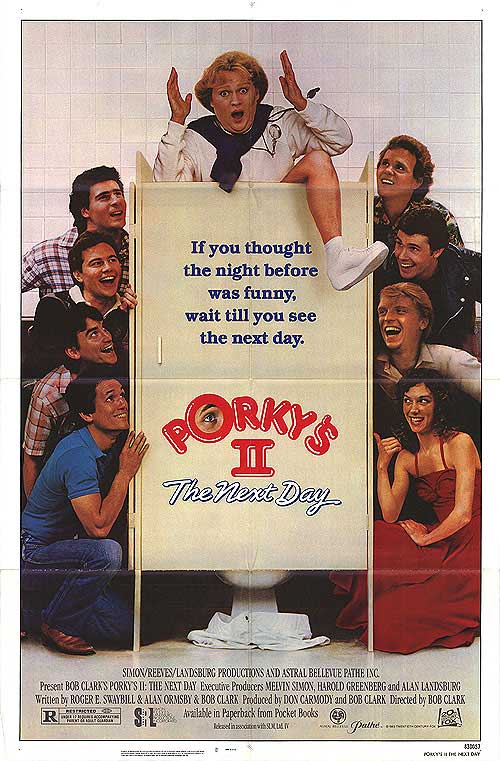
Porky's II: The Next Day + Old Fashioned + 'I Know Where I'm Going!'

PORKY'S II: THE NEXT DAY
(R. 20th Century Fox, 98 mins., theatrical release date: June 24, 1983)

Beyond epitomizing the teen sex farce when it became the surprise hit of 1982, Porky's may also be the definitive prankster comedy of its decade. The problem many had at the time was that those japes were mostly at the expense of females, with the safest male target being Pee Wee, the gullible runt with the bird chest and growth chart. Making a sop to social consciousness in the presence of Jewish teen Billy and his pitiful antagonist Cavanaugh, such finger-wagging mired the hormonal momentum, especially with Lassie and the Shower Scene around the bend. In the meta-defensive Porky's II: The Next Day, the victimizing mantle shifts from Billy (Scott Colomby), who now takes greater part in the foolishness, to John Henry (Joseph Running Fox), the Seminole student on the sidelines who has been cast as Romeo for a Shakespeare-themed class project. Before you can say "Moral Majority," along comes a much wider net of deplorables (religious fanatics, graft-crazed commissioners, Klansmen), alongside bad ol' Balbricker (Nancy Parsons), for Angel Beach's resident miscreants to catch with their pants down.

Bob Clark, whose A Christmas Story was waiting for the coming winter, is somehow operating even broader than the last sty, Not only is the prejudice subplot here a nonentity, but Porky's II doesn't climax so auto-destructively, instead allowing the girl to have all the fun. She is, naturally, Wendy Williams (Kaki Hunter), the one whom the boys all say is the campus bicycle but actually takes a shine to Pee Wee Morris (Dan Monahan). Not that their consummation on the bus has done much for his incredulity, as his attempt to settle the score for that Cherry Forever incident goes very familiarly wrong. Her confessional doesn't even dissuade Pee Wee from leveling the same unfounded suspicion towards a band geek immediately afterwards. But away from their peers, Wendy does talk more sense than the interchangeable sausage party. Even Billy (Mark Herrier), cast as "big fairy" Oberon, has to play straight man to his moronic buds, although you can still count on Meat (Tony Ganios) to thrust his lower weight even while in tights.

Luckily for Clark (and his two fellow writers, including longtime collaborator Alan Ormsby), the uptick in amiability offsets the exaggerated arrogance and hypocrisy of their straw enemies, chief among them Reverend Flavel (Bill Wiley), who tests even the timid principal's (Eric Christmas) patience when they trade indecent passages from both the Bard and the Bible. It doesn't freshen the smutty humor, recycled beat for beat from its predecessor, or encourage Clark to direct with a lighter touch. But like the original, there are a few undeniable elements which escape Clark's belaboring expertise, from the abovementioned literature slam to an impromptu replacement for Billy's defective sword to Wendy's show-stopping jailbait incrimination scheme. Stirring greater havoc with gag boas and breasts in a five-star restaurant than the boys do by scalping and stripping the Kartoon Klan, Kaki Hunter obliterates the subgenre's rosy-palmed loyalty to the He-Man Womun Oglurs Club.


OLD FASHIONED
(PG-13, Freestyle Releasing, 115 mins., limited release date: Feb. 6, 2015)

Beware the kind of quaint romance pitched at the intellectual capacities of Reverend Flavel and the Angel Beach boors. Porky's II painted its barn-door strokes in a manner that suggested Bob Clark reeling from the critical smack downs of his earlier smash. Old Fashioned was released on Valentine's Weekend 2015 as a Christian-friendly alternative to Fifty Shades of Grey, despite the whips-and-chains eroticism in the mainstream being no less passé than the amateur pornography, sexist radio DJ and Manic Pixie Dream Girl used to spice up its spiritual contender. Whatever the opiate of the masses, Rik Swartzwelder is oblivious to the naked truth that his ideals of courtship are as toxic as the Stephenie Meyer/Marquis de Sade drivel he's rebuking. And it's not like he is witty enough to make like Wendy Williams and quote the wisdom of Groucho Marx to mitigate his autumnal frostiness.

Clay Walsh (Swartzwelder) is basically to his sleepy Ohio town what Johnny from the The Room was to his San Francisco burg, although he dabbles in antiques rather than accounting. And Clay's a reactionary scold with serious intimacy problems, which he tries to sermonize as an Abstinence Pledge. So when runaway eccentric Amber Hewson (Elizabeth Roberts) rents the room above his carpentry shop, the frigid Clay tests his domineering philosophies in his courtship of Amber. When her stove breaks, she is sent outside until Clay has finished maintenance. Clay consults a needling, traffic light-themed guide book to determine their compatibility during their dates. He even tests Amber's efficiency in slicing up pears into baby food. Swartzwelder wants us to believe these are gateways to true love, yet the vacant chemistry between these opposites and Clay's validated self-righteousness allows for Swartzwelder to recoil from romance as much as he does sexuality.

Drearily formulaic when it's not transparently demagogic, Old Fashioned slogs on for nearly two arduous hours on rote "boy loses girl" drama, tedious moments of solitude, lifeless side characters with no bearing on any of the plot (including Clay's elderly aunt and third banana black friend), and numerous heavy-handed, one-sided potshots against modern day impurity. Not that references to silent movies and Sleepless in Seattle in any way justify the stultifying portentousness. It's the vanity that kills: Swartzwelder writing clunky dialogue (read: worst proposal ever), deifying himself in the name of "folksiness" and looking/acting like a suicidal Jeff Daniels clone is a lousy advertisement for chivalry. I came into Old Fashioned hoping for innocent erotomania and was rewarded instead with passive-aggressive egomania, a love story whose target audience I imagine composed solely of now and future cat ladies (perky doormat Amber included) and dog dudes.


'I KNOW WHERE I'M GOING!'
(Unrated, Universal Pictures, 91 mins., U.S. theatrical release date: August 9, 1947)

You want old fashioned? Go right to the source. 'I Know Where I'm Going!' is every pound and pence the charmer Swartzwelder's spew isn't. Michael Powell & Emeric Pressburger rapturously weave folkloric imagery and local color in a wartime tonic that still plays on the heartstrings 70 years later. Having demonstrated forward motion ever since infancy, Joan Webster (Dame Wendy Hiller) takes the next leap by marrying into wealth. This means trekking out to Kiloran, an island on the Scottish Hebrides, to wed Lord Bellinger, thereby getting hitched to his Consolidated Chemical Industries in the process (a notion made even more hilarious in dreamtime). An impenetrable fog and furious gale winds sidetrack Ms. Webster from boarding the last boat to her destination, so she is stuck on the Isle of Mull in the raffish company of naval administrator and Kiloran laird Torquil MacNeil (Roger "Colonel Blimp" Livesey).

A bond develops between Webster and MacNeil as they gaze out from across-the-way windowsills, take separate places at lunch tables and eavesdrop on a Ceilidh, a Gaelic wedding anniversary jamboree. The Archers (Powell & Pressburger) are more enraptured with the scenery and its well-drawn inhabitants than setting an agenda or spelling out the unlikely union until where it counts, in a surprise finale where a curse on MacNeil's family is confronted head-on by the wary laird. Along the way are such "magical realist" touches as the phone booth nearby a crashing waterfall, the fantastical use of model trains navigating the Tartan hills to bridge Webster's journey and, most awesomely, a treacherous whirlpool nicknamed Corryvreckan.

Hiller and Livesey, both invaluable, flesh out their roles to match Erwin Hiller's singularly evocative cinematography (locations scouted by Powell himself), with Webster less of a grating stock socialite and more a wayward dreamer who can count beams on the ceiling to achieve her prayers but could stand to count her blessings. MacNeil is princely in all the right ways, too, discerning the difference between being poor and having no money. The Archers also show impeccability in casting such secondary players as Pamela Brown (as Catriona Potts, a lonely bride who shepherds goats and skins rabbits with ease), C.W.R. Knight (as Col. Barnstaple, a proud falconer who names his prize eagle after MacNeil) and George Carney as Joan's father/banker, who is about the same age as Lord Bellinger (heard briefly in the voice of Norman Shelley). There's even a wee Petula Clark as a studious girl who reflects Webster's headstrong qualities.

'I Know Where I'm Going!' got lost in the shuffle among the Archers' more ambitious productions (even Scorsese didn't get around to it until he was in the midst of Raging Bull), but it tames the wild appetite for intelligent, tactful and wistful romance in a way most of today's Hollywood pictures as well as their opportunistic faith-based indie ilk cannot. Take the highland over the low, and you'll get to paradise before thee.


Tuesday, May 9, 2017

I Love You to Death


I LOVE YOU TO DEATH
(PG-13, Tri-Star Pictures, 97 mins., theatrical release date: Apr. 6, 1990)

Aside from Marisa Tomei, Kevin Kline is one of the last Oscar recipients I can think of to be rewarded for his comedic prowess. In 1989, he won Best Supporting Actor as the blustery Otto from A Fish Called Wanda, where he breathed lustily from Jamie Lee Curtis' boot, insulted the "so superior" British every opportunity he could and gulped down Michael Palin's beloved aquarium, fin by fin. An impulsive, imperialist cad whose self-delusional claims of great intellect where debunked by his shapely partner-in-crime Curtis, Kline's portrayal of Otto remains the high mark for unctuous invention in the farcical game.

Kline's first role since nabbing that trophy doubles down on Otto's buffoonish machismo. I Love You to Death, which reunited him with director Lawrence Kasdan (The Big Chill, Silverado) and paired him with River Phoenix (whose performance in Running on Empty was also in the running when Kline won), casts him as Joey Boca, a swarthy pizzeria owner who is introduced confessing to a priest his sin of adultery, committed twice in one week. Or was it four times with two women? But what about the four women last week? Best to round it off at a dozen give or take a couple of times, which he makes up promptly by bedding both Victoria Jackson and Phoebe Cates (Kline's wife in an uncredited cameo).

Joey Boca sees neither harm nor foul in his indiscretions, simply an extension of the American dream which finds him at one point a good-natured family man and the next a lusty hedonist. "I'm a man," he tells Jackson's Lacey in a post-coital rationalization, "I got a lotta hormones in my body." His wife, Rosalie (Tracey Ullman), is dutiful and headstrong in her own way, but in denial herself. To her, Joey's merely flirting, despite the concern of smitten pizzeria co-worker Devo Nod (Phoenix), who catches Joey on the phone with a mistress, fondling pizza dough with all the sensuality he reserves for female flesh.

That Rosalie will discover the truth about Joey's routine plumbing excursions is unavoidable, but her thirst for revenge in the aftermath, deciding on murder as a suitable punishment on the advice of her tabloid junkie of a Mama Nadja (Joan Plowright), is a little less predictable. Joey is too full of life and marinara sauce for a first-degree consummation of "'til death do us part."

As scripted by John Kostmayer, I Love You to Death was inspired by the well-publicized case of Frances Toto from Allentown, PA, whose five unsuccessful attempts on her oafish hubby Tony's life were quickly forgiven by the husband, who went so far as to raise the $50,000 bail money to keep his family together. Though Frances was prosecuted and jailed for four years, they stuck together after her release and remain, to this day, a happy couple.

Kostmayer and Kasdan translate this incredible true story as a combination of ethnic comedy and black comic farce which could be pitched as "Moonstruck on the Verge of a Nervous Breakdown." But the result is far shaggier than either Jewison or Almodovar demonstrated, the zippy energy expected of screwball comedies traded in for the appeal of the various characters and their respective performances. Luckily for Kasdan, he's assembled a surplus of talent to keep the picture going even when the proceedings threaten to peter out.

Opposite the physically robust and carefully caricatured Kline, the equally talented Tracey Ullman opts for a warmer characterization of the cuckolded Rosalie. It's a valiantly humanized effort on her part, as there's nothing particularly funny about the epiphany Rosalie experiences while stopping at the library and her subsequent breakdown in a restroom. She's also an effective median given that Ullman is flanked by the loud presences of clown Kline and joker Joan, and not just in a particularly funny bilingual argument between Joey and Nadja during a public dinner.

Ullman's dedicated personification teases out the black comedy with ease. As scorned as she is, she hopelessly loves Joey enough to opt for a painless way out for her paramour.

Joan Plowright, meanwhile, lives up to her surname as Rosalie's mom, a feisty crone who just has to listen to Johnny Mathis when asked to put on a record to drown out a gunshot and inaugurates the first attempted hit on Joey with a family friend, paying him in cookies and speaking like the Serbian Marla Brando. The favor is accepted by the reluctant assassin, who bumbles into Joey's backyard with a baseball bat and ill-fitting Abe Lincoln mask and just as swiftly chickens out.

Just as inept in their services are Devo, too sensitive to fire a pistol despite having a brother in the Marines, and the supposed pros he hires to finish the job, lowlife cousins Harlan and Marlon James. While River Phoenix is comically spacey as Devo, William Hurt (another of Kasdan's good luck charms) and Keanu Reeves go even farther out there as the druggie James boys, dimwitted and amusingly unkempt casualties of their respective generations. Their banter is marked with pregnant pauses, slow-on-the-uptake realizations and general imbecility. They can't even locate Joey's heart without remembering, and then butchering, the Pledge of Allegiance.

Even Miriam Margolyes, who as Mama Boca arrives late in the game to beat Joey into shame, makes her single minute onscreen an uproarious delight.

The combined talents of this ensemble, all of whom are precise players (even Keanu Reeves, who is as smart being stupid here as Ted Logan), works strange magic onto the screenplay, which draws out the madcap murder games like it was simmering a pot full of spaghetti sauce to a roiling bubble, with Kline stumbling in as flesh-and-blood punchline. It's not particularly accommodating to certain character motivations, and the somnolent pacing isn't rewarded by much of a finale, which departs drastically from the facts of the Toto case for a rousing reconciliation.

And yet Kline remains sublime even when Joey is dosed with two bottles of barbiturates and takes a bullet clear through his chest. It just makes him all the more genial, in a bizarre way, as he offers Harlan & Marlon cheese and crackers with a pale, bleary face. Even when his Italian accent is laid on so thick that you'd expect him to suggest breadsticks, Kline is a physical marvel throughout the movie. Just the way he acts with his hinder is enough to put Jim Carrey to shame.

Kasdan and Kostmayer go lax with the pacing in ways that grossly simplify what should have been a crackerjack comedy of unreliable manners, their conclusion aiming too hard at achieving audience goodwill. If you don't get as much of a kick out of Hurt and Reeves like I do, their shenanigans will slow the procession down even as Ullman's and Plowright's energies barrel on. I Love You to Death has a piping hot ensemble yet a curiously undercooked slab of dough supporting them. Still, it got zestier laughs out of me than most of the retro comedies I've endured, so maybe it will come full circle in the future. Mama Nadja says it best: “I like you once. Maybe someday I like you again."


Friday, March 31, 2017

Mischief

MISCHIEF
(R, 20th Century Fox, 93 mins., theatrical release date: February 8, 1985)

I spent the inauguration day of Mr. 45  watching Better Off Dead, but there was nothing nostalgic about it. The effect felt like putting an old friend out to pasture after having been bitten by a slavering zombie. It should have felt like a reason to believe, but failing that, it became a requiem for whatever amber waves washed over the detritus of pop cultures past.

2017 marks the 35th anniversary of Porky's, and so when I revisited it, I tried to understand how something like that could have been such a blockbuster given that it was riding coattails of previous heavy-hitters like American Graffiti and Animal House. I still don't consider Bob Clark's movie to be in the same league as Lucas or Landis. Not even Fast Times at Ridgemont High, which I really like, could compare to either of those, let alone Diner. And dopier fare like The Last American Virgin, with its unearned "poignancy," or Zapped!, aka "Carrie in Charge," just leaves me cold.

To cut a long intro short, I don't fetishize the 1980s model of mindless adolescent entertainment as much as others do. If pressed to do so, I would look to 1985 as the definitive year of the teen comedy, because overall they were far more diverse and refreshing than the umpteenth "let's get laid" jaunt. Yes, you still had Porky's Revenge and Fraternity Vacation and Hot Chili and whatever other sludge was at the bottom of that well. But there was reason to be cheerful in the deathless deluge of teen capers that were still made-to-order.

Heaven Help Us, itself an evocative boys' club caper located in parochial school, may be the most underrated of the pack because script, direction and acting were all at peak warmth. Rob Reiner's The Sure Thing incorporated old-fashioned romance into its sexual confusion and "snob vs. slob" antagonism. Vision Quest had Matthew Modine and Linda Fiorentino, which went a long way towards humanizing another athletic perseverance curio. Better Off Dead made surreal strides towards being a live-action cartoon, although I think Joe Dante bettered Savage Steve Holland with Gremlins 2: The New Batch. Just One of the Guys has its minor merits, as does watching both Fred Ward and Lori Laughlin in Secret Admirer.

Even Back to the Future, despite its sci-fi trappings, sprung a novel twist on the "coming-of-age" template by placing a contemporary boy in a 1950s environment to play matchmaker to his future parents, Zemeckis & Gale milking the scenario for all the metaphysical and hormonally-conflicting anxieties they could.


Between the poles of hackneyed and inspired came Mischief, which is where '80s nostalgia meets '50s nostalgia and threatens to cancel each other out. Norman Rockwell's Porky's, the critical consensus was likely to refer to it back then. The writer and executive producer, Noel Black, once directed Pretty Poison and made a music-only short film which was a smash at Cannes. Then in 1983, he directed Private School, to a lowest-common-denominator majority. It had Linda Barrett, Mr. Hand, Emmanuelle teaching sex ed, the aforementioned Modine, topless Betsy Russell, and a bawdy ol' Harry Nilsson break-up anthem for its opening credits, the single best musical cue of any teen sex comedy of its time. And yet, the Porky's curse was still casting a pall over the movies geared towards teens.

Whereas Noel Black once possessed enough clout to make Private School seem like the proverbial thankless task, the director of Mischief is Mel Damski, who delivered his own turkey the same year as Black with Yellowbeard. There's nothing in his biography worth mourning. 

Mischief was also looked at by film reviewers in '85 as less the progeny of American Graffiti and more like a blue spawn of TV's Happy Days, with Doug McKeon from On Golden Pond in the Ron Howard role and first-timer Chris Nash as Henry Winkler. This is another modernized "period piece" that communicates its story purely though signifiers and stereotypes, only the seams stick out more by virtue of its Johnny Come Lately development. There's even a snippet of Rebel Without a Cause thrown in to set up an impressionable chicken race which is a transparent excuse for one of those most egregious teen comedy clichés: the "hilarious" destruction of a borrowed car.

You don't need to be Janet Maslin or Owen Gleiberman to stifle a yawn at the predictability factor here.


McKeon plays Jonathan Bellah, the self-described "dreamer" who would've been played much more colorfully in a contemporary setting by Anthony Michael Hall. He's got the rolled-up khakis and dentist's heir glow of the introverted geek. Nash is Gene Harbrough, the new kid in Nelsonville, Ohio, with the whole PG-friendly greaser accessory kit (slicked-up hair, leather jacket, blue jeans, motorbike) and stern concert violinist father, who we realize too late is played by Terry O'Quinn(!) Gene is Jonathan's new neighbor, and the awkward kid finds a big brother surrogate in the hip stranger. More pertinently, he finds a new tutor.

The reason for that is Marilyn McCauley, the local sexpot, played by Kelly Preston with deliberate shades of both Norma Jeane and Cybill Shepherd from The Last Picture Show. Jonathan wants a shot at her in the worst way, and bored Gene decides he'll make it his mission in life to turn the spaz into a stud. Not that Gene will have to go away empty-handed, as he himself is smitten with Bunny Miller (Catherine Mary Stewart), a perky sweetheart in an arranged courtship with loutish preppie Kenny Brubaker (D.W. Brown). On the margins of these competing courtships is ugly duckling Rosalie, a soda shop waitress who is biding her time until she can shed the braces and thick glasses and emerge bodaciously as the Jami Gertz we all recognized back in 1987.

The plot synopsis needn't go any further, and sadly, despite all the names I just listed in the cast, neither the characters. That's the fault which damns Mischief in the worst way: the rigid confines of these characters slouching and strutting through the equally limited plot. Jonathan realizes his wildest fantasy come true, but it means shattering both his naiveté and his appeal. Gene wastes no time establishing his delinquent-with-the-heart-of-gold bona fides and is ridden with angst over Bunny's inability to stand up against Kenny. Marilyn's more experienced ways throw Jonathan for a loop at the last moment, and he counters perfidy with petulance in the vomit-inducing tradition of Boaz Davidson, although Mel Damski directs his actors far better.

Earnest and laconic is the way Black fashions his script, which helps out immensely in the friendship that develops between Jonathan and Gene. Yet his oft-risible dialogue often betrays the loose tone and Damski's direction can't rise above anything better than workmanlike. These combine to give the scenes between Jonathan and Marilyn, which are the crux of the movie, a toxic sense of apathy. From the way Jonathan cavalierly clutches at Marilyn's breast after taking a pratfall to their inevitable bedroom encounter, in which Jonathan bluffs his way out of his lack of rubber-centric preparation but still climaxes traditionally, Jonathan's sexual awakening feels at once passé and piggish.

All Mischief truly delivers on is the Eisenhower-era nostalgia, from the sock hop outfits to the tacky Studebakers (I can hear Kathleen Turner laughing in my head), from the county fair kissing booth raising awareness of polio to the long-needled immunity shots (where's Wade Walker when you need him?). Just like American Graffiti and Lemon Popsicle, the period oldies are ladled over liberally: Chuck Berry, Fats Domino, Buddy Holly, Little Richard, Gene Vincent, The Platters, Mickey & Sylvia, a little Elvis, and Bill Haley's Comets giving Jonathan an ultimatum to "See You Later, Alligator" as he sneaks out through Marilyn's window. If you can get past some minor issues with the film's stated setting of 1956 clashing with the release of a few 45s (particularly the late Berry's), you can enjoy the swinging soundtrack on its own terms.

Other than those chestnuts, Mischief goes according to plan for anyone who has seen enough teen farces. Jonathan takes his first swig of hard liquor and commanders Gene's trusty but anachronistic Triumph, with obvious results. The conflict involving Kenny is good for a salacious prank at the expense of his dad's department store, but mostly it's tediously prolonged fight sequences and upturned milkshakes. And when the heroes find themselves in romantic straits on prom night, the one who's been recently kicked out of his house is forced to sleep out in the barren countryside.

With a better-than-average cast on board (Catherine Mary Stewart, despite being raised in Edmonton, credibly plays the all-American girl here as well as she did in The Last Starfighter or Night of the Comet) and a willing assemblage of pros to make the pastel-pretty visuals come alive (including DP Donald Thorin, set decorator Ernie Bishop and costumer Mina Mittelman), it's a shame Mischief works only on a strictly superficial level. This is yet another film that takes an obviously '80s (or '70s, in the cases of Davidson and Lucas, who gets ribbed right at the opening) sensibility to '50s growing pains. Two schools of "they don't make 'em like they used to" thought combined to excuse a film which begs to have been made better than it did.

If that's your kick, then seek out Diner or Heaven Help Us, instead.