Enchantéd: A Retrospective Tribute to Diane Franklin
IV. Summer Girl/Deadly Lessons (1983)
(Unrated, CBS/ABC TV)
In my introduction to this series, I realized there was no chance I could assess the complete works of Diane Franklin. To put a finer point on it, Diane’s TV work trumps her theatrically-released resume by a notable margin. Focusing on just the seven movies from 1982 to 1989 wherein Diane was cast seemed like a good idea at self-discipline, kind of like how I used to withhold watching Better Off Dead... on cable until I got through a considerable chunk of my homework. But it also doesn’t do justice to what I’d like to achieve with this retrospective tribute: a reappraisal and re-evaluation of Diane Franklin as an actress throughout the varied films of her career, as well as an honest examination of each title. This means that I have pondered deeply the notion of giving at least a couple of Diane’s televised feature performances due processing.
The 1982 double-header of The Last American Virgin and Amityville II: The Possession are readily available from the same home video distributor on MGM DVD and were previously issued on VHS. The two accompanying Diane Franklin vehicles from the next year have barely been placed on the market thus far (there was a now OOP VHS edition of Summer Girl), now resigned to DVD-R obscurity except that you can’t even buy them on-demand. What kind of world am I living in when one of Diane's horror vehicles, a mad psycho mystery which co-stars Ally Sheedy and Bill Paxton(!), and another of her most full-bodied roles in both physicality and performance aren’t a click or two away from being in my cinematic library? I understand compromise all too well, but I can’t just let my first filmic flame become extinguished that easily.
I was intending to proceed straight to 1984's Second Time Lucky, but thanks to some anonymous help, I have allowed myself to break one small rule in the name of respect and depth. In part four of Enchantéd, I will spotlight Diane’s two subsequent TV movies from 1983, Summer Girl and Deadly Lessons.
 Journeyman episodic TV director Robert Michael Lewis' adaptation of the eponymous Caroline Crane novel, Summer Girl feels like the most glaring blind spot in Diane’s oeuvre. Compared to her prior films, this is an outright showcase of a role, as Diane magnificently turns up the heat and the horror for her first truly antagonistic character (remember, Karen with a K was simply fickle, not evil). Cynthia, or Cinni to her friends, is a teenage seductress with a malevolent maturity and alter ego delusions of Greek myth superiority that gives her the confidence of both a truly sexy young woman and a cunning sociopath. Hired as a nanny for a fractured family, Cinni seizes upon their disillusion in order to tempt the workaholic father and teach his children to betray their frazzled mother. More than just a good girl gone bad, Cinni is a devious goddess as acidic as she is alluring.
Better Off Dead... co-star Kim Darby takes the raisin-free lead as harried housefrau Mary Shelburne, a retired photographer and mother of two, Jason and Fern (future Bundy brood David Faustino, Laura Jacoby). When an unanticipated third bun arrives in the oven, it generates fiscal arguments between Mary and workaholic husband Gavin (Barry Bostwick), who is straining to pay for the beach house where Mary’s doctor suggests she rest at to prevent further stress for a couple of weeks. Despite his providing, lighthearted demeanor, Gavin feels caged in by a surplus of soul-deadening responsibility and the strains of domestic turmoil.
Journeyman episodic TV director Robert Michael Lewis' adaptation of the eponymous Caroline Crane novel, Summer Girl feels like the most glaring blind spot in Diane’s oeuvre. Compared to her prior films, this is an outright showcase of a role, as Diane magnificently turns up the heat and the horror for her first truly antagonistic character (remember, Karen with a K was simply fickle, not evil). Cynthia, or Cinni to her friends, is a teenage seductress with a malevolent maturity and alter ego delusions of Greek myth superiority that gives her the confidence of both a truly sexy young woman and a cunning sociopath. Hired as a nanny for a fractured family, Cinni seizes upon their disillusion in order to tempt the workaholic father and teach his children to betray their frazzled mother. More than just a good girl gone bad, Cinni is a devious goddess as acidic as she is alluring.
Better Off Dead... co-star Kim Darby takes the raisin-free lead as harried housefrau Mary Shelburne, a retired photographer and mother of two, Jason and Fern (future Bundy brood David Faustino, Laura Jacoby). When an unanticipated third bun arrives in the oven, it generates fiscal arguments between Mary and workaholic husband Gavin (Barry Bostwick), who is straining to pay for the beach house where Mary’s doctor suggests she rest at to prevent further stress for a couple of weeks. Despite his providing, lighthearted demeanor, Gavin feels caged in by a surplus of soul-deadening responsibility and the strains of domestic turmoil.
 When Mary considers appointing a babysitter, along comes a bookish, frumpy teenager named Cinni for an interview. Honest and polite if a bit too prissy, dressed like she just raided her grandmother’s closet, Mary is impressed by the high school student’s bluntness and sense of responsibility. Once she leaves the room, Cinni’s hyper-intelligence reveals itself to be the product of schizophrenia and violent jealousy. And three weeks later, the Shelburnes arrive to pick up Cinni only to discover their supposedly Plain Jane caretaker is actually a statuesque, sunshiny knockout who gives their elderly neighbors Jack & Esther Reardon (Murray Hamilton and Millie Slavin) equal pause.
Cinni’s playful rapport with fun-loving Gavin quickly morphs into erotic entrapment. On their second day at the beach, Cinni tricks Gavin into rescuing her from drowning, flatters him with calculated timidity and then lotions herself up with come-hither cuteness. Mary’s suspicions are aroused enough that she reassumes her shutterbug talents, but it gets worse when Gavin leaves on business. That’s when Cinni starts manipulating and menacing Jason and Fern, revealing her fantastical lineage to Artemis, the fabled Greek goddess of the moon whose Roman counterpart is inadvertently named Diana. She tells the kids about her secret island kingdom, where no other women can trespass but she gleefully teases that their daddy can come.
When Mary considers appointing a babysitter, along comes a bookish, frumpy teenager named Cinni for an interview. Honest and polite if a bit too prissy, dressed like she just raided her grandmother’s closet, Mary is impressed by the high school student’s bluntness and sense of responsibility. Once she leaves the room, Cinni’s hyper-intelligence reveals itself to be the product of schizophrenia and violent jealousy. And three weeks later, the Shelburnes arrive to pick up Cinni only to discover their supposedly Plain Jane caretaker is actually a statuesque, sunshiny knockout who gives their elderly neighbors Jack & Esther Reardon (Murray Hamilton and Millie Slavin) equal pause.
Cinni’s playful rapport with fun-loving Gavin quickly morphs into erotic entrapment. On their second day at the beach, Cinni tricks Gavin into rescuing her from drowning, flatters him with calculated timidity and then lotions herself up with come-hither cuteness. Mary’s suspicions are aroused enough that she reassumes her shutterbug talents, but it gets worse when Gavin leaves on business. That’s when Cinni starts manipulating and menacing Jason and Fern, revealing her fantastical lineage to Artemis, the fabled Greek goddess of the moon whose Roman counterpart is inadvertently named Diana. She tells the kids about her secret island kingdom, where no other women can trespass but she gleefully teases that their daddy can come.

Unlike Karen or Patricia Montelli, Cinni affords Diane Franklin a boundless opportunity to fuse the desirable with the dangerous, the model California girl gone to the Land of Nod, the glamour of Jane Russell and the psychosis of Norman Bates. Women’s costumer Christine Zamaira (
Modern Romance) flatters Diane with so many modes of drop-dead gorgeous in various one-piece bikinis, tank top/hot pants combos, dresses, and evening gowns that it feels like the world’s hottest history lesson in sexy fashion trends. Yet these choices wouldn't fully matter had Diane not matched such diverse surface allure by twisting the same star-making attributes found in her debut performances (her teased curly brown hair, beguiling eyes, twinkling smile, inviting voice, and fantastic body) into something so persuasively, vicariously frightening as well as scintillating.
Whether crushing Jason's newly-captured jellyfish with twisted delight, reliving the heated murder of her best friend after first adjusting the downed strap of her nightgown or dreaming up a chilling soliloquy whilst demonstrating the body language of a witch but with the actual body of Gidget, Diane Franklin proves herself utterly spellbinding as a femme fatale with a very playful if iniquitous poise. Siren though she may be, Cinni could just be Diane’s definitive "babe" performance in every loving definition of the term. It is certainly her most undervalued turn.

The result naturally makes the already credible performances of Kim Darby and Barry Bostwick that much more worthy of investment. Everydude Bostwick is both excitable and tormented as the young-at-heart Gavin, thus providing a morally-grounded sunniness to Cinni’s moonlit charms but giving off enough inner turmoil to make him feel believably weak. But it is Kim Darby as Mary who has to anchor the picture with a very sympathetic display of unwanted neurosis and maternal fear. Distraught but darling, Darby humanizes the pulpy melodrama in valiant ways. You never doubt Mary’s sanity even as her own husband tries to tell her she’s gone overboard in her rightful mistrust of Cinni, and you’re with her every step of the way in uncovering Cinni’s murderous manifesto. Also in the cast are Martha Ellen Scott as Mary's doting mother and soap opera superstar Hunt Block as Peter, the lovesick victim of the apathetic Cinni’s anti-affection.
The cinematography looks TV-movie protocol, a bit too flat due to inferior source quality, but hopefully a restored print (the Warner Archive Collection needs to give this a chance) will do justice to the Hawaiian summertime glow of the beach scenes and the ominous darkness in the night shots as well as the flesh tones and costumes of sumptuous Cinni.
However, as a feminine battle of wills and a domestic drama about the old reliable notion of the home-wrecking coquette, the characters are so well-handled that you're kept in a state of relentless unease. Robert Lewis and adaptive writer A.J. Carothers know how to generate tension, and despite any handful of contrivances and a easily redemptive third act built upon child endangerment, the stakes prove to be very high. All in all,
Summer Girl is trashy fun for all seasons and deserves to be rescued from the bottom of the teleflick barrel.

After such a bravura change of pace, the disappointing
Deadly Lessons sets back Diane Franklin in
Amityville II mode as the naïve ingénue ensnared in a hostile environment. Fourth-billed despite leading character status in this William Wiard-directed chiller, scripted by Jennifer Miller (also responsible for the pre-
Summer Girl nanny from hell MOW
The Babysitter), Diane plays Stephanie, the sheltered new summertime scholarship student studying French ("Mon dieu!") at Starkwater Hall, an all-girl private school. Arriving dressed similarly to Cinni at the start of
Summer Girl, Stephanie is greeted by two of the more friendly girls whom she first meets, including Marita (vivacious Ally Sheedy), who in turn introduces Stephanie to shy Eddie (Bill "Severen" Paxton, Esq.), who is grooming the Saudi stallion belonging to Stephanie’s roommate Shama (Vicki Kriegler of
The Competition).
After squeezing in as many characters as possible during the first seven minutes, we cut to stern but immoral headmistress Miss Wade, played by Donna "Miss Ellie Ewing" Reed (who cursed in vain this movie in her last days), holding an inaugural assembly warning the girls to keep away from both townsfolk and the neighboring boys academy (during which we meet Nancy Cartwright from the same year’s
Twilight Zone: The Movie as awkward loner Libby). A whole lotta casual cattiness and suspicious glances at muddied boots ensues before sweetheart Stephanie (the kind of girl who enjoys playing murder mystery board games like "Evidence!") and friends uncover the first sign of mortal danger floating in the lake.
"I guess they have a different attitude about death in the east, don’t they?"

A network-friendly slasher/giallo-style mystery made three years after the trendsetting
Silent Scream and
Friday the 13th is hardly an intriguing alternative, especially in the same year when films as batty, bloody and badly overdramatic as
Pieces or
Sleepaway Camp were playing theatrically. The latter film’s annoyingly vulgar characters are thankfully not the norm here, as the female students are to a degree plucky and appealing, though clearly some have a hard time looking like convincing young adults (Cartwright may voice Bart Simpson, but it’s tough to suspend disbelief when you actually see her). The movie doles out ominous references in the form of detective movie posters, curriculum quizzes about
The Merchant of Venice (wherein Stephanie is thrust into her first catfight in a scene that should’ve been more OTT) and the world’s most carefree red herring in the form of Shama. And there are enough shifty characters who either seem like they have secrets to protect via murder (Miss Ward’s clandestine affair with horse-riding instructor Ferrar, played by David Ackroyd) or just stand about dishing idle threats or looking particularly odd, including Eddie (who we learn has quite an ethics-questioning history in relation to his brother) and the atypical shadowy groundskeeper.

The resulting movie unspools like a more chaste variation on numerous other films of its type (
The Dorm That Dripped Blood,
The House on Sorority Row), albeit one that’s still quintessentially 1980s in set design (Marshall Crenshaw poster!), vernacular ("grody" and "barfy") and fashion. Cliffhanger transitions and screeching string/synthesizer sections do most of the heavy lifting in terms of suspense until Marita finally gets abducted by the psychotically protective Talking Killer(?). The performances all around seem serviceable, starting from the supporting vets at the top of the cast list, Donna Reed and Larry Wilcox (doing Cameron Mitchell proud as surly Detective Russ Kemper) on down to the effervescent team of Diane Franklin and Ally Sheedy, who truly could‘ve annihilated playing sisters in a much looser, funnier project, and finally a sullen, hunky love interest in the form of Bill Paxton’s Eddie, who, truth be told, felt more at ease in the same year's
Mortuary.
And if you always wanted to see Diane as an amateur equestrian before crossing over into horse whisperer for that one Savage Steve Holland-helmed
Encyclopedia Brown episode, this one will definitely be on your must-see list. She even takes a fateful, commercial-transitioning roll in the hay, albeit all by her lonesome and without my cushy frame to level the fall and keep her comfy. Have you noticed already how I am just so sweet on her? You try watching Stephanie screaming in panic on a wily horse and resist yelling for help. Discrete as I try to be, I can’t deny that Diane has quite an eternally appealing hold over me.
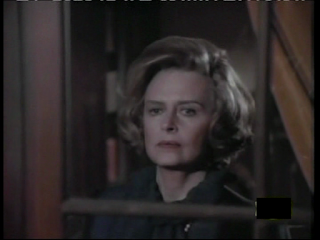 Deadly Lessons
, the movie, it pains me to say, does not. Although her eyes still enrapture, I didn't notice a lot of smiling on behalf of Diane’s character Stephanie, which does mirror my own reaction to this. Whereas the last three films I focused on were quite bracing and stylish, this one has a rather listless pace and a dearth of engrossing set pieces. For a cast that includes three other very likeable, gifted stars in Cartwright, Sheedy and Paxton, people whom Franklin speaks very kindly of in her book, the characters as written don’t make full use of the their glowing presences. The movie overall is actually quite leaden, cluttered and a bit too self-conscious of its TV-friendly trappings enough to feel like an honestly entertaining movie.
It deserves to be seen on the basis of nostalgic star power, a modicum of intelligence and a dynamite third act, but it’s nowhere near as irresistible or revelatory as
Summer Girl, in which the drama truly comes alive enough to warrant the anxiety, the central characters feel more relatable and, yes, dream queen Diane Franklin proves herself to be stirringly sensual and multi-faceted in time for her next film. Although I had to pre-empt it, said film demonstrates with the same enticing vigor just how weak in the knees my favorite moon goddess can make me when I’m in the mood for love.
Holy claymation hot dog, I feel lucky tonight!


 Working in the basement of their hospital in order to take advantage of a functioning MRI machine, they competitively stop their hearts by lowering their body temperature via a cooling jacket and receiving a fatal hit from the defibrillator. Courtney claims that her astral projection was actually "a little sexual," but good luck sensing this based on the screensaver visuals Oprev preserves. The carnality is strictly TV-PG, as Sophia has a vigorous if ridiculous tryst with Jamie and moony Ray confesses his love to Marlo. Save for Ray, the resurrected med students tap into repressed mental faculties whether it's book knowledge or bread recipes or, in the 25-year-old Sophia's case, standing up to her mother, who demands she Win At All Costs.
 Flatliners flits from one half-assed conceptual triviality to another, freed from gravity just like its cast during those out-of-body experiences. Not since posing as Kitty Pryde for disgraced hack Brett Ratner has Ellen Page been so egregiously squandered. Diego Luna (has it already been 16 years since Y Tu Mamá También?) and Kiersey Clemons (a comedic charmer as seen in Neighbors 2) have too proven themselves overqualified for this tedium, which is more than can be said for small screen ciphers Nina Dobrev and James Norton. The work Oplev and Ripley have done could've been accomplished by any slumming work-for-hires toiling under the Screen Gems banner. There's nothing exquisitely tricky or emotional to make their Flatliners come alive, just 110 minutes which transition into rigor mortis early on and never lets up. It's the kind of stiff which you don't so much as review as perform an autopsy on. And with so many people trying to look on the bright side of a downer year, the sooner we bag and tag Flatliners '17, the better.


